Sols 4348-4349: Smoke on the Water
Earth planning date: Monday, Oct. 28, 2024
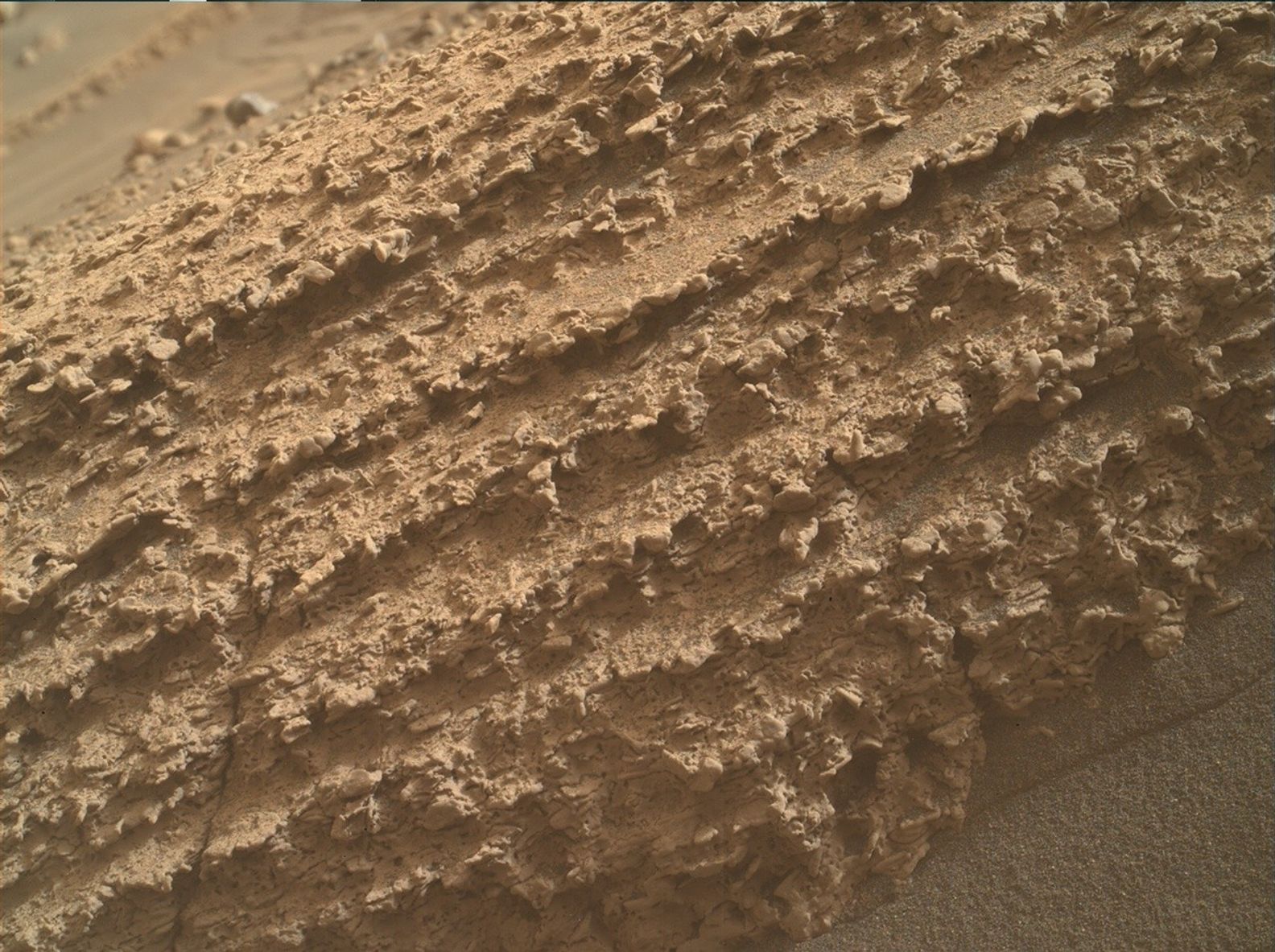
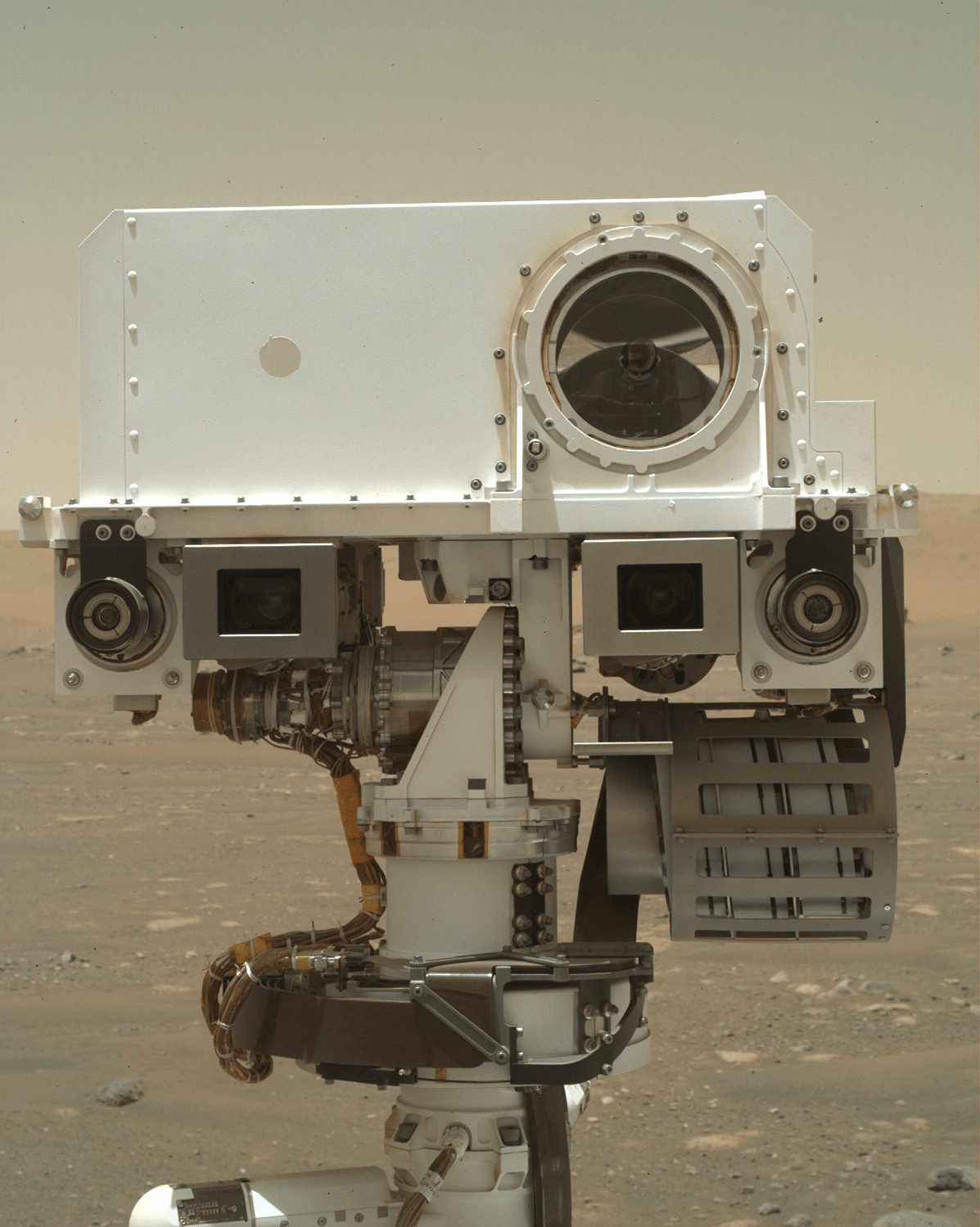
Before the science team starts planning, we first look at the latest Navcam image downlinked from Curiosity to see where the rover is located. It can be all too easy to get lost in the scenery of the Navcam and find new places in the distance we want to drive towards, but there’s so much beauty in the smaller things. Today I’ve chosen to show a photo from Curiosity’s hand lens camera, MAHLI, that takes photos so close that we can see the individual grains of the rock.
The planning day usually starts by thinking about these smaller features: What rocks are the closest to the rover? What can we shoot with our laser? What instruments can we use to document these features? Today we planned two sols, and the focus of the close-up contact science became a coating of material that in some image stretches looks like a deep-purple color.
We planned lots of activities to characterize this coating including use of the dust removal tool (DRT) and the APXS instrument on a target called “Reds Meadow.” This target will also be photographed by the MAHLI instrument. The team planned a ChemCam LIBS target on “Midge Lake” as well as a passive ChemCam target on “Primrose Lake” to document this coating with a full suite of instruments. Mastcam will then document the ChemCam LIBS target Midge Lake, and take a mosaic of the vertical faces of a few rocks near to the rover called “Peep Sight Peak” to observe the sedimentary structures here. Mastcam will also take a mosaic of “Pinnacle Ridge,” an area seen previously by the rover, from a different angle. ChemCam is rounding off the first sol with two long-distance RMI mosaics to document the stratigraphy of two structures we are currently driving between: Texoli butte and the Gediz Vallis channel.
In the second sol of the plan, after driving about 20 meters (about 66 feet), Curiosity will be undertaking some environmental monitoring activities before an AEGIS activity that automatically selects a LIBS target in our new workspace prior to our planning on Wednesday morning.
Written by Emma Harris, Graduate Student at Natural History Museum, London
Related Terms
A Spooky Soliday: Haunting Whispers from the Martian Landscape

Sols 4345-4347: Contact Science is Back on the Table
Sols 4343-4344: Late Slide, Late Changes
Article
5 days ago
Discover More Topics From NASA
]]>

How it started versus how it’s going for astronaut Nick Hague with ISS Ham Radio on the space station.
Since November 2000, crew members like Hague have used ham radio to communicate with people on Earth through this educational program, also known as Amateur Radio on the International Space Station or ARISS. So far, there have been more than 1,700 events, directly engaging students and listeners from 49 U.S. states, 63 countries, and all seven continents. Students study the space station, radio waves, amateur radio technology, and related topics before their call from space, which encourages interest in STEM.
Now through Nov 17, 2024, ARISS is accepting applications from formal and informal educational institutions and organizations that want to host events in summer or fall of 2025. There is no charge for these calls from space, although host locations may incur some equipment-related costs. Local amateur radio clubs help hosts prepare for their contacts.
Read about how ISS Ham Radio and other station programs inspire students.
Melissa Gaskill
International Space Station Research Communications Team
Johnson Space Center
The Marshall Star for October 30, 2024
Editor’s Note: Starting Nov. 4, the Office of Communications at NASA’s Marshall Space Flight Center will no longer publish the Marshall Star on nasa.gov. The last public issue will be Oct. 30. To continue reading Marshall news, visit nasa.gov/marshall.
Marshall Team Members View Progress Toward Future Artemis Flights
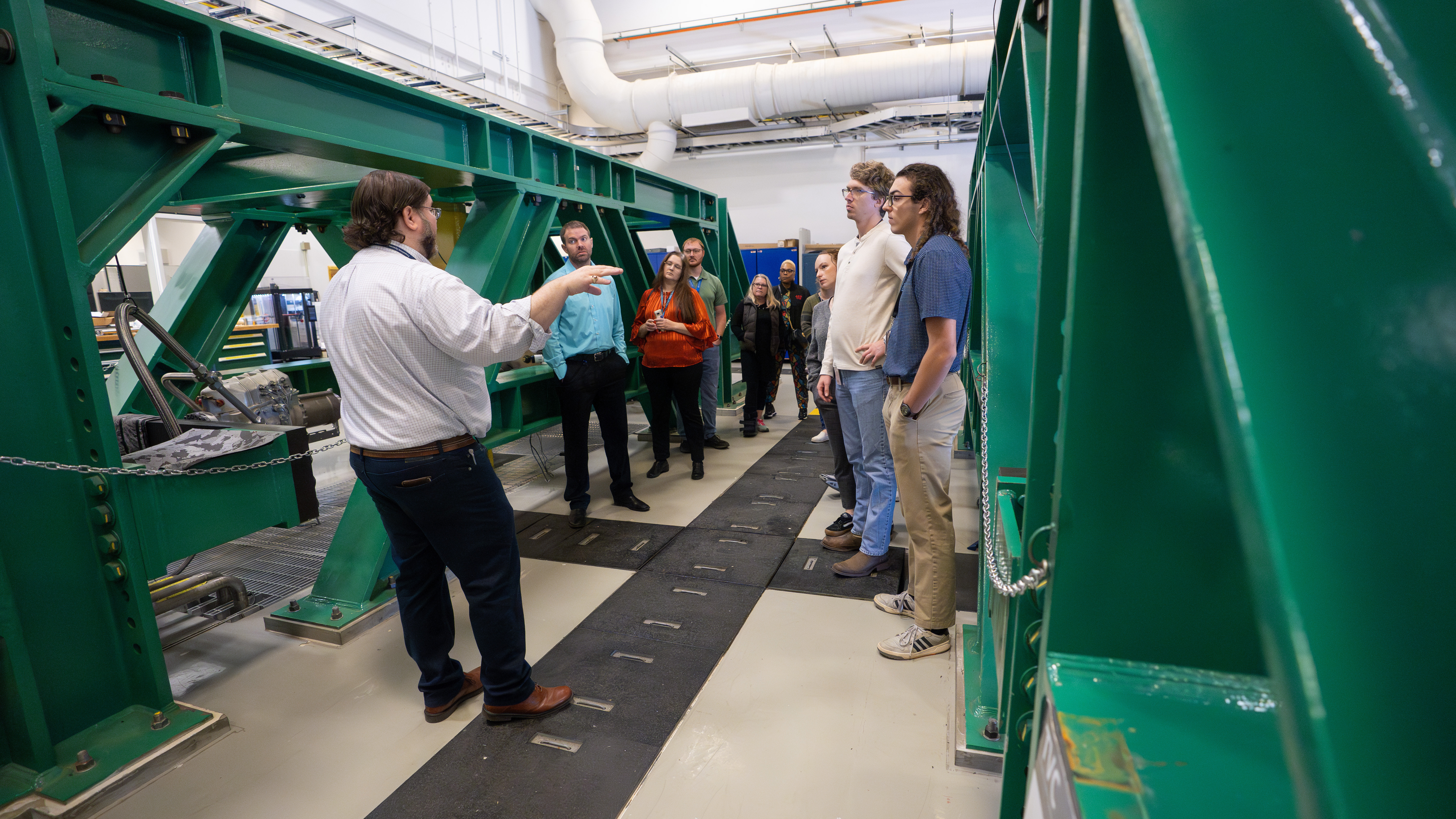
Blake Stewart, lead of the Thrust Vector Control Test Laboratory inside Building 4205 at NASA’s Marshall Space Flight Center, explains how his team tests the mechanisms that steer engine and booster nozzles of NASA’s SLS (Space Launch System) rocket to a group of Marshall team members Oct. 24. The employees were some of the more than 500 team members who viewed progress toward future Artemis flights on bus tours offered by the SLS Program. Building 4205 is also home to the Propulsion Research and Development Laboratory that includes 26 world-class labs and support areas that help the agency’s ambitious goals for space exploration. The Software Integration Lab and the Software Integration Test Facility are among the labs inside supporting SLS that employees visited on the tour. (NASA/Sam Lott)

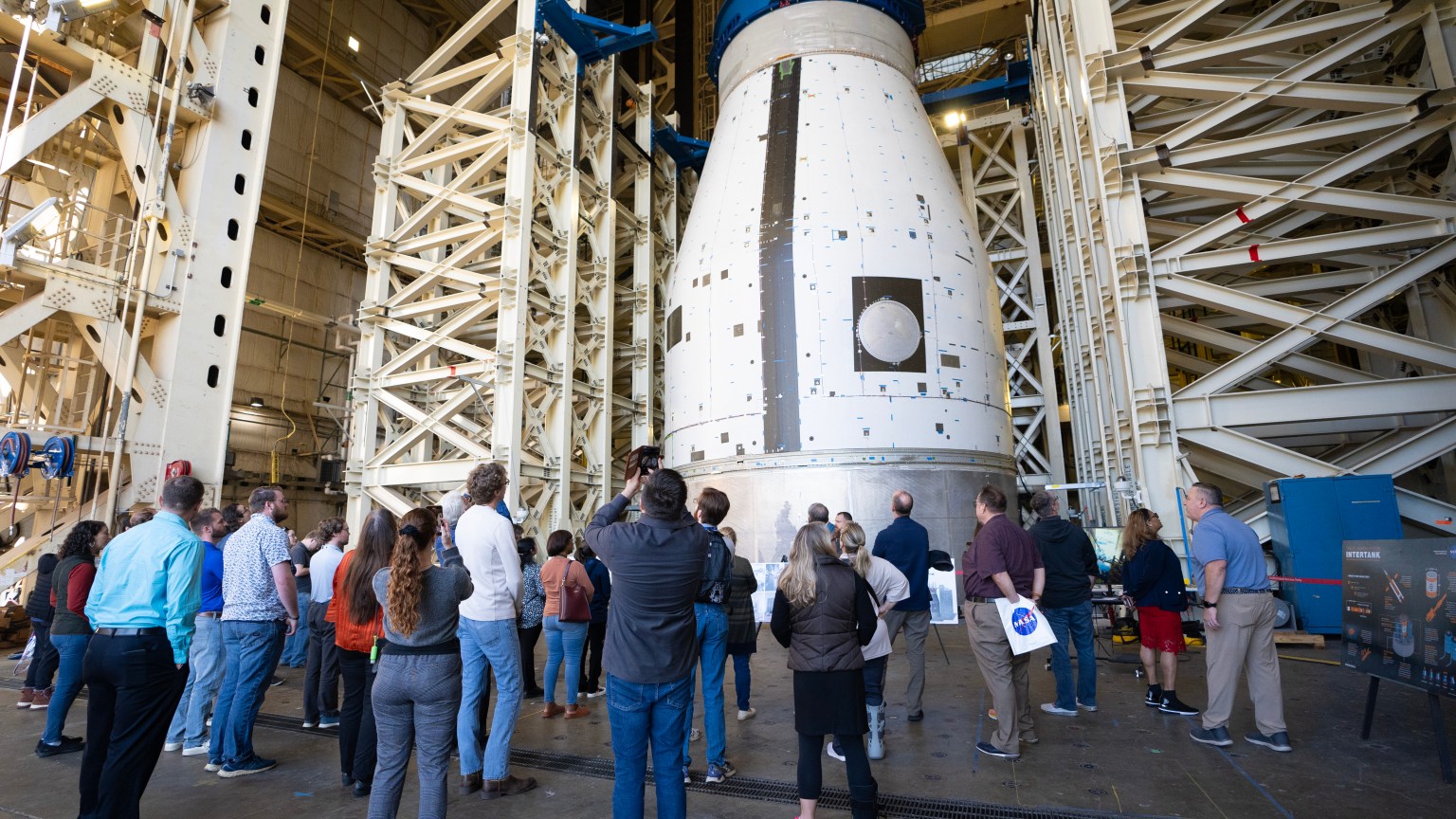
A group of Marshall team members gather below the development test article for the universal stage adapter that will be used on the second variant of SLS, called Block 1B. The universal stage adapter is located inside one of the high bays in building 4619. The universal stage adapter will connect the Orion spacecraft to the SLS exploration upper stage. With the exploration upper stage, which will be powered by four RL10-C3 engines, SLS will be capable of lifting more than 105 metric tons (231,000 pounds) from Earth’s surface. This extra mass capability enables SLS to send multiple large payloads to the Moon on the same launch. (NASA/Sam Lott)

Marshall team members view the Orion Stage Adapters for the Artemis II and Artemis III test flights inside Building 4708. The Orion Stage Adapter, built at Marshall, connects the rocket’s interim cryogenic propulsion stage to the Orion spacecraft. The Orion Stage Adapter for Artemis II is complete and ready to be shipped to Kennedy Space Center. The Oct. 24 tours featured four stops that also included opportunities to see the Artemis III launch vehicle stage adapter, and the development test article for the SLS Block 1B universal stage adapter that will begin flying on Artemis IV. Additionally, programs and offices such as the Human Landing Systems Development Office and the Science and Technology Office hosted exhibits in the lobby of Building 4220, where employees gathered for the tours. (NASA/Jonathan Deal)
Center Commemorates National Disability Employment Awareness Month
By Serena Whitfield
In conjunction with National Disability Employment Awareness Month, NASA’s Marshall Space Flight Center held anagencywide virtual event hosted by the Office of Diversity and Equal Opportunity on Oct. 24.
Marshall team members watched the Webex event in Building 4221.

In alignment with the month’s national theme, “Access to Good Jobs for All,” the program highlighted the perspectives of people with disabilities in the workplace as they navigate the work lifecycle – from applying, to onboarding, career growth and advancement, and day-to-day engagements.
The event began with Marshall Associate Director Roger Baird welcoming NASA team members.
“NASA is dedicated to inclusive hiring practices and providing pathways for good jobs and career success for all employees, including workers with disabilities,” Baird said. “Some ways we do this is through targeted recruitment of qualified individuals with disabilities through accessible vacancy announcements, outreach to students with disabilities, and community partnerships.”
NASA also utilizes Schedule A Authority, a non-competitive Direct Hiring Authority to hire people with disabilities without competition.
Baird introduced event moderator Joyce Meier, logistics manager at Marshall, who welcomed panelists Casey Denham, Kathy Clark, Paul Spann, and Paul Sullivan, all NASA team members. The panelists from the disability community discussed their work lifecycles, lessons learned in the workplace, and shared a demonstration on colorblindness and its impact.
Denham discussed some of the best practices for onboarding employees with neurodiversity, a term used to describe people whose brains develop or work differently than the typical brain.

Clark talked about what can be done to continue raising awareness and advocating for disability rights. She said NASA empowers its workforce with knowledge so they can be informed allies to team members with disabilities and foster a safe and inclusive working environment.
Spann gave insight into practical steps employers can take to accommodate candidates with deafness, and Sullivan spoke about some key considerations NASA managers should keep in mind to make the job application process more accessible to candidates with low vision.
Guest speaker Chip Dobbs, supply management specialist at Marshall, talked about his personal experiences with being deaf. Dobbs has worked at NASA for 29 years and said he has never let his disability hold him back, but instead uses it as a gateway to inspire and connect with others.
The event ended with closing remarks from Tora Henry, director of the Office of Diversity and Equal Opportunity at Marshall. The virtual event placed importance on planning for NASA’s future by promoting equality and addressing the barriers people with disabilities face in the workplace.
“As we celebrate National Disability Employment Awareness Month, keep in mind that NASA’s mission of exploring the unknown and pushing the boundaries of human potential requires the contributions of every mind, skill set, and perspective,” Baird said. “Our commitment to inclusivity ensures that no talent goes untapped, and no idea goes unheard because together, we’re not just reaching for the stars, we’re showing the world what’s possible when everyone has a seat at the table.”
A recording of the event is available here. Learn more about NASA’s agencywide resources for individuals with disabilities as well as the agency’s Disability Employment Program.
Whitfield is an intern supporting the Marshall Office of Communications.
Farley Davis Receives NASA’s Blue Marble Award
By Wayne Smith
Farley Davis, manager of the Environmental Engineering and Occupational Health Office at NASA’s Marshall Space Flight Center, has received a 2024 Blue Marble Award from the agency.
NASA’s Office of Strategic Infrastructure, Environmental Management Division presented the 2024 Blue Marble Awards on Oct. 8 at the agency’s Johnson Space Center. The Blue Marble Awards Program recognizes teams and individuals demonstrating exceptional environmental leadership in support of NASA’s missions and goals. In 2024, the awards included five categories: the Director’s Award, Environmental Quality, Excellence in Energy and Water Management, Excellence in Resilience or Climate Change Adaptation, and new this year: Excellence in Site Remediation.

Davis was recognized for “exceptional leadership and outstanding commitment above and beyond individual job responsibilities, to assist Marshall and the agency in enabling environmentally sound mission success.”
“The award was unexpected, and I am very thankful to receive the Environmental Management Director’s Blue Marble Award,” said Davis, who has been at Marshall for 33 years. “Collectively, Marshall’s environmental engineering team has made this award possible with their diligent support for many years keeping the center’s environmental compliance at the forefront. I will cherish the award for the rest of my life.”
June Malone, director of the Office of Center Operations at Marshall, credited Davis for his environmental leadership and mentoring team members.
“Farley’s attitude of professionalism and personal responsibility for the development and implementation of well-grounded environmental programs has increased Marshall’s sustainability and prevented pollution,” Malone said. “His tireless leadership has resulted in compliance with federal, state, and local environmental laws and regulations, and his creative solution-oriented approaches to environmental stewardship have restored contaminated areas.”
Charlotte Bertrand, director of the Environmental Management Division at NASA Headquarters, said it was an honor to select Davis for the 2024 Blue Marble Director’s Award.
“Farley’s incredibly distinguished career with NASA reflects the award’s intention to recognize exceptional leadership by an individual in assisting the agency in enabling environmentally sound mission success,” Bertrand said.
Please see the awards program for additional information.
Smith, a Media Fusion employee and the Marshall Star editor, supports the Marshall Office of Communications.
Take 5 with Brooke Rhodes
By Wayne Smith
When human exploration of Mars becomes a reality and more than just the stuff of science fiction, Brooke Rhodes will be eager to investigate what astronauts discover on the Red Planet.
From listening to her talk about her work as an engineer at NASA’s Marshall Space Flight Center, it’s easy to grasp her excitement about the future of human space exploration and NASA’s Moon to Mars architecture.

“I can’t wait for the Mars rovers to have some human company,” said Rhodes, who recently began a detail as the chief of Marshall’s Avionics and Software Ground Systems Test Branch. “I need to know if we can grow Mark Watney (of The Martian movie fame) quantities of potatoes up there. Everything we do to prepare to return humans to the Moon and establish a presence in deep space is building toward putting boots on Mars. It’s an honor and a privilege to be even a small part of it.”
Rhodes also appreciates the responsibility she takes on in any form in NASA’s exploration missions to benefit humanity. After all, she has worked on hardware for the International Space Station and has had supporting roles for the Mars Ascent Vehicle and Artemis missions.
“We at Marshall hold an incredible amount of responsibility: responsibility for the welfare of the crew on the space station, responsibility for the welfare of the crew on the Artemis missions, and even the welfare of humanity through the responsibility we have for science on the station and elsewhere,” said Rhodes, who is from Petal, Mississippi, and has worked at Marshall for seven years. “When your missions are as critical as ours, it’s nearly impossible to not be motivated.”
Now, on to Mars.
Question: What is your position and what are your primary responsibilities?
Rhodes: I recently began the detail as the branch chief of the Avionics and Software Ground Systems Test Branch, ES53. Our branch is primarily responsible for the development of hardware-in-the-loop and software development facilities for the Artemis and MAV (Mars Ascent Vehicle) missions. My home organization is ES61, the Instrument Development, Integration and Test Branch, where I’ve been responsible for the integration and testing of International Space Station payloads for the past several years.
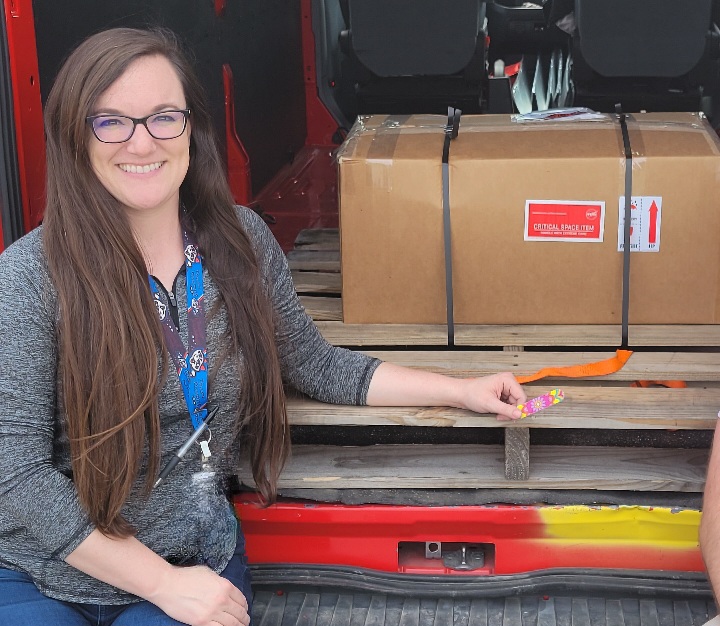
Question: What has been the proudest moment of your career and why?
Rhodes: One really cool moment that sticks out was the first time I saw hardware I had been responsible for being used in space. I spent several years as the integration and test lead of the Materials Science Research Rack (MSRR) Sample Cartridge Assemblies (SCAs) and we shipped our first batch of SCAs to the space station in 2018. That shipment was the culmination of years of intense effort and teamwork, so to see them onboard and about to enable materials science was an incredible feeling. There was a moment in particular that felt a bit surreal: prior to our SCA shipment the crew discovered they were missing a couple of fasteners from the onboard furnace, so we had those shipped to us from Europe and I packed them into the SCA flight foam before they shipped to the launch site. The next time I saw those fasteners they were being held up to a camera by one of the crew members, asking if those were the ones they needed for the furnace. Putting fasteners into foam didn’t take much effort, but what it represented was much bigger: being a small part of an international effort to enable science off the Earth, for the Earth, was an incredible moment I’ll carry with me for the rest of my career.
Question: Who or what inspired you to pursue an education/career that led you to NASA and Marshall?
Rhodes: I had a couple of lightbulb moments my junior year of high school that eventually set me on my current career path. I very specifically recall sitting in my physics I class and learning how to calculate the planetary motion of Jupiter and thinking I had never learned about anything cooler. Even then, though, NASA didn’t really enter my thoughts. Growing up, working for NASA didn’t even occur to me as something people could actually do – being a “rocket scientist” was just an abstract concept people threw around to indicate something was difficult.
That changed later when the same teacher who had been teaching us planetary motion took us on a field trip to Kennedy Space Center. The tour guide showing us around the Vehicle Assembly Building was a young employee who said he had majored in aerospace engineering at the University of Tennessee. That was the second lightbulb moment: here was a young person from the Southeast, just like me, who had done something tangible in order to work for NASA. That seemed easy enough, so I decided to major in aerospace engineering at Mississippi State and one day work for NASA. That turned out to not be easy, but definitely doable.
While at Mississippi State, I was able to complete three NASA internships, one at the Jet Propulsion Laboratory and two at Marshall. Eventually, I was hired on full-time at NASA’s Johnson Space Center, but wound up making my way back to Marshall, where I’ve been ever since. There’s no place on the planet better for enthusiasts of both aerospace engineering and football.

Interestingly, my physics I teacher’s name was Mrs. Rhodes, and I used to joke with my classmates that I wanted to be Mrs. Rhodes when I grew up. I didn’t actually mean that literally, but then I married Matthew Rhodes and did, indeed, become Mrs. Rhodes.
Question: What advice do you have for employees early in their NASA career or those in new leadership roles?
Rhodes: Scary is good. If you aren’t stepping out of your comfort zone you probably aren’t growing, and if you’re experiencing imposter syndrome, you’re probably the right person for the job.
Question: What do you enjoy doing with your time while away from work?
Rhodes: While away from work I tend to invest too much of my mental wellbeing into football. To recover from the stresses of work and my football teams being terrible, I like to explore National Parks. The U.S. has some of the most diverse scenery anywhere in the world, and I love getting outside and exploring it.
Smith, a Media Fusion employee and the Marshall Star editor, supports the Marshall Office of Communications.
Planets Beware: NASA Unburies Danger Zones of Star Cluster
Most stars form in collections, called clusters or associations, that include very massive stars. These giant stars send out large amounts of high-energy radiation, which can disrupt relatively fragile disks of dust and gas that are in the process of coalescing to form new planets.
A team of astronomers used NASA’s Chandra X-ray Observatory, in combination with ultraviolet, optical, and infrared data, to show where some of the most treacherous places in a star cluster may be, where planets’ chances to form are diminished.

The target of the observations was Cygnus OB2, which is the nearest large cluster of stars to our Sun – at a distance of about 4,600 light-years. The cluster contains hundreds of massive stars as well as thousands of lower-mass stars. The team used long Chandra observations pointing at different regions of Cygnus OB2, and the resulting set of images were then stitched together into one large image.
The deep Chandra observations mapped out the diffuse X-ray glow in between the stars, and they also provided an inventory of the young stars in the cluster. This inventory was combined with others using optical and infrared data to create the best census of young stars in the cluster.
In a new composite image, the Chandra data (purple) shows the diffuse X-ray emission and young stars in Cygnus OB2, and infrared data from NASA’s now-retired Spitzer Space Telescope (red, green, blue, and cyan) reveals young stars and the cooler dust and gas throughout the region.
In these crowded stellar environments, copious amounts of high-energy radiation produced by stars and planets are present. Together, X-rays and intense ultraviolet light can have a devastating impact on planetary disks and systems in the process of forming.
Planet-forming disks around stars naturally fade away over time. Some of the disk falls onto the star and some is heated up by X-ray and ultraviolet radiation from the star and evaporates in a wind. The latter process, known as “photoevaporation,” usually takes between five and 10 million years with average-sized stars before the disk disappears. If massive stars, which produce the most X-ray and ultraviolet radiation, are nearby, this process can be accelerated.
The researchers using this data found clear evidence that planet-forming disks around stars indeed disappear much faster when they are close to massive stars producing a lot of high-energy radiation. The disks also disappear more quickly in regions where the stars are more closely packed together.
For regions of Cygnus OB2 with less high-energy radiation and lower numbers of stars, the fraction of young stars with disks is about 40%. For regions with more high-energy radiation and higher numbers of stars, the fraction is about 18%. The strongest effect – meaning the worst place to be for a would-be planetary system – is within about 1.6 light-years of the most massive stars in the cluster.
A separate study by the same team examined the properties of the diffuse X-ray emission in the cluster. They found that the higher-energy diffuse emission comes from areas where winds of gas blowing away from massive stars have collided with each other. This causes the gas to become hotter and produce X-rays. The less energetic emission probably comes from gas in the cluster colliding with gas surrounding the cluster.
Two separate papers describing the Chandra data of Cygnus OB2 are available. The paper about the planetary danger zones, led by Mario Giuseppe Guarcello (National Institute for Astrophysics in Palermo, Italy), appeared in the November 2023 issue of the Astrophysical Journal Supplement Series, and is available here. The paper about the diffuse emission, led by Juan Facundo Albacete-Colombo (University of Rio Negro in Argentina) was published in the same issue of Astrophysical Journal Supplement, and is available here.
NASA’s Marshall Space Flight Center manages the Chandra program. The Smithsonian Astrophysical Observatory’s Chandra X-ray Center controls science operations from Cambridge, Massachusetts, and flight operations from Burlington, Massachusetts.
NASA’s Jet Propulsion Laboratory (JPL) managed the Spitzer Space Telescope mission for the agency’s Science Mission Directorate until the mission was retired in January 2020. Science operations were conducted at the Spitzer Science Center at Caltech. Spacecraft operations were based at Lockheed Martin Space in Littleton, Colorado. Data are archived at the Infrared Science Archive operated by IPAC at Caltech. Caltech manages JPL for NASA.
NASA Begins New Deployable Solar Array Tech Demo on Pathfinder Spacecraft
NASA recently evaluated initial flight data and imagery from Pathfinder Technology Demonstrator-4 (PTD-4), confirming proper checkout of the spacecraft’s systems including its on-board electronics as well as the payload’s support systems such as the small onboard camera. Shown is a test image of Earth taken by the payload camera, shortly after PTD-4 reached orbit. This camera will continue photographing the technology demonstration during the mission.

Payload operations are now underway for the primary objective of the PTD-4 mission – the demonstration of a new power and communications technology for future spacecraft. The payload, a deployable solar array with an integrated antenna called the Lightweight Integrated Solar Array and anTenna, or LISA-T, has initiated deployment of its central boom structure. The boom supports four solar power and communication arrays, also called petals. Releasing the central boom pushes the still-stowed petals nearly three feet away from the spacecraft bus. The mission team currently is working through an initial challenge to get LISA-T’s central boom to fully extend before unfolding the petals and beginning its power generation and communication operations.
Small spacecraft on deep space missions require more electrical power than what is currently offered by existing technology. The four-petal solar array of LISA-T is a thin-film solar array that offers lower mass, lower stowed volume, and three times more power per mass and volume allocation than current solar arrays. The in-orbit technology demonstration includes deployment, operation, and environmental survivability of the thin-film solar array.
“The LISA-T experiment is an opportunity for NASA and the small spacecraft community to advance the packaging, deployment, and operation of thin-film, fully flexible solar and antenna arrays in space. The thin-film arrays will vastly improve power generation and communication capabilities throughout many different mission applications,” said John Carr, deputy center chief technologist at NASA’s Marshall Space Flight Center. “These capabilities are critical for achieving higher value science alongside the exploration of deep space with small spacecraft.”
The Pathfinder Technology Demonstration series of missions leverages a commercial platform which serves to test innovative technologies to increase the capability of small spacecraft. Deploying LISA-T’s thin solar array in the harsh environment of space presents inherent challenges such as deploying large highly flexible non-metallic structures with high area to mass ratios. Performing experiments such as LISA-T on a smaller, lower-cost spacecraft allows NASA the opportunity to take manageable risk with high probability of great return. The LISA-T experiment aims to enable future deep space missions with the ability to acquire and communicate data through improved power generation and communication capabilities on the same integrated array.
The PTD-4 small spacecraft is hosting the in-orbit technology demonstration called LISA-T. The PTD-4 spacecraft deployed into low Earth orbit from SpaceX’s Transporter-11 rocket, which launched from Space Launch Complex 4E at Vandenberg Space Force Base in California on Aug. 16. Marshall designed and built the LISA-T technology as well as LISA-T’s supporting avionics system. NASA’s Small Spacecraft Technology program, based at NASA’s Ames Research Center and led by the agency’s Space Technology Mission Directorate, funds and manages the PTD-4 mission as well as the overall Pathfinder Technology Demonstration mission series. Terran Orbital Corporation of Irvine, California, developed and built the PTD-4 spacecraft bus, named Triumph.
NASA SPoRT’s Streamflow-AI Helps with Flood Preparedness in Texas
By Paola Pinto
For more than two decades, the NASA Short-term Prediction Research and Transition Center (SPoRT) within the NASA Earth Science Office at Marshall Space Flight Center has been at the forefront of developing and maintaining decision-making tools for meteorological predictions.
Jonathan Brazzell, a service hydrologist at the National Weather Service (NWS) office in Lake Charles, Louisiana, highlighted a recent example of SPoRT’s impact while he was doing forecasting for Texas streams.
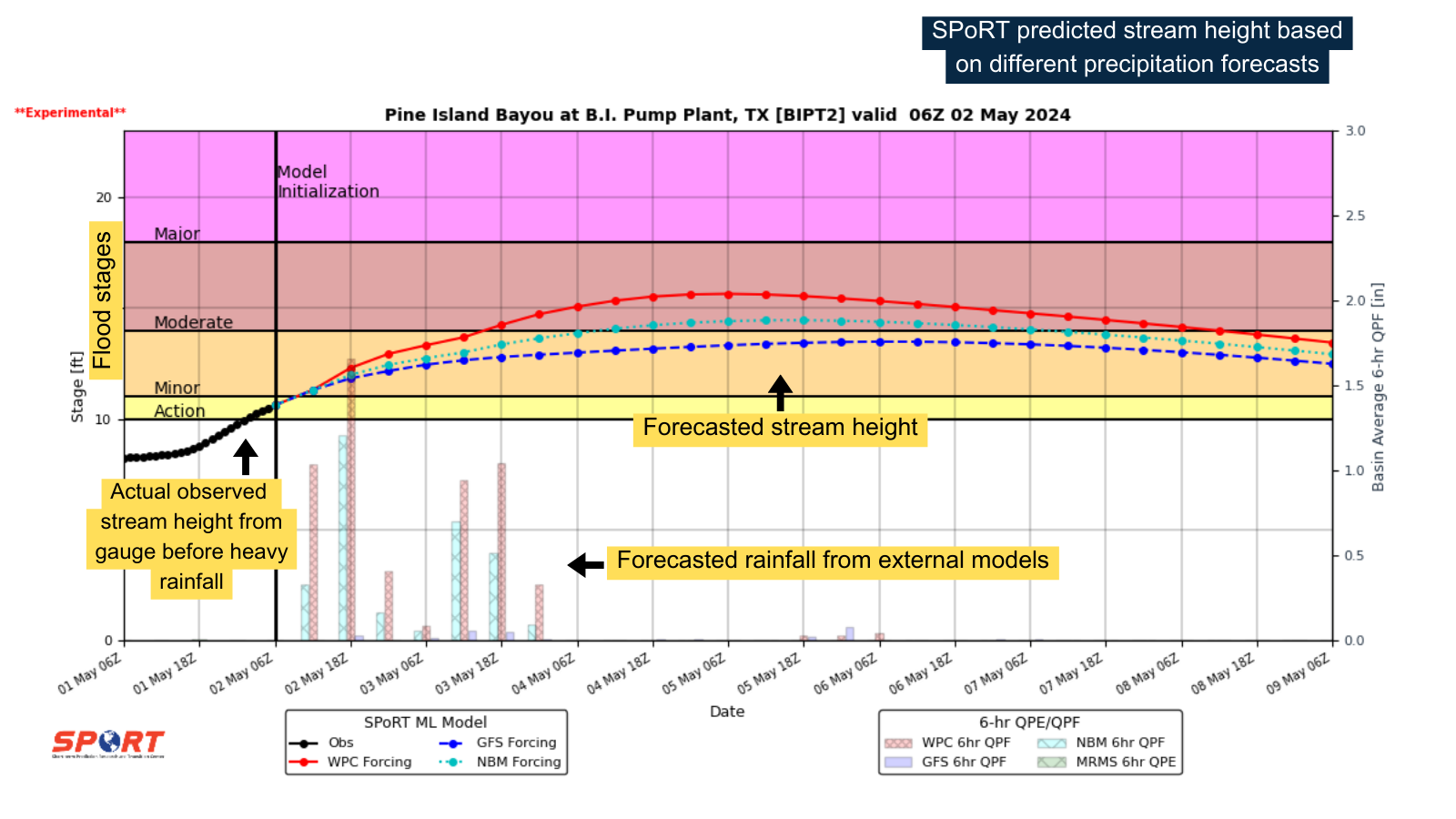
Brazzell, who manages the South Texas and South Louisiana regions, emphasized the practical applications and significant impacts of the Machine Learning model developed by NASA SPoRT to predict future stream heights, known as the SPoRT Streamflow A.I. During a heavy rainfall event this past spring, he noted the challenge of forecasting flooding beyond 48 hours. SPoRT has worked closely with the NWS offices to develop a machine learning tool capable of predicting river flooding beyond two days and powered by the SPoRT Land Information System.
“Previously, we relied on actual gauge information and risk assessments based on predicted precipitation,” Brazzell said. “Now, with this machine learning, we have a modeling tool that provides a much-needed predictive capability.”
During forecasted periods of heavy precipitation from early to mid-May, Brazzell monitored potential flooding events and their magnitude using NASA SPoRT’s Streamflow-AI, which provided essential support to the Pine Island Bayou and Big Cow Creek communities in south Texas.
Streamflow A.I. enabled local authorities to provide advance notice, allowing residents to prepare adequately for the event. Due to the benefit of three to seven-day flood stage predictions, the accurate forecasts helped county officials decide on road closures and evacuation advisories; community officials advised residents to gather a seven-day supply of necessities and relocate their vehicles, minimizing disruption and potential damage.
Brazzell highlighted specific instances where the machine learning outputs were critical. For example, during the event that peaked around May 6, Streamflow A.I. accurately predicted the rise in stream height, allowing for timely road closures and advisories. These predictions were shared with county officials and were pivotal in their decision-making process.
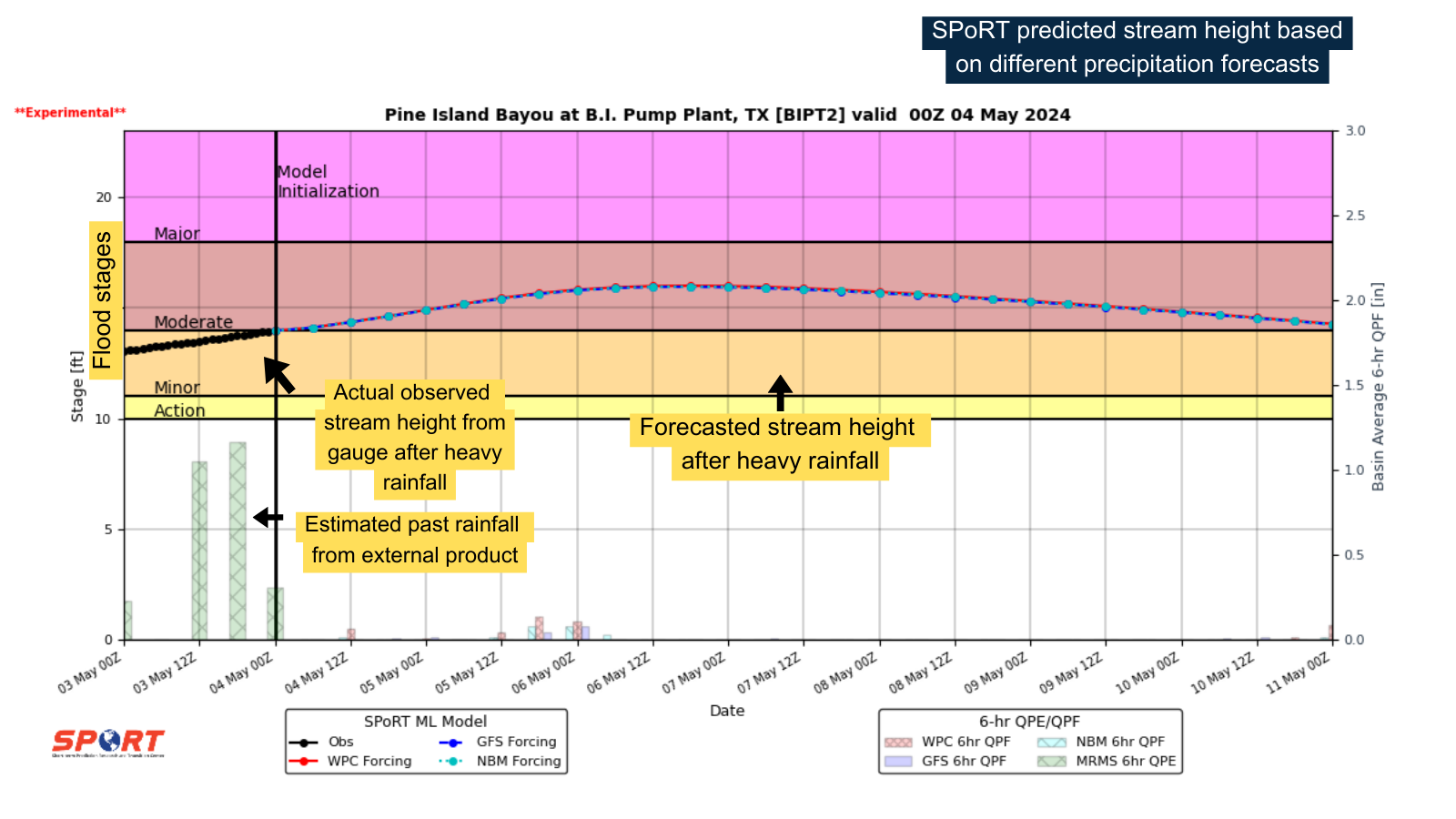
Brazzell shared that integrating SPoRT’s machine learning capabilities with their existing tools, such as flood risk mapping, proved invaluable. Although the machine learning outputs had been operational for almost two years after Hurricane Harvey, this season has provided their first significant applications in real-time scenarios due to persistent conditions of below-normal precipitation and ongoing drought.
He also mentioned the broader applications of Streamflow A.I., including its potential use in other sites beyond those currently being monitored. He expressed interest in expanding the use of machine learning stream height outputs to additional locations, citing the successful application in current sites as a compelling reason for broader implementation.
NASA SPoRT users’ experiences emphasize how crucial advanced prediction technologies are in hydrometeorology and emergency management operations. Based on Brazzell’s example, it is reasonable to say that the product’s ability to provide accurate, timely data greatly improves decision-making processes and ensures public safety. The partnership between NASA SPoRT and operational agencies like NOAA/NWS and county response teams demonstrates how research and operations can be seamlessly integrated into everyday practices, making a tangible difference in communities vulnerable to high-impact events.
As the Streamflow A.I. product continues to evolve and expand its applications, it holds significant promise for improving disaster preparedness and response efforts across various regions that experience different types of flooding events.
The Streamflow-AI product provides a 7-day river height or stage forecasts at select gauges across the south/eastern U.S. You can find the SPoRT training item on Streamflow-AI here.
Pinto is a research associate at the University of Alabama in Huntsville, specializing in communications and user engagement for NASA SPoRT.
Agency Awards Custodial, Refuse Collection Contract
NASA has selected All Native Synergies Company of Winnebego, Nebraska, to provide custodial and refuse collection services at the agency’s Marshall Space Flight Center.
The Custodial and Refuse Collection Services III contract is a firm-fixed-price contract with an indefinite-delivery/indefinite-quantity provision. Its maximum potential value is approximately $33.5 million. The performance period began Oct. 23 and will extend four and a half years, with a one-year base period, four one-year options, and a six-month extension.
This critical service contract provides custodial and refuse collection services for all Marshall facilities. Work under the contract includes floor maintenance, including elevators; trash removal; cleaning drinking fountains and restrooms; sweeping, mopping, and cleaning building entrances and stairways.
]]>3 min read
Buckle Up: NASA-Funded Study Explores Turbulence in Molecular Clouds
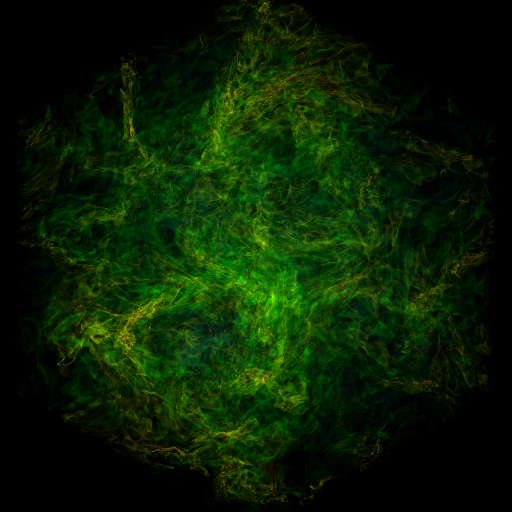
On an airplane, motions of the air on both small and large scales contribute to turbulence, which may result in a bumpy flight. Turbulence on a much larger scale is important to how stars form in giant molecular clouds that permeate the Milky Way.
In a new NASA-funded study in the journal Science Advances, scientists created simulations to explore how turbulence interacts with the density of the cloud. Lumps, or pockets of density, are the places where new stars will be born. Our Sun, for example, formed 4.6 billion years ago in a lumpy portion of a cloud that collapsed.
“We know that the main process that determines when and how quickly stars are made is turbulence, because it gives rise to the structures that create stars,” said Evan Scannapieco, professor of astrophysics at Arizona State University and lead author of the study. “Our study uncovers how those structures are formed.”
Giant molecular clouds are full of random, turbulent motions, which are caused by gravity, stirring by the galactic arms and winds, jets, and explosions from young stars. This turbulence is so strong that it creates shocks that drive the density changes in the cloud.
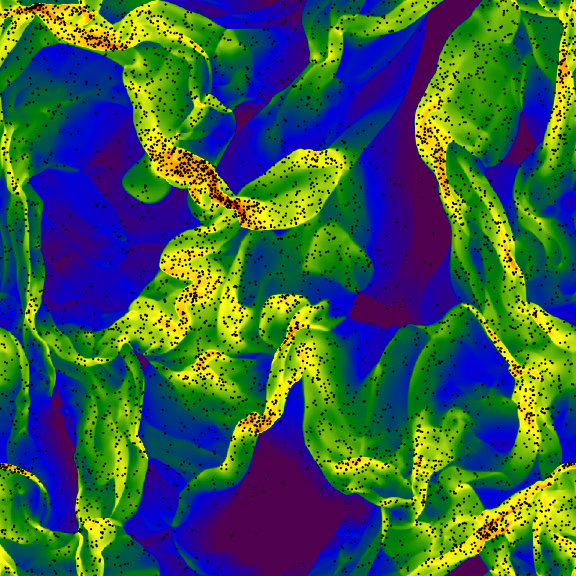
The simulations used dots called tracer particles to traverse a molecular cloud and travel along with the material. As the particles travel, they record the density of the part of the cloud they encounter, building up a history of how pockets of density change over time. The researchers, who also included Liubin Pan from Sun Yat Sen University in China, Marcus Brüggen from the University of Hamburg in Germany, and Ed Buie II from Vassar College in Poughkeepsie, New York, simulated eight scenarios, each with a different set of realistic cloud properties.
The team found that the speeding up and slowing down of shocks plays an essential role in the path of the particles. Shocks slow down as they go into high-density gas and speed up as they go into low-density gas. This is akin to how an ocean wave strengthens when it hits shallow water by the shore.
When a particle hits a shock, the area around it becomes more dense. But because shocks slow down in dense regions, once lumps become dense enough, the turbulent motions can’t make them any denser. These lumpiest high-density regions are where stars are most likely to form.
While other studies have explored molecular cloud density structures, this simulation allows scientists to see how those structures form over time. This informs scientists’ understanding of how and where stars are likely to be born.
“Now we can understand better why those structures look the way they do because we’re able to track their histories,” said Scannapieco.
NASA’s James Webb Space Telescope is exploring the structure of molecular clouds. It is also exploring the chemistry of molecular clouds, which depends on the history of the gas modeled in the simulations. New measurements like these will inform our understanding of star formation.
]]>
In the ever-evolving aerospace industry, collaboration and mentorship are vital for fostering innovation and growth. Recent achievements highlight the positive impact of Mentor-Protégé Agreements (MPA) facilitated by Jacobs Engineering Group, now known as Amentum Space Exploration Group. Two standout partnerships have demonstrated remarkable success and expansion, underscoring the value of such initiatives.
CODEplus and Amentum Space Exploration Group
The 24-Month MPA between CODEplus and Amentum Space Exploration Group has proven to be a game-changer. Recognized as the FY24 Marshall Space Flight Center (MSFC) Mentor-Protégé Agreement of the Year, this collaboration has significantly boosted CODEplus’s operations. Since the agreement’s inception on March 1, 2023, CODEplus has expanded its workforce to ten full-time employees and currently has two active job requisitions. This growth exemplifies the transformative potential of mentorship in nurturing small businesses within the aerospace sector.
KS Ware and Amentum Space Exploration Group / CH2M Hill
Another exemplary partnership involves KS Ware, which has benefitted from a 36-Month MPA with Amentum Space Exploration Group and CH2M Hill. This agreement has garnered accolades as both the FY23 NASA Agency Mentor-Protégé Agreement of the Year and the FY23 MSFC Mentor-Protégé Agreement of the Year. Through targeted business and technical counseling, KS Ware successfully launched a new drilling division in 2022 and expanded its offerings to include surveying services in 2023. The impact of this mentorship is evident, with a remarkable 30% growth rate reported for KS Ware.
These success stories highlight the critical role of Mentor-Protégé Agreements in empowering small businesses in the aerospace industry. By fostering collaboration and providing essential support, Amentum Space Exploration Group has not only strengthened its partnerships but also contributed to the broader growth and innovation landscape. As the aerospace sector continues to evolve, such initiatives will be essential in driving future success.
Published by: Tracy L. Hudspeth
]]>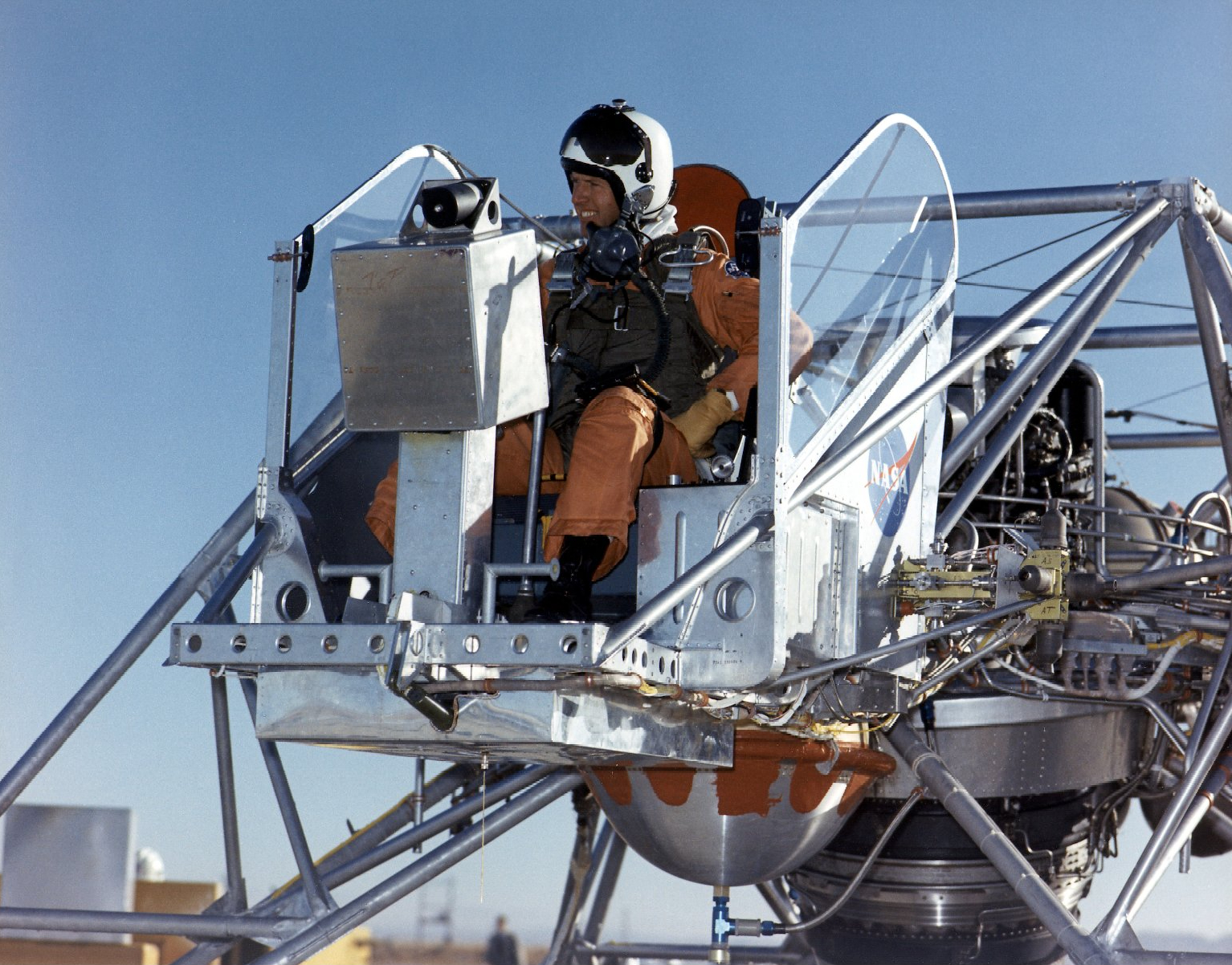
NASA pilot Joe Walker sits in the pilot’s platform of the Lunar Landing Research Vehicle (LLRV) number 1 on Oct. 30, 1964. The LLRV and its successor the Lunar Landing Training Vehicle (LLTV) provided the training tool to simulate the final 200 feet of the descent to the Moon’s surface.
The LLRVs, humorously referred to as flying bedsteads, were used by NASA’s Flight Research Center, now NASA’s Armstrong Flight Research Center in California, to study and analyze piloting techniques needed to fly and land the Apollo lunar module in the moon’s airless environment.
Learn more about the LLRV’s first flight.
Image credit: NASA
]]>4 min read
Preparations for Next Moonwalk Simulations Underway (and Underwater)
The tiny, potato-shaped moon Phobos, one of two Martian moons, cast a silhouette as it passed in front of the Sun, creating an eye in Mars’ sky.
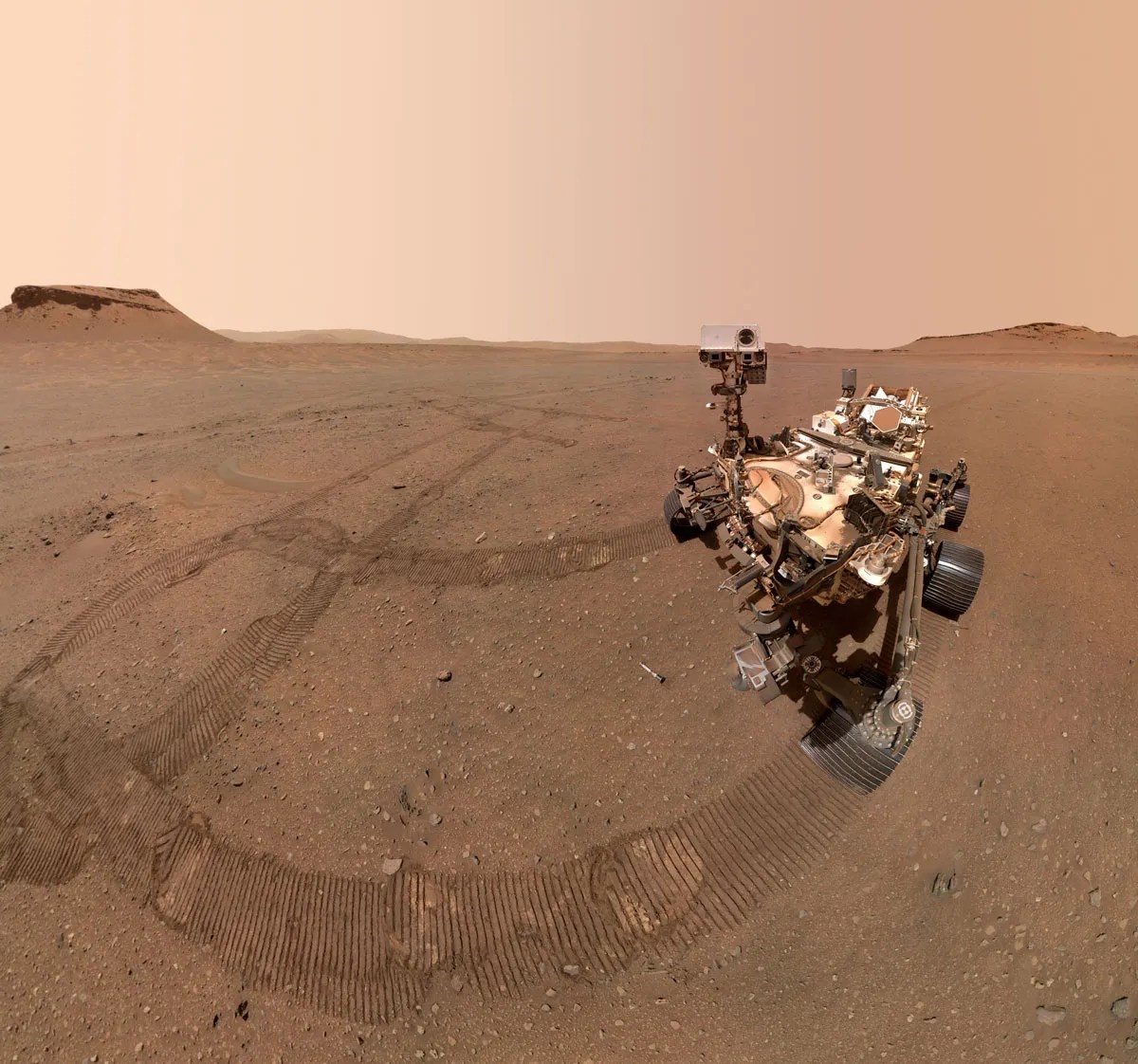
From its perch on the western wall of Mars’ Jezero Crater, NASA’s Perseverance rover recently spied a “googly eye” peering down from space. The pupil in this celestial gaze is the Martian moon Phobos, and the iris is our Sun.
Captured by the rover’s Mastcam-Z on Sept. 30, the 1,285th Martian day of Perseverance’s mission, the event took place when the potato-shaped moon passed directly between the Sun and a point on the surface of Mars, obscuring a large part of the Sun’s disc. At the same time that Phobos appeared as a large black disc rapidly moving across the face of the Sun, its shadow, or antumbra, moved across the planet’s surface.
Astronomer Asaph Hall named the potato-shaped moon in 1877, after the god of fear and panic in Greek mythology; the word “phobia” comes from Phobos. (And the word for fear of potatoes, and perhaps potato-shaped moons, is potnonomicaphobia.) He named Mars’ other moon Deimos, after Phobos’ mythological twin brother.
Roughly 157 times smaller in diameter than Earth’s Moon, Phobos is only about 17 miles (27 kilometers) at its widest point. Deimos is even smaller.
Rapid Transit
Because Phobos’ orbit is almost perfectly in line with the Martian equator and relatively close to the planet’s surface, transits of the moon occur on most days of the Martian year. Due to its quick orbit (about 7.6 hours to do a full loop around Mars), a transit of Phobos usually lasts only 30 seconds or so.
This is not the first time that a NASA rover has witnessed Phobos blocking the Sun’s rays. Perseverance has captured several Phobos transits since landing at Mars’ Jezero Crater in February 2021. Curiosity captured a video in 2019. And Opportunity captured an image in 2004.
By comparing the various images, scientists can refine their understanding of the moon’s orbit to learn how it’s changing. Phobos is getting closer to Mars and is predicted to collide with it in about 50 million years.
More About Perseverance
Arizona State University leads the operations of the Mastcam-Z instrument, working in collaboration with Malin Space Science Systems in San Diego, on the design, fabrication, testing, and operation of the cameras, and in collaboration with the Niels Bohr Institute of the University of Copenhagen on the design, fabrication, and testing of the calibration targets.
A key objective for Perseverance’s mission on Mars is astrobiology, including the search for signs of ancient microbial life. The rover will characterize the planet’s geology and past climate, pave the way for human exploration of the Red Planet, and be the first mission to collect and cache Martian rock and regolith (broken rock and dust).
Subsequent NASA missions, in cooperation with ESA (European Space Agency), would send spacecraft to Mars to collect these sealed samples from the surface and return them to Earth for in-depth analysis.
The Mars 2020 Perseverance mission is part of NASA’s Moon to Mars exploration approach, which includes Artemis missions to the Moon that will help prepare for human exploration of the Red Planet.
NASA’s Jet Propulsion Laboratory, which is managed for the agency by Caltech in Pasadena, California, built and manages operations of the Perseverance rover.
For more about Perseverance:
https://mars.nasa.gov/mars2020
News Media Contacts
Karen Fox / Molly Wasser
NASA Headquarters, Washington
202-358-1600
karen.c.fox@nasa.gov / molly.l.wasser@nasa.gov
DC Agle
Jet Propulsion Laboratory, Pasadena, Calif.
818-393-9011
agle@jpl.nasa.gov
2024-150
Share
Details
Related Terms
Explore More




5 min read
NASA to Launch Innovative Solar Coronagraph to Space Station
NASA’s Coronal Diagnostic Experiment (CODEX) is ready to launch to the International Space Station to reveal new details about the solar wind including its origin and its evolution.
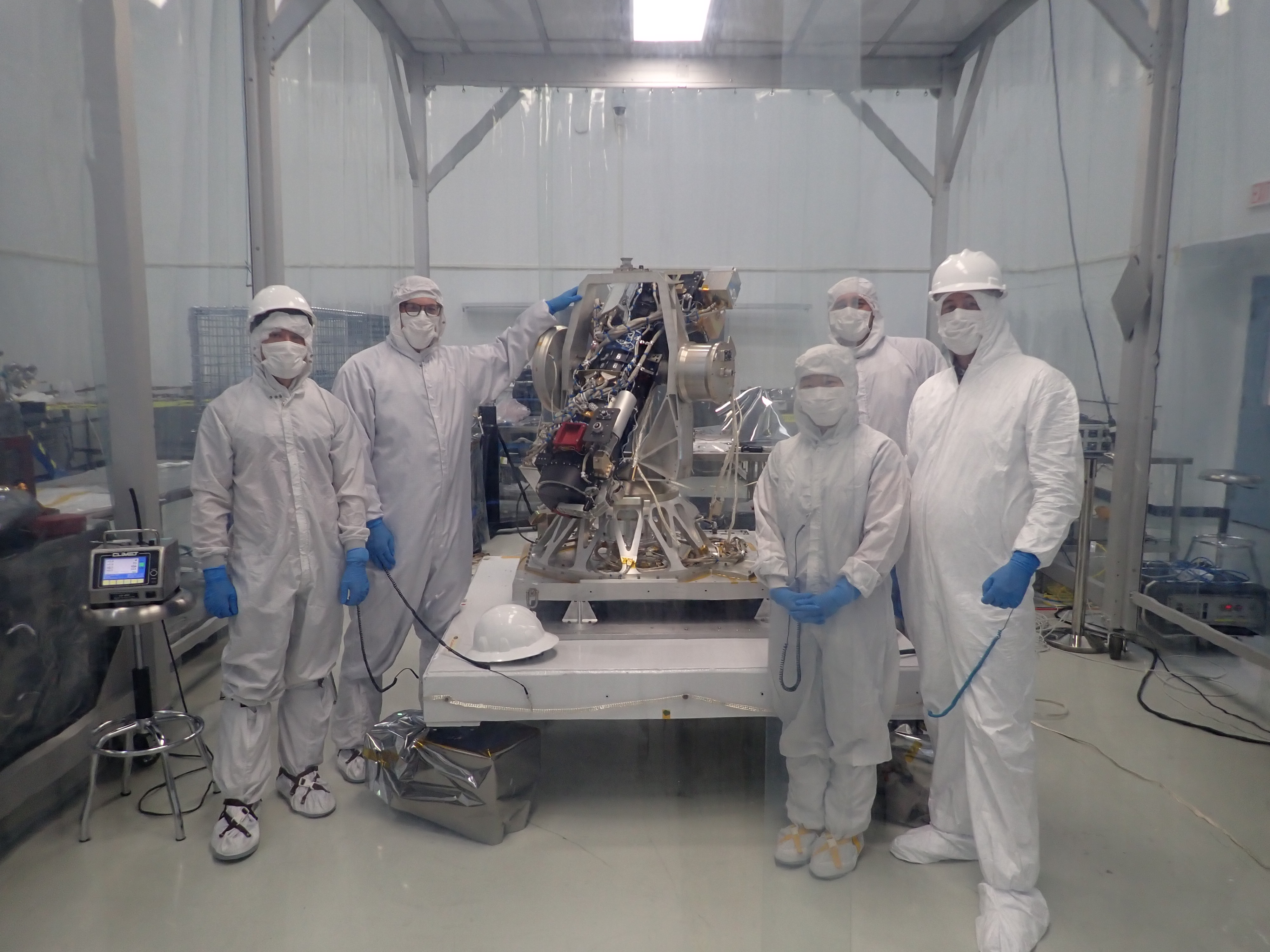
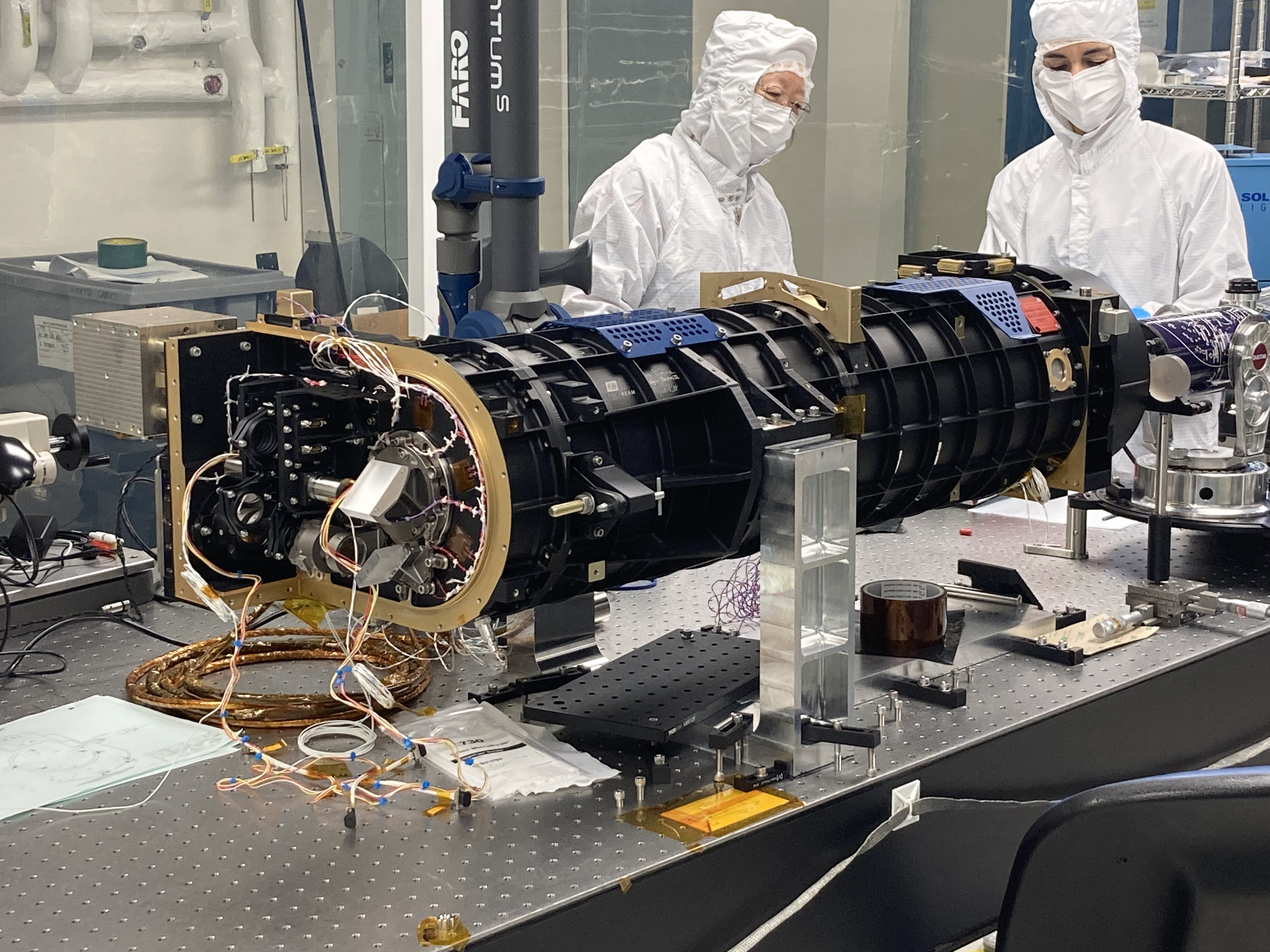
Launching in November 2024 aboard SpaceX’s 31st commercial resupply services mission, CODEX will be robotically installed on the exterior of the space station. As a solar coronagraph, CODEX will block out the bright light from the Sun’s surface to better see details in the Sun’s outer atmosphere, or corona.
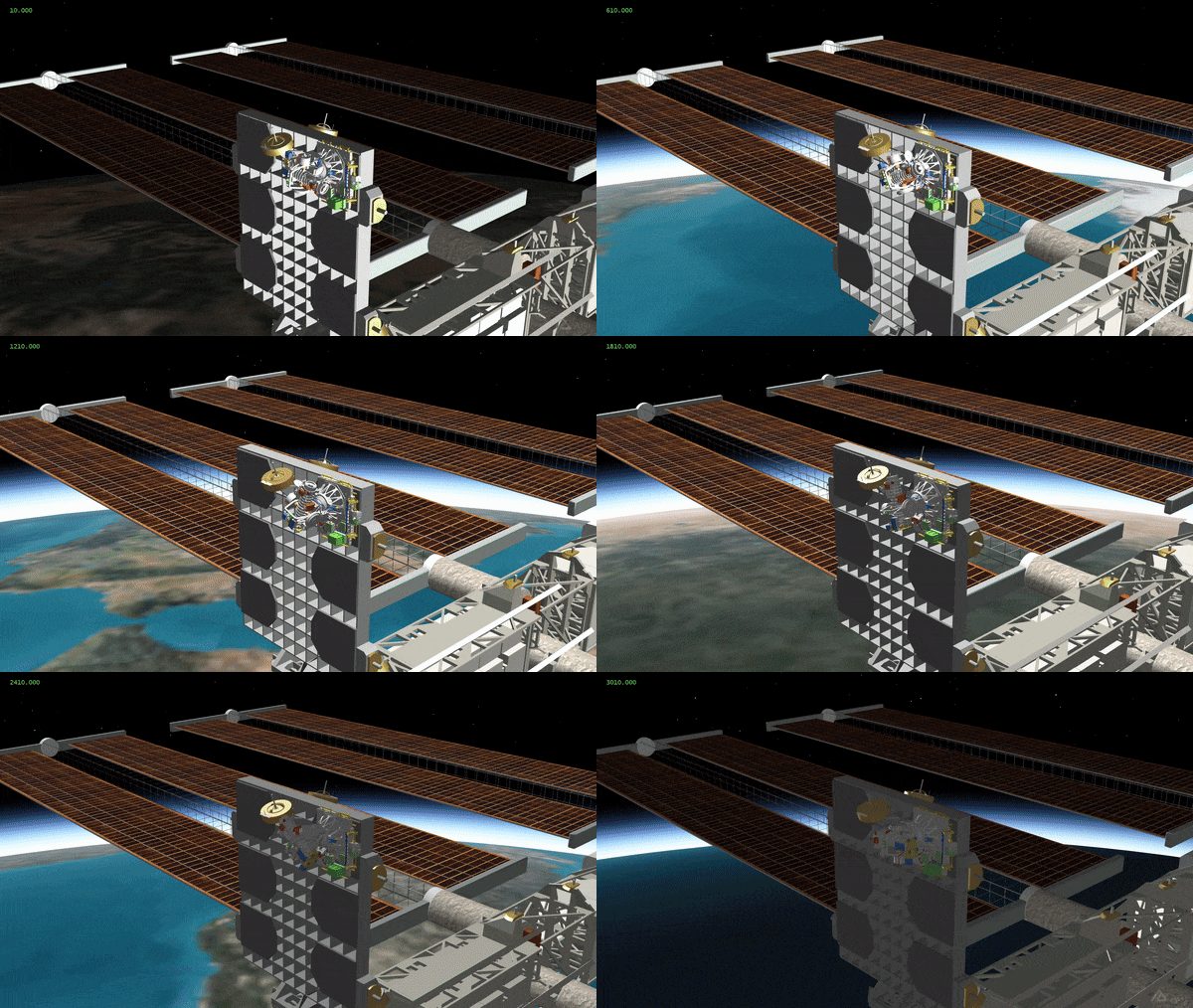
“The CODEX instrument is a new generation solar coronagraph,” said Jeffrey Newmark, principal investigator for the instrument and scientist at NASA’s Goddard Space Flight Center in Greenbelt, Maryland. “It has a dual use — it’s both a technology demonstration and will conduct science.”
This coronagraph is different from prior coronagraphs that NASA has used because it has special filters that can provide details of the temperature and speed of the solar wind. Typically, a solar coronagraph captures images of the density of the plasma flowing away from the Sun. By combining the temperature and speed of the solar wind with the traditional density measurement, CODEX can give scientists a fuller picture of the wind itself.
“This isn’t just a snapshot,” said Nicholeen Viall, co-investigator of CODEX and heliophysicist at NASA Goddard. “You’re going to get to see the evolution of structures in the solar wind, from when they form from the Sun’s corona until they flow outwards and become the solar wind.”
The CODEX instrument will give scientists more information to understand what heats the solar wind to around 1.8 million degrees Fahrenheit — around 175 times hotter than the Sun’s surface — and sends it streaming out from the Sun at almost a million miles per hour.
This launch is just the latest step in a long history for the instrument. In the early 2000s and in August 2017, NASA scientists ran ground-based experiments similar to CODEX during total solar eclipses. A coronagraph mimics what happens during a total solar eclipse, so this naturally occurring phenomena provided a good opportunity to test instruments that measure the temperature and speed of the solar wind.
In 2019, NASA scientists launched the Balloon-borne Investigation of Temperature and Speed of Electrons in the corona (BITSE) experiment. A balloon the size of a football field carried the CODEX prototype 22 miles above Earth’s surface, where the atmosphere is much thinner and the sky is dimmer than it is from the ground, enabling better observations. However, this region of Earth’s atmosphere is still brighter than outer space itself.
“We saw enough from BITSE to see that the technique worked, but not enough to achieve the long-term science objectives,” said Newmark.
Now, by installing CODEX on the space station, scientists will be able to view the Sun’s corona without fighting the brightness of Earth’s atmosphere. This is also a beneficial time for the instrument to launch because the Sun has reached its solar maximum phase, a period of high activity during its 11-year cycle.
“The types of solar wind that we get during solar maximum are different than some of the types of wind we get during solar minimum,” said Viall. “There are different coronal structures during this time that lead to different types of solar wind.”
This coronagraph will be looking at two types of solar wind. In one, the solar wind travels directly outward from our star, pulling the magnetic field from the Sun into the heliosphere, the bubble that surrounds our solar system. The other type of solar wind forms from magnetic field lines that are initially closed, like a loop, but then open up.
These closed field lines contain hot, dense plasma. When the loops open, this hot plasma gets propelled into the solar wind. While these “blobs” of plasma are present throughout all of the solar cycle, scientists expect their location to change because of the magnetic complexity of the corona during solar maximum. The CODEX instrument is designed to see how hot these blobs are for the first time.
The coronagraph will also build upon research from ongoing space missions, such as the joint ESA (European Space Agency) and NASA mission Solar Orbiter, which also carries a coronagraph, and NASA’s Parker Solar Probe. For example, CODEX will look at the solar wind much closer to the solar surface, while Parker Solar Probe samples it a little farther out. Launching in 2025, NASA’s Polarimeter to Unify the Corona and Heliosphere (PUNCH) mission will make 3D observations of the Sun’s corona to learn how the mass and energy there become solar wind.
By comparing these findings, scientists can better understand how the solar wind is formed and how the solar wind changes as it travels farther from the Sun. This research advances our understanding of space weather, the conditions in space that may interact with Earth and spacecraft.
“Just like understanding hurricanes, you want to understand the atmosphere the storm is flowing through,” said Newmark. “CODEX’s observations will contribute to our understanding of the region that space weather travels through, helping improve predictions.”
The CODEX instrument is a collaboration between NASA’s Goddard Space Flight Center and the Korea Astronomy and Space Science Institute with additional contribution from Italy’s National Institute for Astrophysics.
By Abbey Interrante
NASA’s Goddard Space Flight Center, Greenbelt, Md.
Share
Details
Related Terms
Buckle Up: NASA-Funded Study Explores Turbulence in Molecular Clouds
New NASA Instrument for Studying Snowpack Completes Airborne Testing

New Project Invites You To Do Martian Cloud Science with NASA
Discover More Topics From NASA
]]>
2 min read
Preparations for Next Moonwalk Simulations Underway (and Underwater)
Lee esta historia en Español aquí.
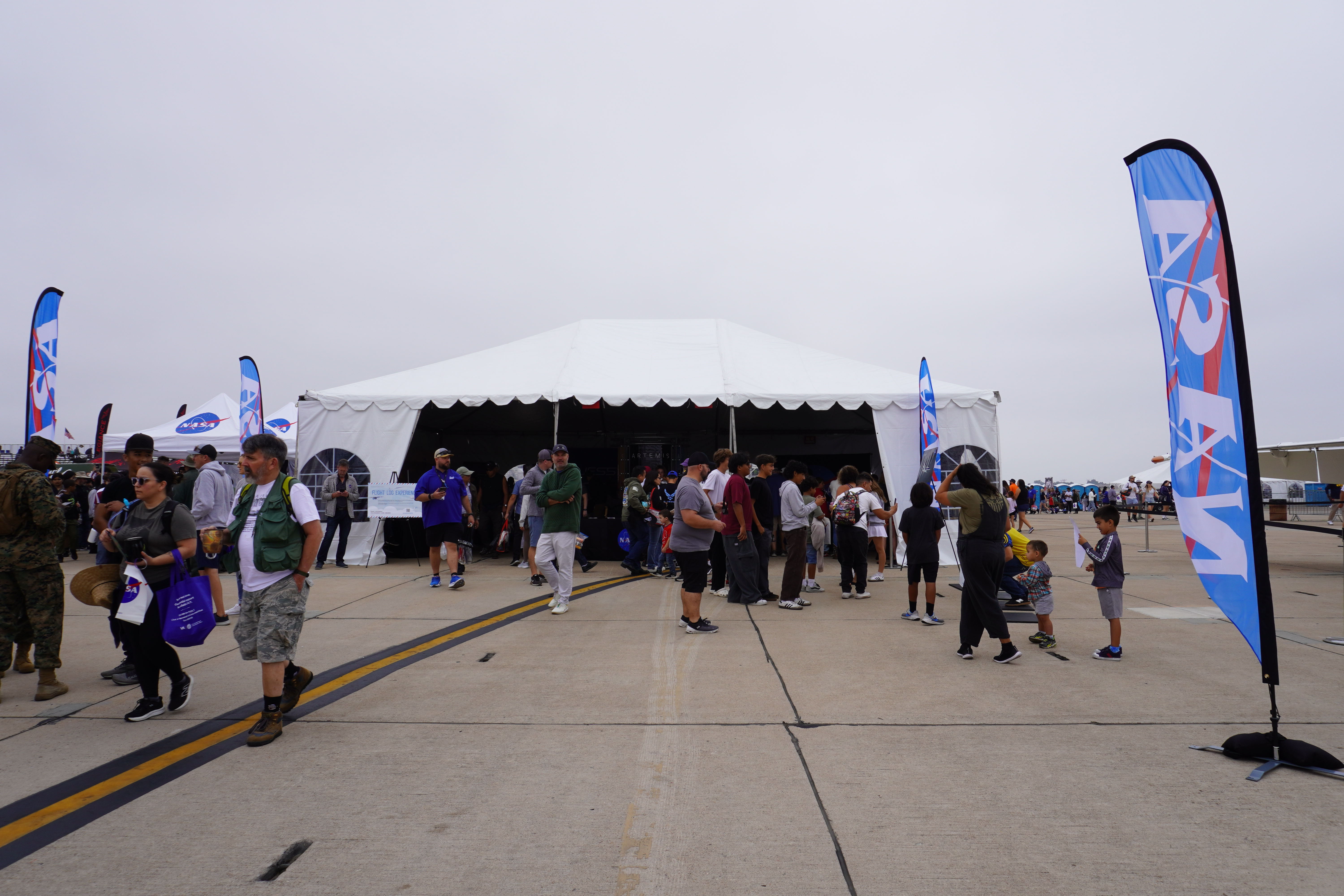
In September, the three NASA centers in California came together to share aerospace innovations with thousands of guests at the Miramar Air Show in San Diego, California. Agency experts talked about the exciting work NASA does while exploring the secrets of the universe for the benefit of all.
Under a large tent near the airfield, guests perused exhibits from different centers and projects, like a model of the Innovator rover or the Alta-X drone, from Sept. 27 through 29. Agency employees from NASA’s Armstrong Flight Research Center in Edwards, California; Ames Research Center in Moffett Field, California; and Jet Propulsion Laboratory (JPL) in Southern California guided guests through tours and presentations and shared messages about NASA missions.
“The airshow is about the people just as much as it is about the aircraft and technology,” said Derek Abramson, chief engineer for the Subscale Flight Research Laboratory at NASA Armstrong. “I met many new people, worked with an amazing team, and developed a comradery with other NASA centers, talking about what we do here as a cohesive organization.”

On Sept. 29, pilots from Armstrong joined the event to take photos with guests and answer questions from curious or enthusiastic patrons. One air show guest had a special moment with NASA pilot Jim Less.
“One of my favorite moments was connecting with a young man in his late teens who stopped by the exhibit tent numerous times, all in hopes of being able to meet Jim Less, our X-59 pilot,” said Kevin Rohrer, chief of Communications at NASA Armstrong. “It culminated with a great conversation with the two and Jim [Less] autographing a model of the X-59 aircraft the young man had been carrying around.”
“I look forward to this tradition continuing, if not at this venue, at some other event in California,” Rohrer continued. “We have a lot of minds hungry and passionate to learn more about all of NASA missions.”
The Miramar Air Show is an annual event that happens at the Miramar Air Base in San Diego, California.

Explore More

3 min read
Preparations for Next Moonwalk Simulations Underway (and Underwater)
Read this story in English here.
En septiembre, los tres centros de la NASA en California se reunieron para compartir innovaciones aeroespaciales con miles de asistentes en el Espectáculo Aéreo de Miramar, en San Diego, California. Expertos de la agencia hablaron del apasionante trabajo que realiza la NASA mientras explora los secretos del universo en beneficio de todos.
Bajo una gran carpa cerca del aeródromo, los invitados exploraron exposiciones de diferentes centros y proyectos, como una maqueta del rover Innovator o el avión no tripulado Alta-X, desde el 27 al 29 de septiembre. Empleados de la agencia provenientes del Centro de Investigación de Vuelo Armstrong de la NASA en Edwards, California, del Centro de Investigación Ames en Moffett Field, California y del Laboratorio de Propulsión a Chorro (JPL por sus siglas en inglés) en el sur de California guiaron a los visitantes a través de visitas y presentaciones y compartieron mensajes sobre las misiones de la NASA.
“El espectáculo aéreo es tanto sobre la gente como sobre las aeronaves y la tecnología”, dijo Derek Abramson, ingeniero jefe del Laboratorio de Investigación de Vuelo a Subescala de NASA Armstrong. “Conocí a mucha gente nueva, trabajé con un equipo increíble y formé un gran vínculo con otros centros de la NASA, hablando de lo que hacemos aquí como una organización cohesiva”.
El 29 de septiembre, los pilotos de Armstrong se unieron al evento para tomarse fotos con los invitados y responder a las preguntas de los curiosos o entusiastas asistentes. Un visitante del espectáculo aéreo tuvo un momento especial con el piloto de la NASA Jim Less.
“Uno de mis momentos favoritos fue conectar con un joven en sus útimos años de adolescencia que se detuvo numerosas veces en la carpa de exhibición, con la esperanza de poder conocer a Jim Less, nuestro piloto del X-59”, dijo Kevin Rohrer, jefe de comunicaciones de NASA Armstrong. “Culminó con una gran conversación entre los dos y con Jim [Less] autografiando un modelo del avión X-59 que el joven traía consigo”.
“Espero que esta tradición continúe, si no en este mismo lugar, en algún otro evento en California”, continuó Rohrer. “Tenemos muchas mentes hambrientas y apasionadas por aprender más sobre todas las misiones de la NASA”.
El Espectáculo Aéreo de Miramar es un evento anual que tiene lugar en la Base Aérea de Miramar, en San Diego, California.
Articulo traducido por: Elena Aguirre
Post a Comment