4 min read
Preparations for Next Moonwalk Simulations Underway (and Underwater)
Lee esta historia en español aquí.
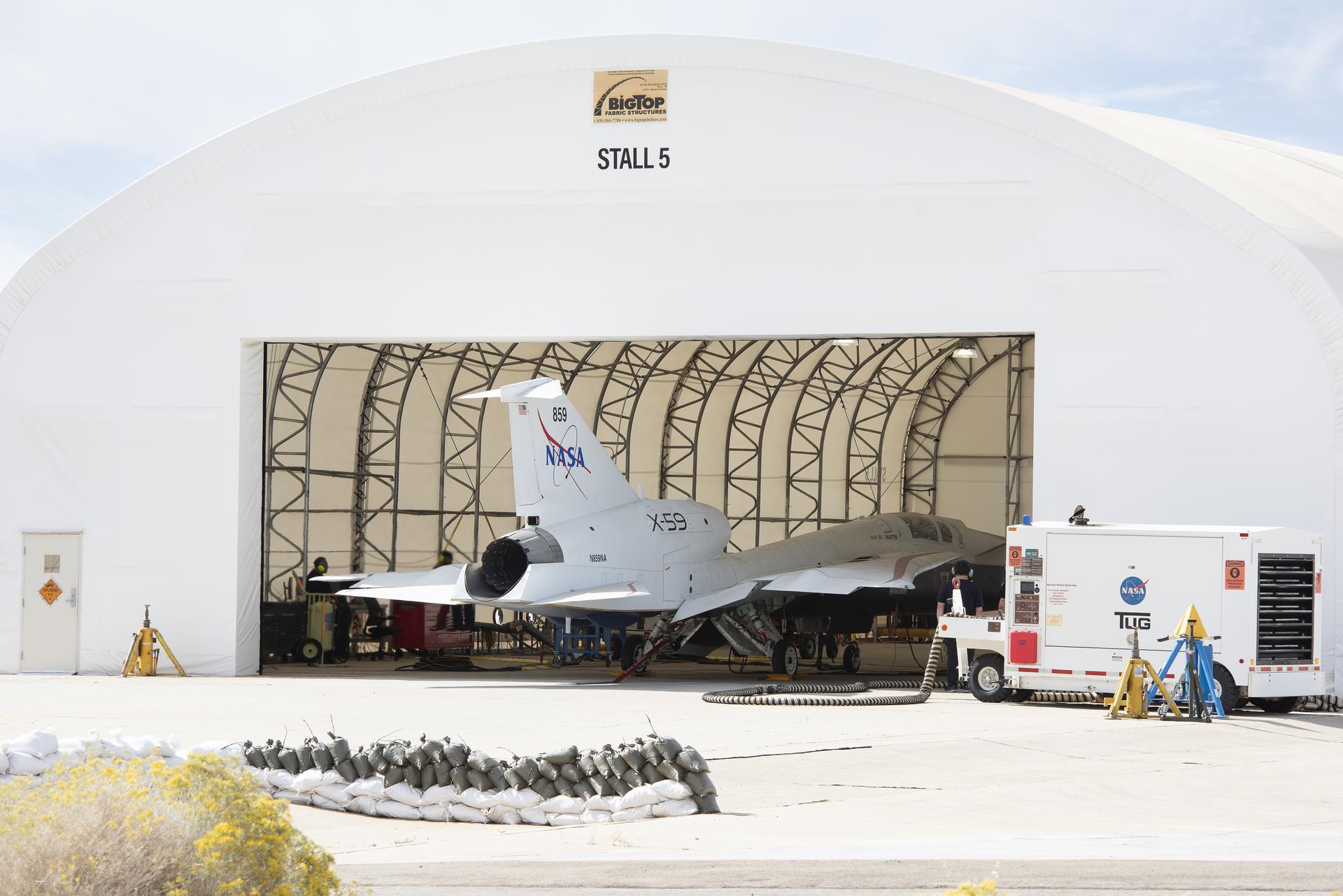
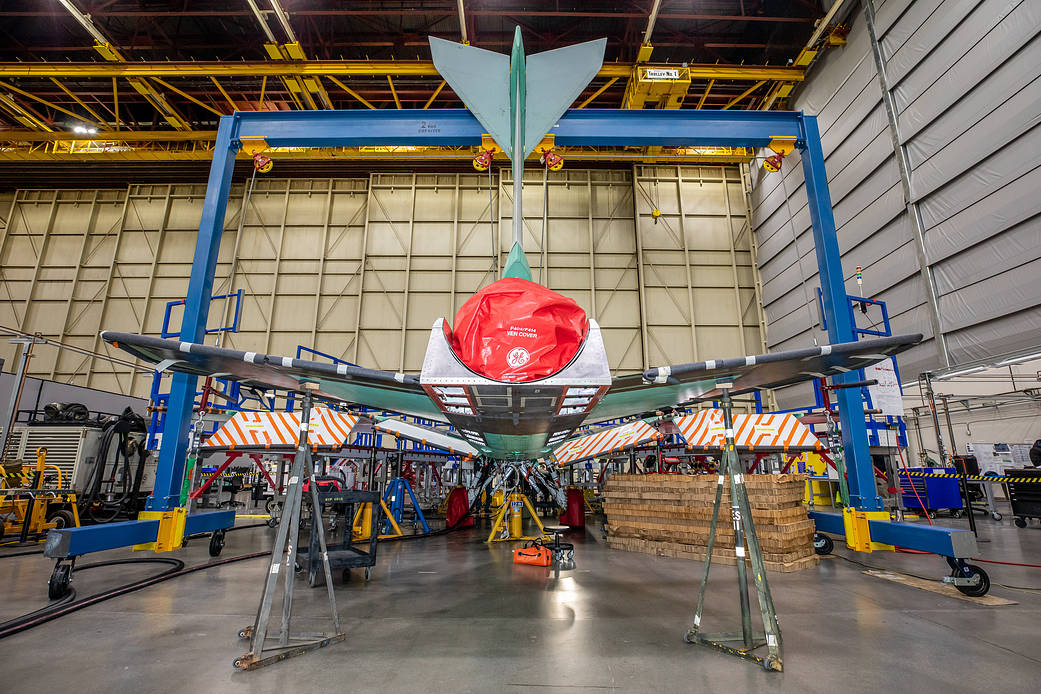
NASA’s Quesst mission marked a major milestone with the start of tests on the engine that will power the quiet supersonic X-59 experimental aircraft.
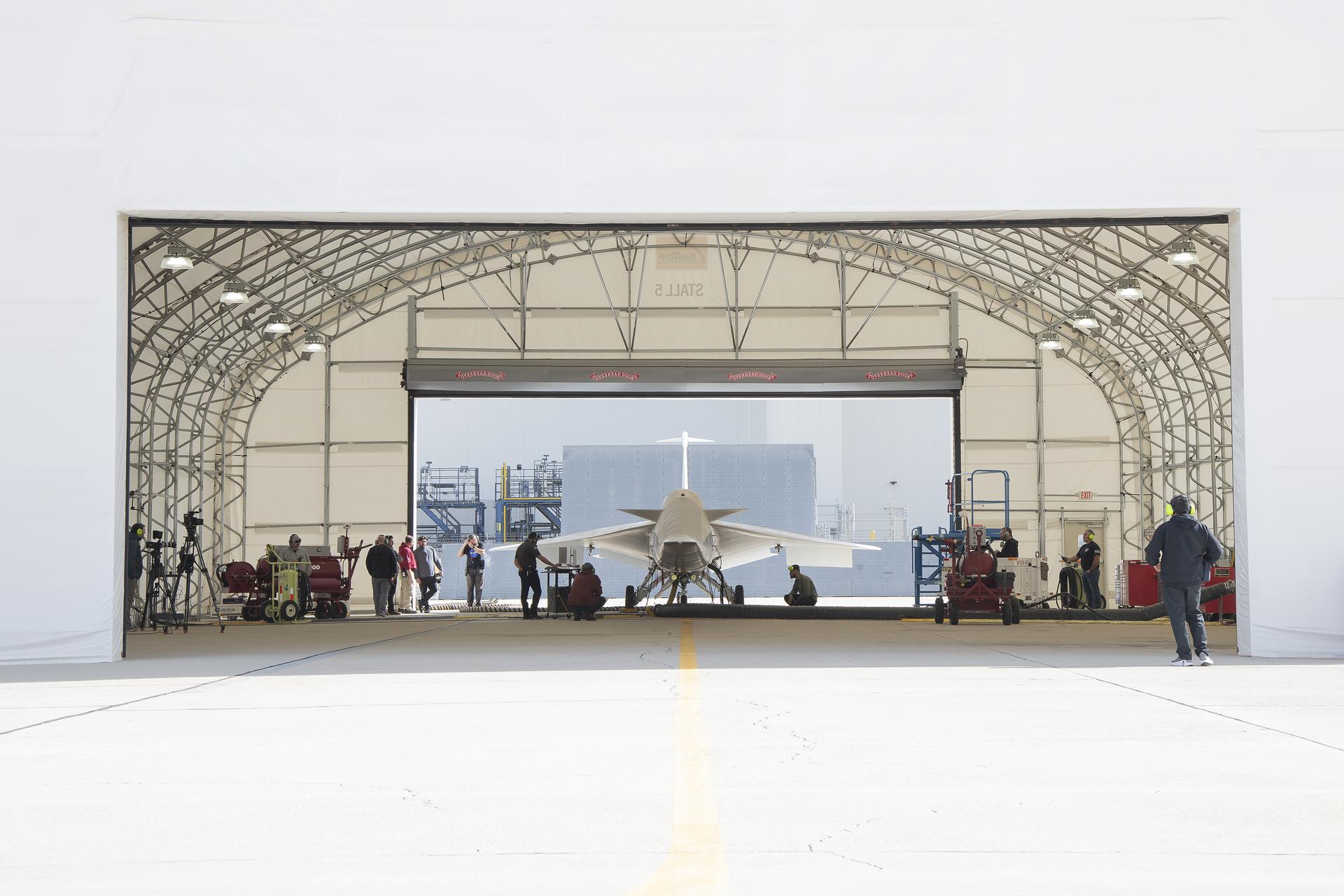
These engine-run tests, which began Oct. 30, allow the X-59 team to verify the aircraft’s systems are working together while powered by its own engine. In previous tests, the X-59 used external sources for power. The engine-run tests set the stage for the next phase of the experimental aircraft’s progress toward flight.
The X-59 team is conducting the engine-run tests in phases. In this first phase, the engine rotated at a relatively low speed without ignition to check for leaks and ensure all systems are communicating properly. The team then fueled the aircraft and began testing the engine at low power, with the goal ofverifying that it and other aircraft systems operate without anomalies or leaks while on engine power.
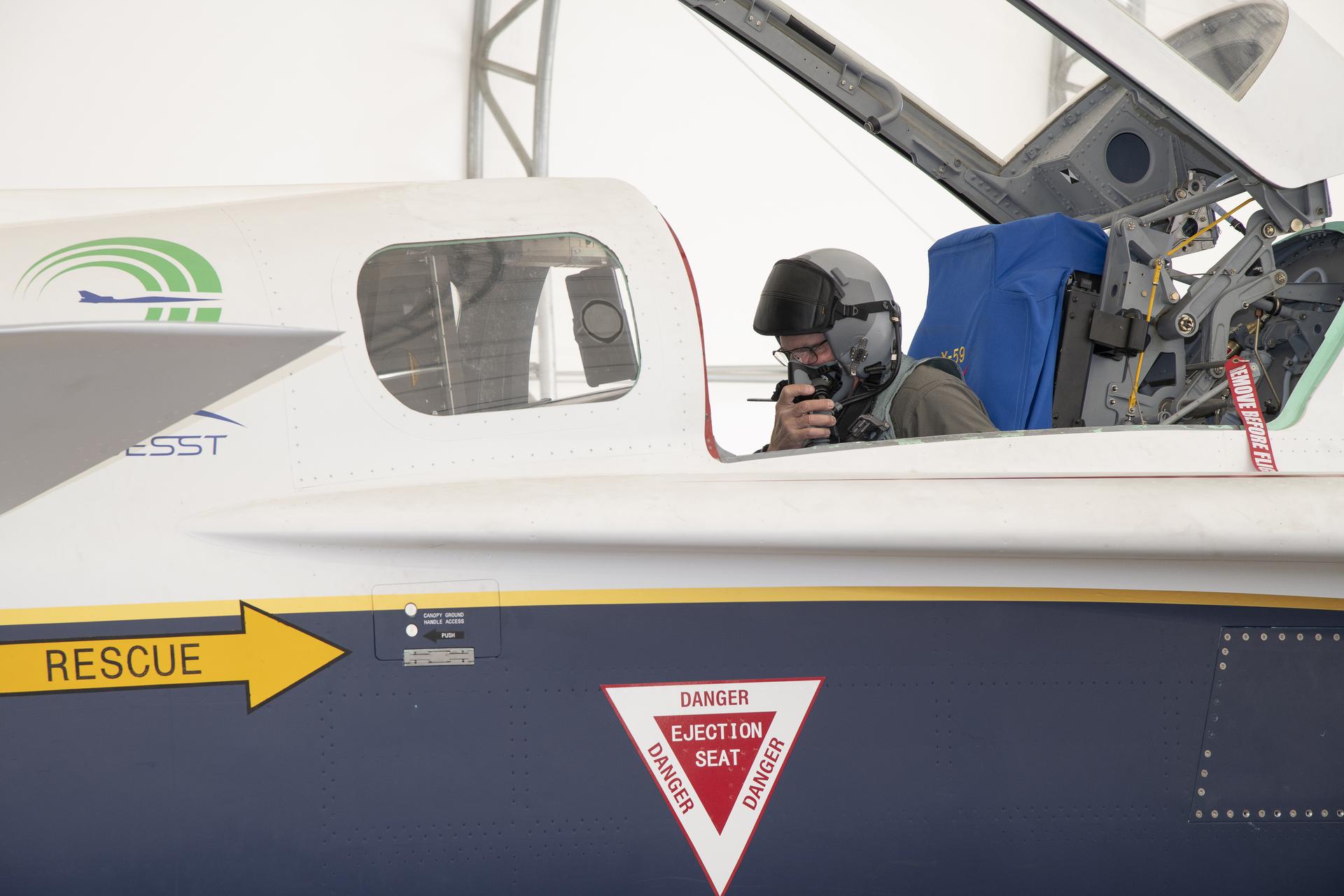
“The first phase of the engine tests was really a warmup to make sure that everything looked good prior to running the engine,” said Jay Brandon, NASA’s X-59 chief engineer. “Then we moved to the actual first engine start. That took the engine out of the preservation mode that it had been in since installation on the aircraft. It was the first check to see that it was operating properly and that all the systems it impacted – hydraulics, electrical system, environmental control systems, etc. – seemed to be working.”
The X-59 will generate a quieter thump rather than a loud boom while flying faster than the speed of sound. The aircraft is the centerpiece of NASA’s Quesst mission, which will gather data on how people perceive these thumps, providing regulators with information that could help lift current bans on commercial supersonic flight over land.
The engine, a modified F414-GE-100, packs 22,000 pounds of thrust, which will enable the X-59 to achieve the desired cruising speed of Mach 1.4 (925 miles per hour) at an altitude of approximately 55,000 feet. It sits in a nontraditional spot – atop the aircraft — to aid in making the X-59 quieter.
Engine runs are part of a series of integrated ground tests needed to ensure safe flight and successful achievement of mission goals. Because of the challenges involved with reaching this critical phase of testing, the X-59’s first flight is now expected in early 2025. The team will continue progressing through critical ground tests and address any technical issues discovered with this one-of-a-kind, experimental aircraft. The X-59 team will have a more specific first flight date as these tests are successfully completed.
The testing is taking place at Lockheed Martin’s Skunk Works facility in Palmdale, California. During later phases, the team will test the aircraft at high power with rapid throttle changes, followed by simulating the conditions of an actual flight.
“The success of these runs will be the start of the culmination of the last eight years of my career,” said Paul Dees, NASA’s deputy propulsion lead for the X-59. “This isn’t the end of the excitement but a small steppingstone to the beginning. It’s like the first note of a symphony, where years of teamwork behind the scenes are now being put to the test to prove our efforts have been effective, and the notes will continue to play a harmonious song to flight.”
After the engine runs, the X-59 team will move to aluminum bird testing, where data will be fed to the aircraft under both normal and failure conditions. The team will then proceed with a series of taxi tests, where the aircraft will be put in motion on the ground. These tests will be followed by final preparations for first flight.
Explore More



4 min read
Preparations for Next Moonwalk Simulations Underway (and Underwater)
Lee esta historia en español aquí.
NASA’s Quesst mission marked a major milestone with the start of tests on the engine that will power the quiet supersonic X-59 experimental aircraft.
These engine-run tests, which began Oct. 30, allow the X-59 team to verify the aircraft’s systems are working together while powered by its own engine. In previous tests, the X-59 used external sources for power. The engine-run tests set the stage for the next phase of the experimental aircraft’s progress toward flight.
The X-59 team is conducting the engine-run tests in phases. In this first phase, the engine rotated at a relatively low speed without ignition to check for leaks and ensure all systems are communicating properly. The team then fueled the aircraft and began testing the engine at low power, with the goal of verifying that it and other aircraft systems operate without anomalies or leaks while on engine power.
“The first phase of the engine tests was really a warmup to make sure that everything looked good prior to running the engine,” said Jay Brandon, NASA’s X-59 chief engineer. “Then we moved to the actual first engine start. That took the engine out of the preservation mode that it had been in since installation on the aircraft. It was the first check to see that it was operating properly and that all the systems it impacted – hydraulics, electrical system, environmental control systems, etc. – seemed to be working.”
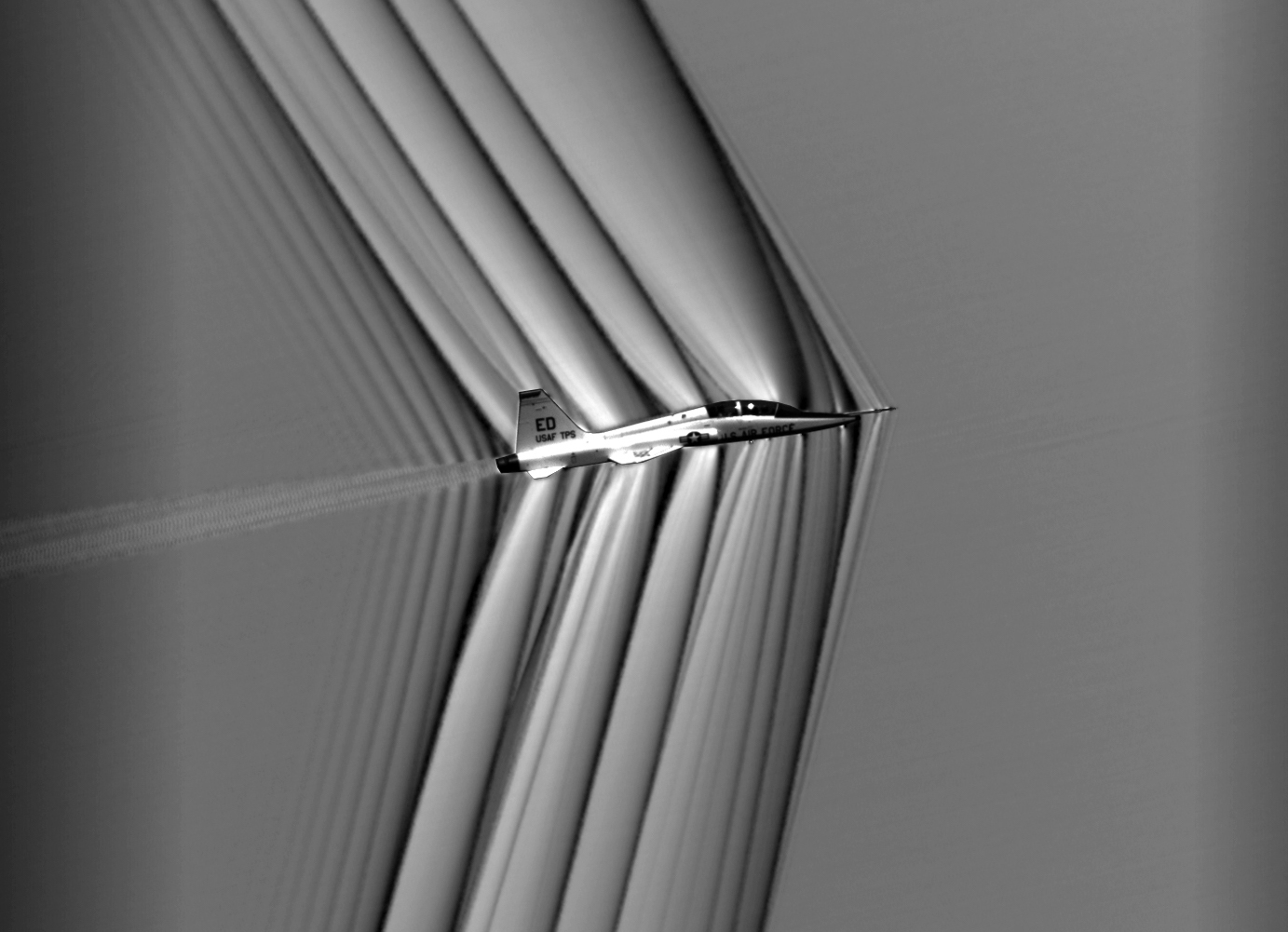
The X-59 will generate a quieter thump rather than a loud boom while flying faster than the speed of sound. The aircraft is the centerpiece of NASA’s Quesst mission, which will gather data on how people perceive these thumps, providing regulators with information that could help lift current bans on commercial supersonic flight over land.
The engine, a modified F414-GE-100, packs 22,000 pounds of thrust, which will enable the X-59 to achieve the desired cruising speed of Mach 1.4 (925 miles per hour) at an altitude of approximately 55,000 feet. It sits in a nontraditional spot – atop the aircraft — to aid in making the X-59 quieter.
Engine runs are part of a series of integrated ground tests needed to ensure safe flight and successful achievement of mission goals. Because of the challenges involved with reaching this critical phase of testing, the X-59’s first flight is now expected in early 2025. The team will continue progressing through critical ground tests and address any technical issues discovered with this one-of-a-kind, experimental aircraft. The X-59 team will have a more specific first flight date as these tests are successfully completed.
The testing is taking place at Lockheed Martin’s Skunk Works facility in Palmdale, California. During later phases, the team will test the aircraft at high power with rapid throttle changes, followed by simulating the conditions of an actual flight.
“The success of these runs will be the start of the culmination of the last eight years of my career,” said Paul Dees, NASA’s deputy propulsion lead for the X-59. “This isn’t the end of the excitement but a small steppingstone to the beginning. It’s like the first note of a symphony, where years of teamwork behind the scenes are now being put to the test to prove our efforts have been effective, and the notes will continue to play a harmonious song to flight.”
After the engine runs, the X-59 team will move to aluminum bird testing, where data will be fed to the aircraft under both normal and failure conditions. The team will then proceed with a series of taxi tests, where the aircraft will be put in motion on the ground. These tests will be followed by final preparations for first flight.
Explore More
2 min read
Preparations for Next Moonwalk Simulations Underway (and Underwater)
Lee esta historia en Español aquí.
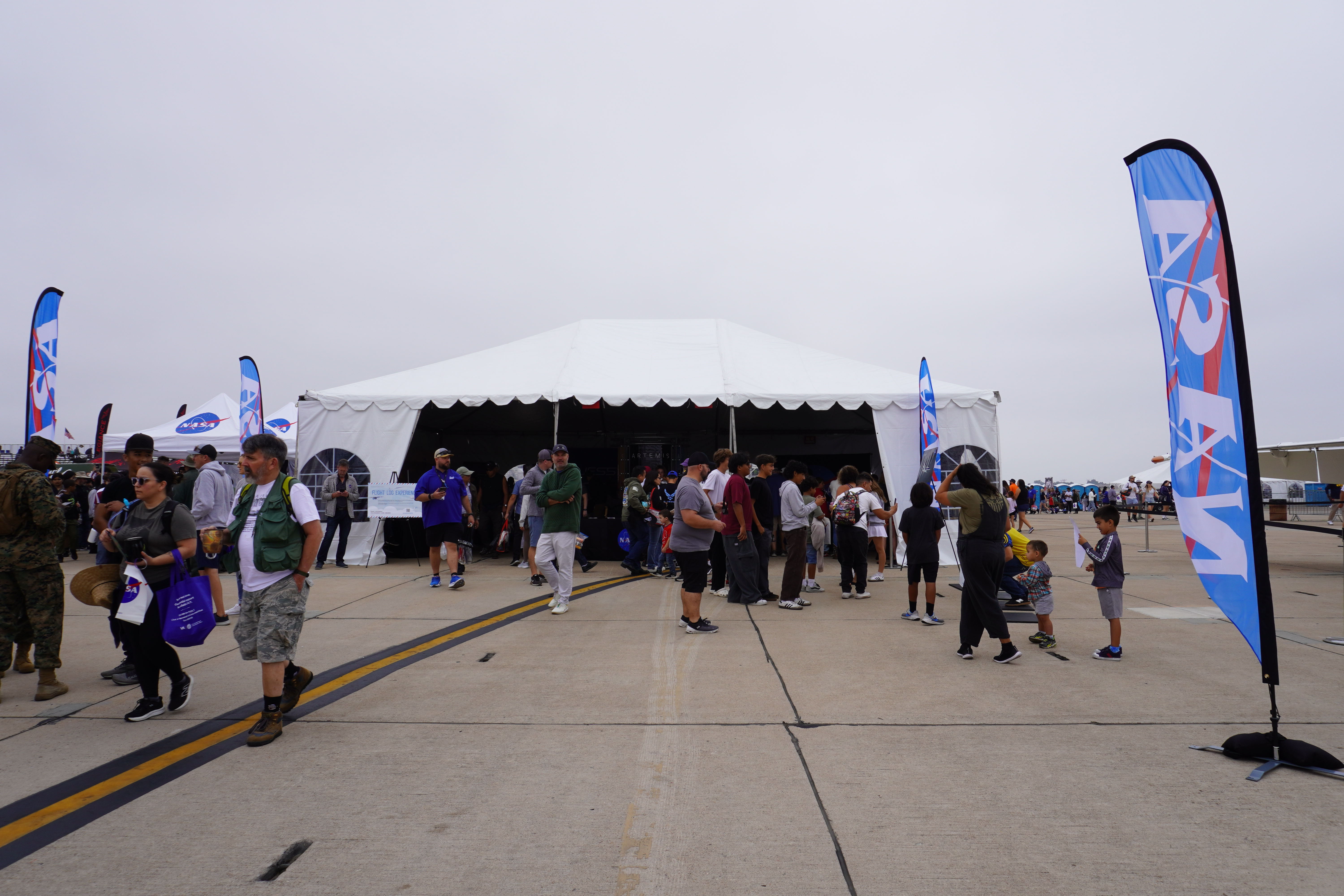
In September, the three NASA centers in California came together to share aerospace innovations with thousands of guests at the Miramar Air Show in San Diego, California. Agency experts talked about the exciting work NASA does while exploring the secrets of the universe for the benefit of all.
Under a large tent near the airfield, guests perused exhibits from different centers and projects, like a model of the Innovator rover or the Alta-X drone, from Sept. 27 through 29. Agency employees from NASA’s Armstrong Flight Research Center in Edwards, California; Ames Research Center in Moffett Field, California; and Jet Propulsion Laboratory (JPL) in Southern California guided guests through tours and presentations and shared messages about NASA missions.
“The airshow is about the people just as much as it is about the aircraft and technology,” said Derek Abramson, chief engineer for the Subscale Flight Research Laboratory at NASA Armstrong. “I met many new people, worked with an amazing team, and developed a comradery with other NASA centers, talking about what we do here as a cohesive organization.”

On Sept. 29, pilots from Armstrong joined the event to take photos with guests and answer questions from curious or enthusiastic patrons. One air show guest had a special moment with NASA pilot Jim Less.
“One of my favorite moments was connecting with a young man in his late teens who stopped by the exhibit tent numerous times, all in hopes of being able to meet Jim Less, our X-59 pilot,” said Kevin Rohrer, chief of Communications at NASA Armstrong. “It culminated with a great conversation with the two and Jim [Less] autographing a model of the X-59 aircraft the young man had been carrying around.”
“I look forward to this tradition continuing, if not at this venue, at some other event in California,” Rohrer continued. “We have a lot of minds hungry and passionate to learn more about all of NASA missions.”
The Miramar Air Show is an annual event that happens at the Miramar Air Base in San Diego, California.

Explore More

3 min read
Preparations for Next Moonwalk Simulations Underway (and Underwater)

NASA, in partnership with AeroVironment and Aerostar, recently demonstrated a first-of-its-kind air traffic management concept that could pave the way for aircraft to safely operate at higher altitudes.
This work seeks to open the door for increased internet coverage, improved disaster response, expanded scientific missions, and even supersonic flight. The concept is referred to as an Upper-Class E traffic management, or ETM.
There is currently no traffic management system or set of regulations in place for aircraft operating 60,000 feet and above. There hasn’t been a need for a robust traffic management system in this airspace until recently. That’s because commercial aircraft couldn’t function at such high altitudes due to engine constraints.
However, recent advancements in aircraft design, power, and propulsion systems are making it possible for high altitude long endurance vehicles — such as balloons, airships, and solar aircraft — to coast miles above our heads, providing radio relay for disaster response, collecting atmospheric data, and more.
But before these aircraft can regularly take to the skies, operators must find a way to manage their operations without overburdening air traffic infrastructure and personnel.

“We are working to safely expand high-altitude missions far beyond what is currently possible,” said Kenneth Freeman, a subproject manager for this effort at NASA’s Ames Research Center in California’s Silicon Valley. “With routine, remotely piloted high-altitude operations, we have the opportunity to improve our understanding of the planet through more detailed tracking of climate change, provide internet coverage in underserved areas, advance supersonic flight research, and more.”
Current high-altitude traffic management is processed manually and on a case-by-case basis. Operators must contact air traffic control to gain access to a portion of the Class E airspace. During these operations, no other aircraft can enter this high-altitude airspace. This method will not accommodate the growing demand for high-altitude missions, according to NASA researchers.
To address this challenge, NASA and its partners have developed an ETM traffic management system that allows aircraft to autonomously share location and flight plans, enabling aircraft to stay safely separated.
During the recent traffic management simulation in the Airspace Operations Laboratory at Ames, data from multiple air vehicles was displayed across dozens of traffic control monitors and shared with partner computers off site.
This included aircraft location, health, flight plans and more. Researchers studied interactions between a slow fixed-wing vehicle from AeroVironment and a high-altitude balloon from Aerostar operating at stratospheric heights.
Each aircraft, connected to the ETM traffic management system for high altitude, shared location and flight plans with surrounding aircraft.
This digital information sharing allowed Aerostar and AeroVironment high-altitude vehicle operators to coordinate and deconflict with each other in the same simulated airspace, without having to gain approval from air traffic control.
Because of this, aircraft operators were able to achieve their objectives, including wireless communication relay.
This simulation represents the first time a traffic management system was able to safely manage a diverse set of high-altitude aircraft operations in the same simulated airspace.
Next, NASA researchers will work with partners to further validate this system through a variety of real flight tests with high-altitude aircraft in a shared airspace.
The Upper-Class E traffic management concept was developed in coordination with the Federal Aviation Administration and high-altitude platform industry partners, under NASA’s National Airspace System Exploratory Concepts and Technologies subproject led out of Ames.
Explore More

Share
Related Terms
2 min read
Preparations for Next Moonwalk Simulations Underway (and Underwater)

NASA’s globetrotting C-130 Hercules team is carrying out a cargo transport mission to Bengaluru, India, in support of the NASA-ISRO Synthetic Aperture Radar (NISAR) mission.
The C-130 departed from NASA’s Wallops Flight Facility in Virginia, Tuesday, Oct. 15, to embark on the multi-leg, multi-day journey. The flight path will take the aircraft coast to coast within the United States, across the Pacific Ocean with planned island stops, and finally to its destination in India. The goal: safely deliver NISAR’s radar antenna reflector, one of NASA’s contributions to the mission, for integration on the spacecraft. NISAR is a joint mission between NASA and ISRO (Indian Space Research Organisation).
The cargo transport mission will encompass approximately 24,500 nautical miles and nearly 80 hours of flight time for the C-130 and crew. The flight plan includes strategic stops and rest days to service the aircraft and reduce crew fatigue from long-haul segments of the flight and multiple time zone changes.


The first stop for the C-130 was March Air Reserve Base located in Riverside County, California; the reflector had been at a specialized facility in California. Additional stops during the mission include Hickman Air Force Base, Hawaii; Andersen Air Force Base, Guam; Clark Air Base, Philippines; and Hindustan Aeronautics Limited Airport in Bengaluru, India.
This is the C-130 and crew’s third cargo transport to India in support of the NISAR mission, with prior flights in July 2023 and March 2024.
For more information, visit nasa.gov/wallops.
NASA’s Wallops Flight Facility, Wallops Island, Va.
Related Terms
4 min read
Preparations for Next Moonwalk Simulations Underway (and Underwater)
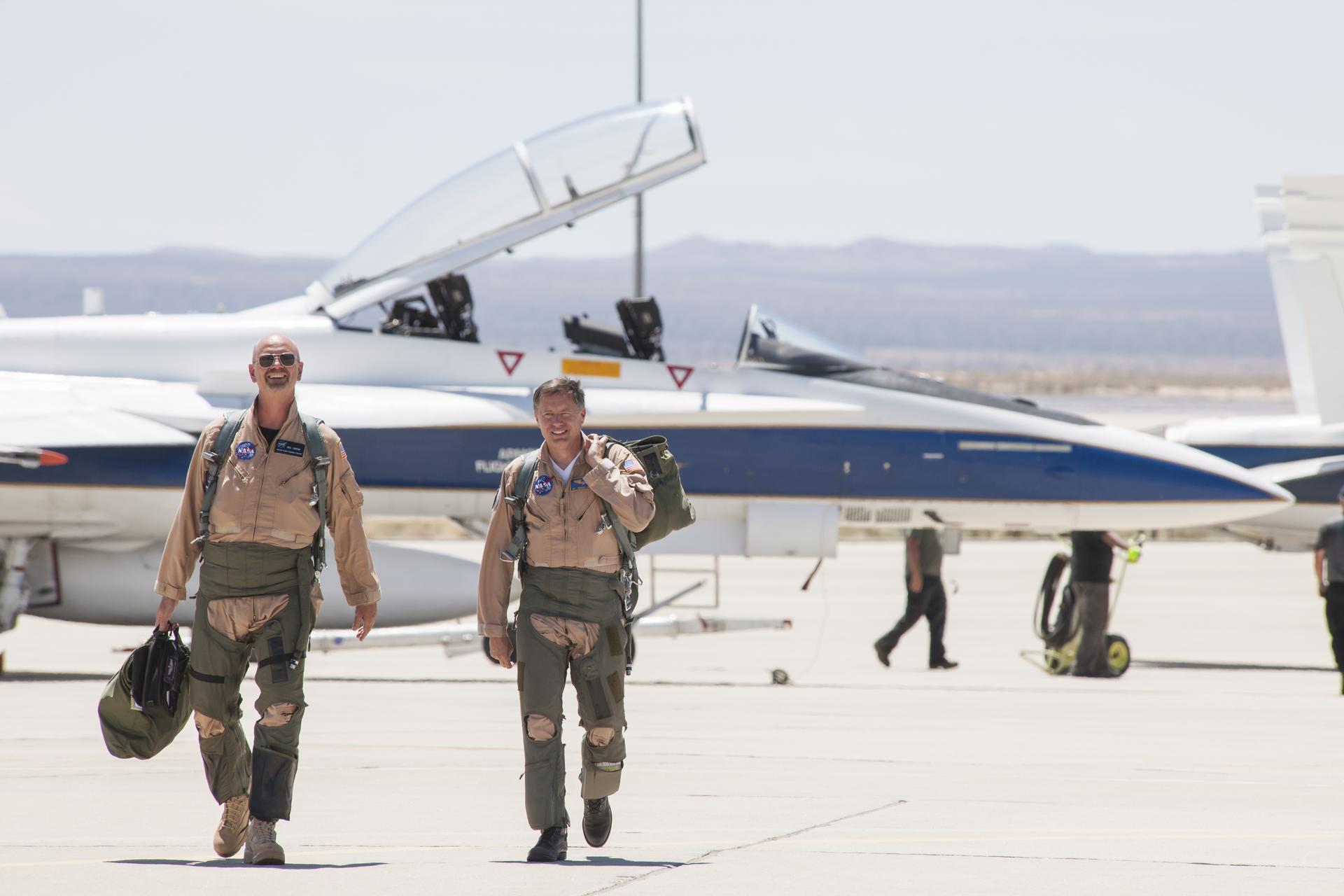
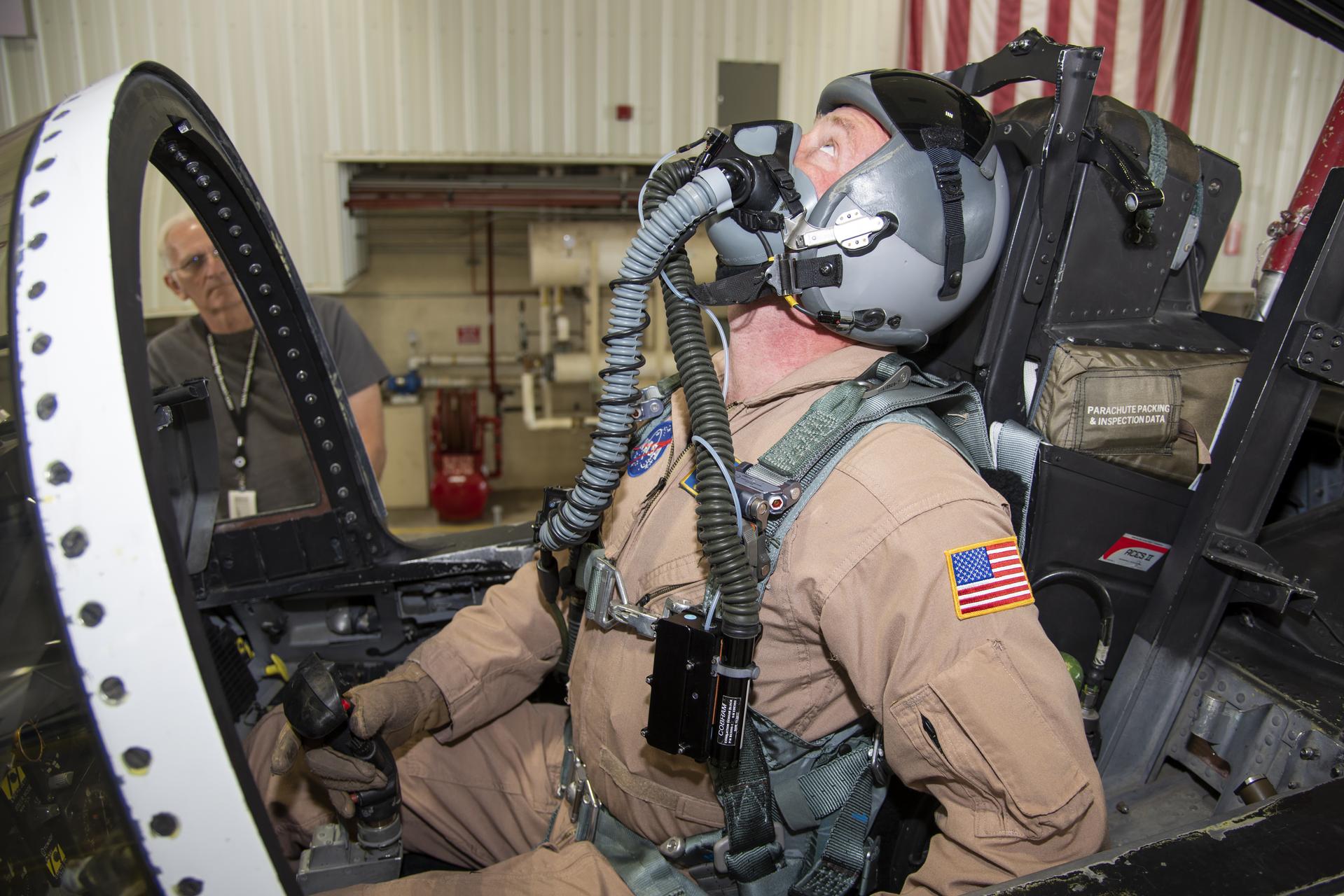
NASA research pilots are experts on how to achieve the right flight-test conditions for experiments and the tools needed for successful missions. It is that expertise that enables pilots to help researchers learn how an aircraft can fly their technology innovations and save time and money, while increasing the innovation’s readiness for use.
NASA pilots detailed how they help researchers find the right fit for experiments that might not advance without proving that they work in flight as they do in modeling, simulation, and ground tests at the Ideas to Flight Workshop on Sept. 18 at NASA’s Armstrong Flight Research Center in Edwards, California. “Start the conversation early and make sure you have the right people in the conversation,” said Tim Krall, a NASA Armstrong flight operations engineer. “What we are doing better is making sure pilots are included earlier in a flight project to capitalize on their experience and knowledge.”
Flight research is often used to prove or refine computer models, try out new systems, or increase a technology’s readiness. Sometimes, pilots guide a research project involving experimental aircraft. For example, pilots play a pivotal role on the X-59 aircraft, which will fly faster than the speed of sound while generating a quiet thump, rather than a loud boom. In the future, NASA’s pilots with fly the X-59 over select U.S. communities to gather data about how people on the ground perceive sonic thumps. NASA will provide this information to regulators to potentially change regulations that currently prohibit commercial supersonic flight over land.
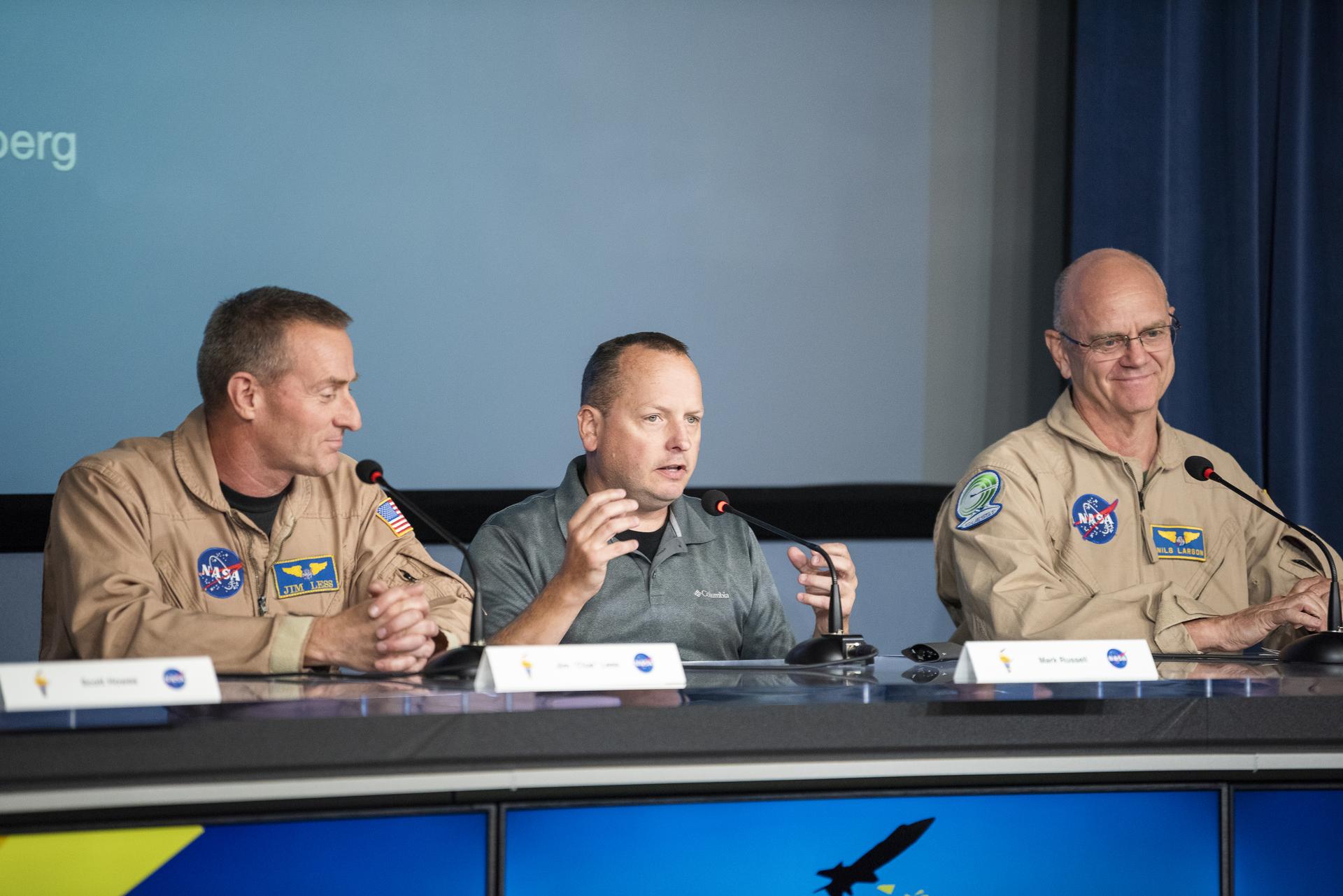
“We have been involved with X-59 aircraft requirements and design process from before it was an X-plane,” said Nils Larson, NASA chief X-59 aircraft pilot and senior advisor on flight research. “I was part of pre-formulation and formulation teams. I was also on the research studies and brought in NASA pilot Jim Less in for a second opinion. Because we had flown missions in the F-15 and F-18, we knew the kinds of systems, like autopilots, that we need to get the repeatability and accuracy for the data.”
NASA pilots’ experience can provide guidance to enable a wide range of flight experiments. A lot of times researchers have an idea of how to get the required flight data, but sometimes, Larson explains, while there are limits to what an aircraft can do – like flying the DC-8 upside down, there are maneuvers that given the right mitigations, training, and approval could simulate those conditions.
Less says he’s developed an approach to help focus researchers: “What do you guys really need? A lot of what we do is mundane, but anytime you go out and fly, there is some risk. We don’t want to take a risk if we are going after data that nobody needs, or it is not going to serve a purpose, or the quality won’t work.”
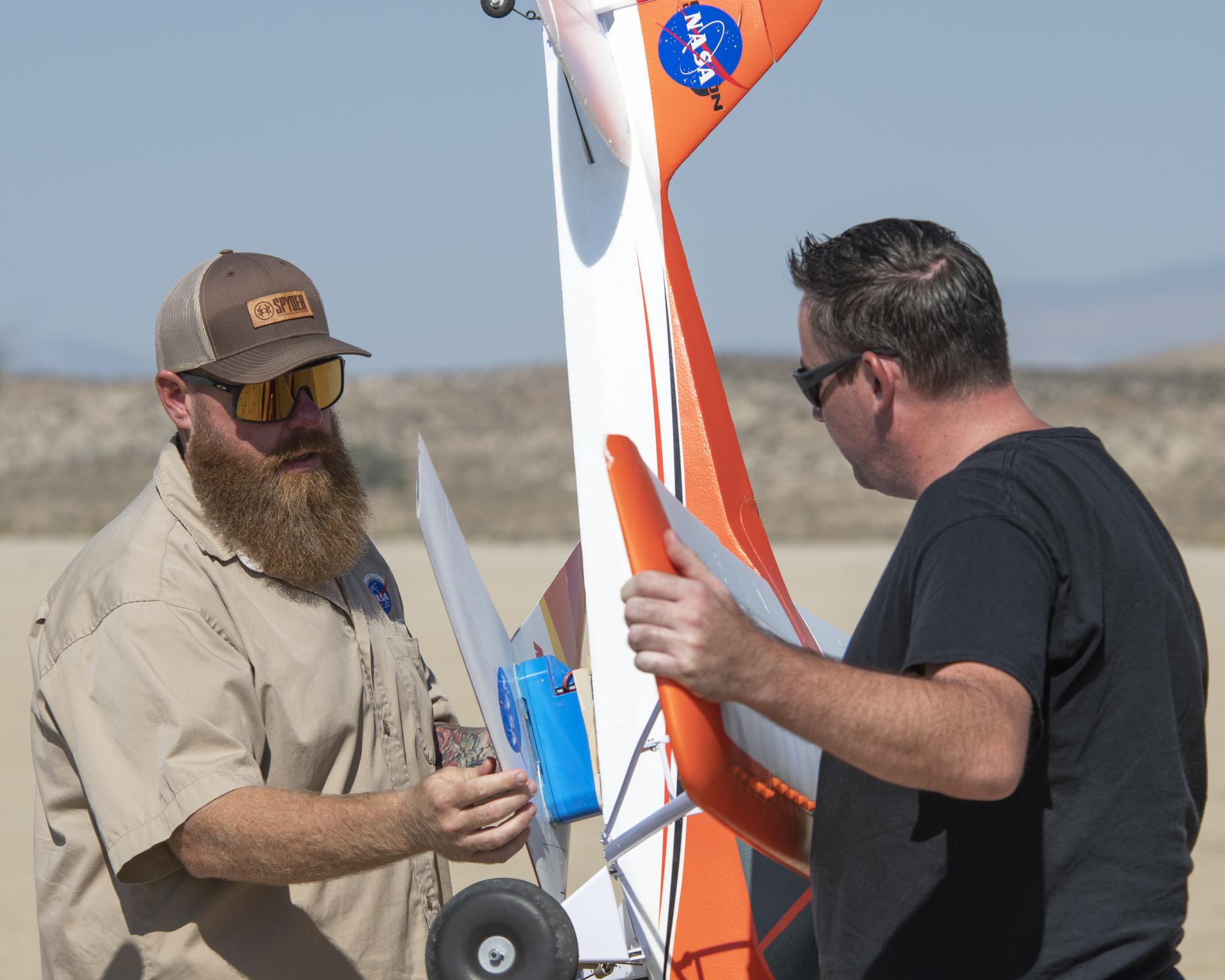
Sometimes, a remotely piloted aircraft can provide an advantage to achieve NASA’s research priorities, said Justin Hall, NASA Armstrong’s subscale aircraft laboratory chief pilot. “We can do things quicker, at a lower cost, and the subscale lab offers unique opportunities. Sometimes an engineer comes in with an idea and we can help design and integrate experiments, or we can even build an aircraft and pilot it.”
Most research flights are straight and level like driving a car on the highway. But there are exceptions. “The more interesting flights require a maneuver to get the data the researcher is looking for,” Less said. “We mounted a pod to an F/A-18 with the landing radar that was going to Mars and they wanted to simulate Martian reentry using the airplane. We went up high and dove straight at the ground.”
Another F/A-18 experiment tested the flight control software for the Space Launch System rocket for the Artemis missions. “A rocket takes off vertically and it has to pitch over 90 degrees,” Less explained. “We can’t quite do that in an F-18, but we could start at about a 45-degree angle and then push 45 degrees nose low to simulate the whole turn. That’s one of the fun parts of the job, trying to figure out how to get the data you want with the tools we have.”
Related Terms
Explore More

3 min read
Preparations for Next Moonwalk Simulations Underway (and Underwater)
Lee esta historia en español aquí.
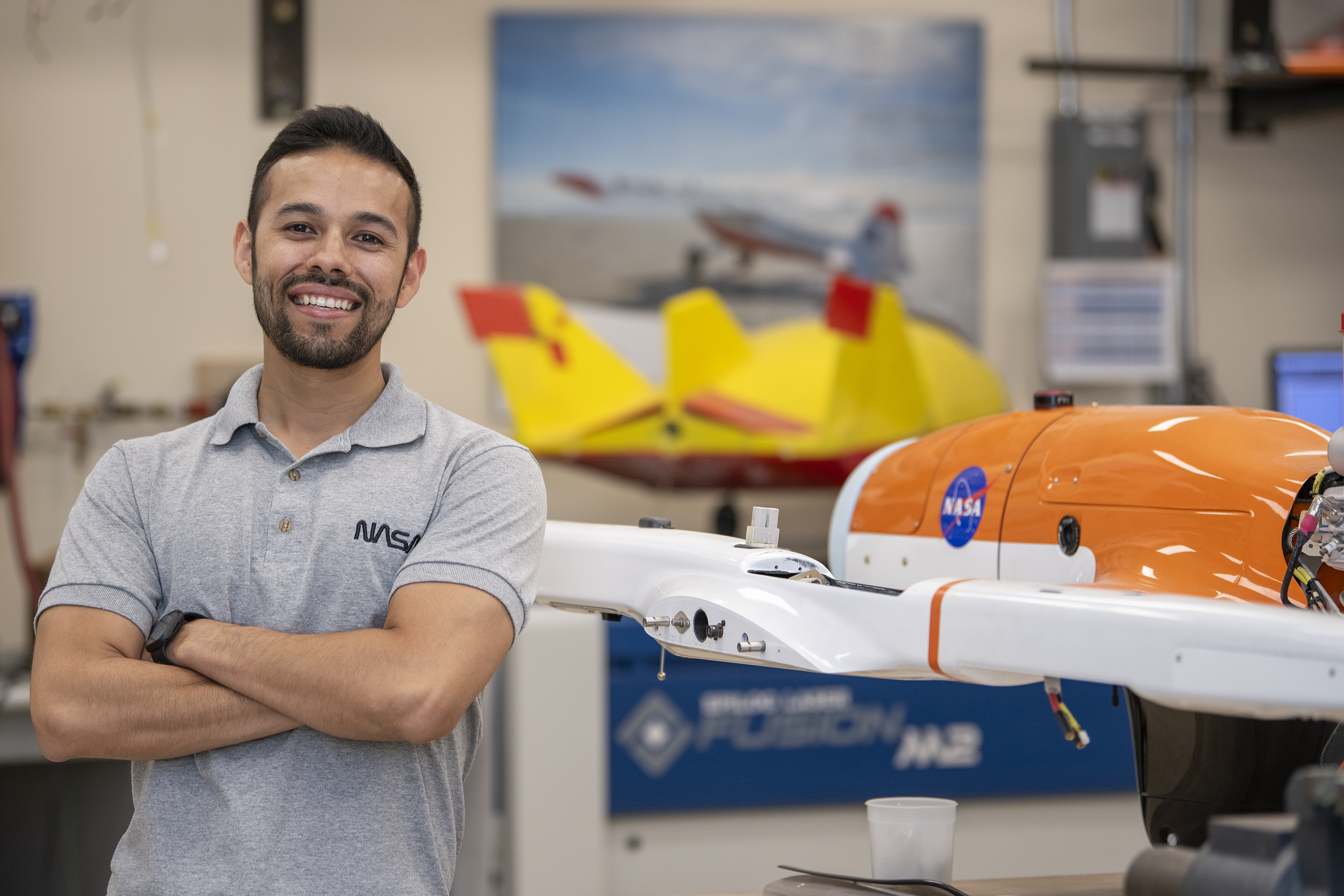
Felipe Valdez is someone who took advantage of every possible opportunity at NASA, working his way from undergraduate intern to his current job as a flight controls engineer.
Born in the United States but raised in Mexico, Valdez faced significant challenges growing up.
“My mom worked long hours, my dad battled addiction, and eventually, school became unaffordable,” Valdez said.
Determined to continue his education, Valdez made the difficult choice to leave his family and return to the U.S. But as a teenager, learning English and adapting to a new environment was a culture shock for him. Despite these changes, his curiosity for subjects such as math and science never wavered.
“As a kid, I’d always been good with numbers and fascinated by how things worked. Engineering combined both,” Valdez said. “This sparked my interest.”
While he pursued an undergraduate degree in mechanical engineering from California State University, Sacramento, guidance from his professor, Jose Granda, proved to be pivotal.
“He encouraged me to apply for a NASA internship,” Valdez said. “He’d actually been a Spanish-language spokesperson for a [space] shuttle mission, so hearing about someone with my background succeed gave me the confidence I needed to take that step.”
Valdez’s hard work paid off – he was selected as a NASA Office of STEM Engagement intern at the agency’s Johnson Space Center in Houston. There, he worked on software development for vehicle dynamics, actuators, and controller models for a space capsule in computer simulations.
“I couldn’t believe it,” Valdez said. “Getting that opportunity changed everything.”
This internship opened the door to a second with NASA this time at the agency’s Armstrong Flight Research Center in California. He had the chance to work on flight computer development for the Preliminary Research Aerodynamic Design to Lower Drag, an experimental flying wing design.
After these experiences, he was later accepted as an intern for NASA’s Pathways Program, a work-study program that offers the possibly of full-time employment at NASA after graduation.
“That was the start of my career at NASA, where my passion for aeronautics really took off,” he said.
Valdez was the first in his family to pursue higher education, earning his bachelor’s degree from Sacramento State and his master’s in mechanical and aerospace engineering from the University of California, Davis.
Today, he works as a NASA flight controls engineer under the Dynamics and Controls branch at Armstrong. Most of his experience has focused on flight simulation development and flight control design, particularly for distributed electric propulsion aircraft.
“It’s rewarding to be part of a group that’s focused on making aviation faster, quieter, and more sustainable,” Valdez said. “As a controls engineer, working on advanced aircraft concepts like distributed electric propulsion allows me design algorithms to directly control multiple motors, enhancing safety, controllability, and stability, while enabling cleaner, and quieter operations that push the boundaries of sustainable aviation.”
Throughout his career, Valdez has remained proud of his heritage. “I feel a strong sense of pride knowing that inclusion is one of our core values, opportunities are within reach for anyone at NASA.”
Explore More
Related Terms
2 min read
Preparations for Next Moonwalk Simulations Underway (and Underwater)
Lee esta historia en español aquí.
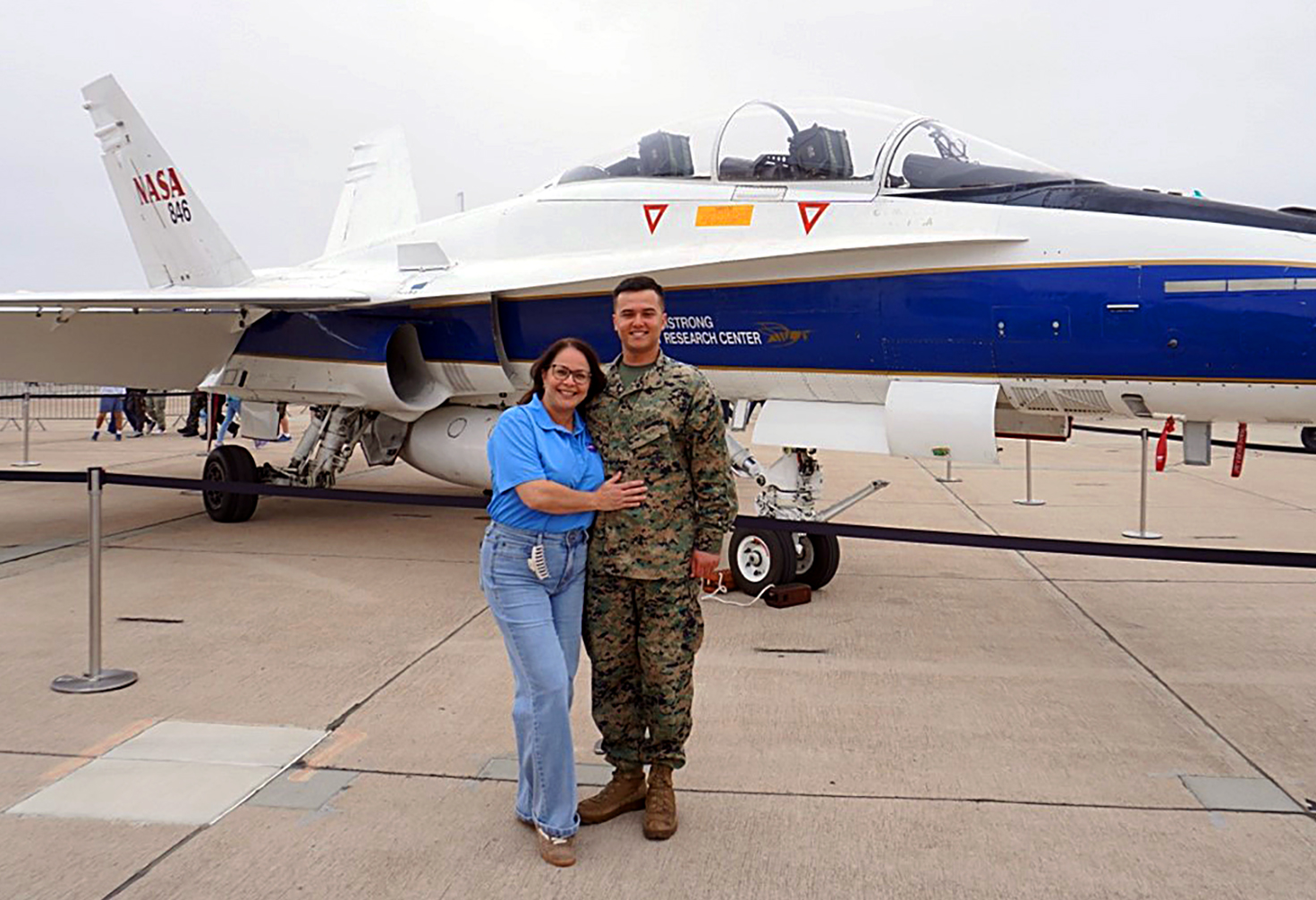
Growing up in Puerto Rico, Yomayra Cruz-Diaz didn’t imagine that one day she would work at NASA. Today, she serves as technical project coordinator at NASA’s Langley Research Center in Virginia, supporting its Aeronautics Research Directorate.
Cruz-Diaz’s position requires her to travel in support of public engagement events and recently she supported NASA’s presence at the Miramar Airshow in San Diego, California where the agency’s booth featured Spanish-language STEM materials.
Something, or rather, someone, made this event especially unique for Cruz-Diaz: Her son, Israel Martinez-Cruz, is currently serving in the United States Marine Corps and is stationed at Marine Corps Air Station Miramar.
In a stroke of serendipity, they were both working the same event for their respective employers. Living on opposite sides of the country, they hadn’t seen each other in person for nearly a year. With surprise and joy, they hugged.
Growing up in a Puerto Rican household, conversations about core values revolved around family, Martinez-Cruz said. He recalled seeing his mom work at NASA and feeling inspired by her work ethic. That level of commitment ran in the family.
“Israel and I would carpool,” she said. “He would drop me off at Langley and then he would go on his way to his aircraft mechanic school.”
Martinez-Cruz serves as an air traffic controller, work that Cruz-Diaz knew about but had never seen in person.
“He’s explained to me what his job entails but taking a tour of his job site gives me a whole new understanding,” she said after a tour of the air traffic control tower.
NASA is proud to celebrate National Hispanic Heritage Month, the annual observance honoring the wide and rich histories, cultures, and contributions of the Hispanic and Latino community. In the words of NASA Administrator Bill Nelson, “Adelante y hacia arriba,” or “Onward and upward!”
Explore More
2 min read
Preparations for Next Moonwalk Simulations Underway (and Underwater)
Read this story in English here.
Al crecer en Puerto Rico, Yomayra Cruz-Díaz nunca imaginó que algún día trabajaría en la NASA. Actualmente , se desempeña como coordinadora de proyectos técnicos en el Centro de Investigación Langley de la NASA en Virginia, apoyando a su Dirección de Investigación Aeronáutica.
El trabajo de Cruz-Díaz le requiere viajar para apoyar eventos de participación pública, y recientemente apoyó la presencia de la NASA en una exhibición aérea en San Diego, California, donde el puesto de la agencia presentó materiales STEM en español. Algo, o, mejor dicho, alguien hizo que este evento fuera especialmente único para Cruz-Díaz: su hijo, Israel Martínez-Cruz actualmente sirve en los Marines de los Estados Unidos y está asignado en la Estación Aérea en Miramar.
En un golpe de suerte, ambos trabajaron en el mismo evento para sus respectivos empleadores. Al vivir en lados opuestos del país, no se habían visto en persona durante casi un año. Con sorpresa y alegría, se abrazaron.
Al crecer en un hogar puertorriqueño, las conversaciones sobre los valores fundamentales eran sobre el tema de la familia. Martínez-Cruz recuerda haber visto a su madre trabajar en la NASA y sentirse inspirado por su ética de trabajo. Ese nivel de compromiso resulto ser hereditario.
“Israel y yo compartiríamos el viaje en coche” , ella dijo. “El me dejaba en Langley y luego seguía el camino a su escuela de mecánica aeronáutica.”
Martínez-Cruz se desempeña como controlador de tránsito aéreo, trabajo que Cruz-Díaz conocía pero que nunca había visto en persona.
“Él me ha explicado lo que implica su trabajo, pero hacer un recorrido por su lugar de trabajo me da una comprensión completamente nueva,” ella dijo, después de un recorrido por la torre de control de tráfico aéreo.
La NASA se enorgullece de celebrar el Mes de la Herencia Hispana, una celebración anual que rinde homenaje a las amplias y ricas historias, culturas y contribuciones de la comunidad Hispana y Latina. En palabras del administrador de la NASA, Bill Nelson, “Adelante y hacia arriba.”
Explore More

President of Latvia Edgars Rinkēvičs observes simulated visuals of an airport and its air traffic, consisting of commercial aircraft and electric vertical take-off and landing aircraft, at NASA’s FutureFlight Central on Sept. 18, 2024, during a visit to NASA’s Ames Research Center in California’s Silicon Valley.
FutureFlight Central provides high-fidelity simulation of air traffic management scenarios and is dedicated to solving the present and emerging challenges of the nation’s air traffic management system. President Rinkēvičs and representatives of Latvian business visited Ames to learn about the center’s technical capabilities and areas of research in aeronautics.
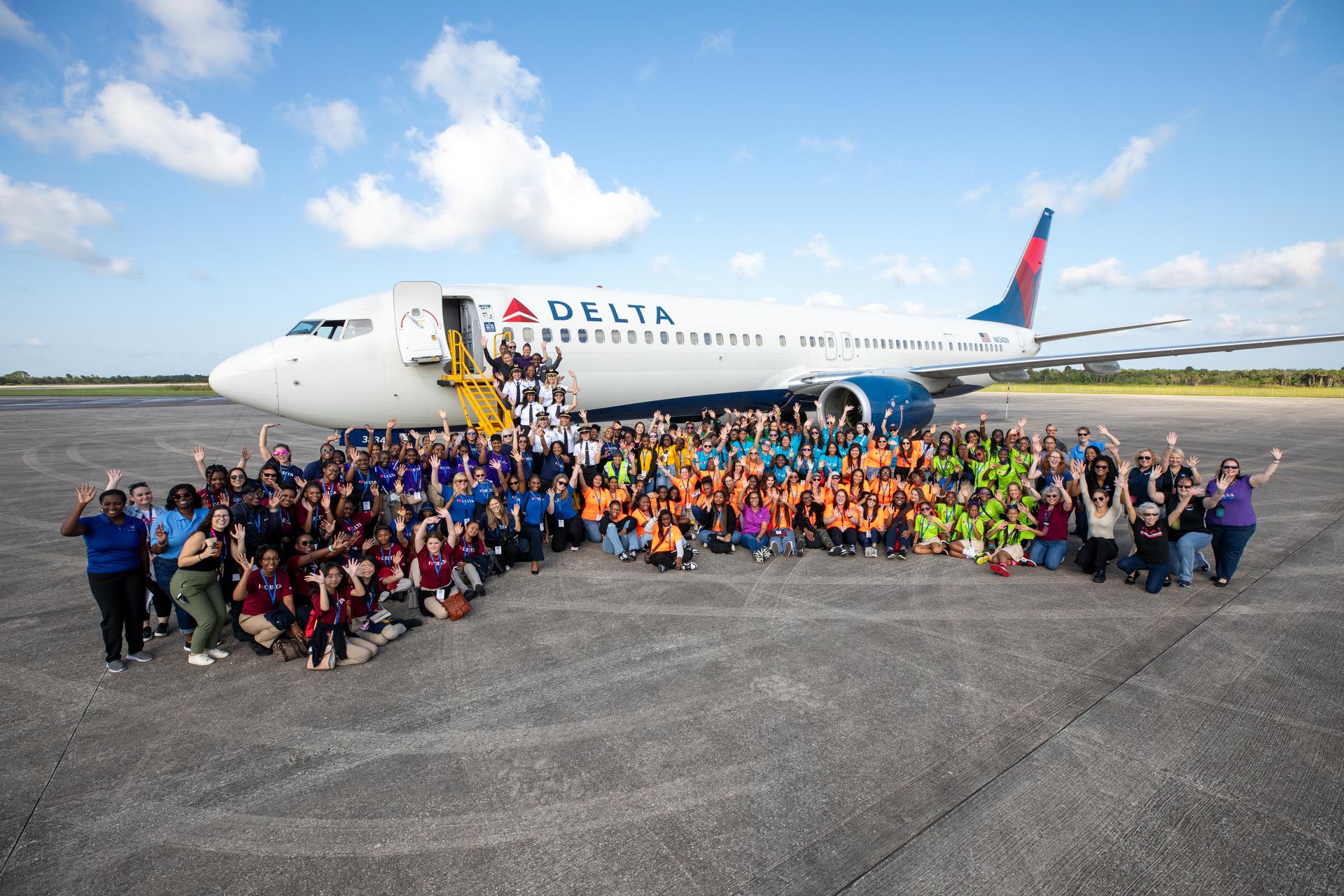
For the third straight year, scores of young women flew to NASA’s Kennedy Space Center in Florida to learn how to make their aviation dreams take flight as part of the Delta Air Lines Women Inspiring our Next Generation (WING) program. Their Boeing 737 aircraft, piloted by an all-female crew, carried 130 girls, ages 11 to 18, who hail from Atlanta area schools and aviation organizations with a strong focus on STEM.
They departed Atlanta’s Hartsfield-Jackson International Airport just after sunrise on Sept. 20 and just a few hours later, stepped onto the runway of Kennedy’s Launch and Landing Facility, where dozens of space shuttle missions landed and current-day NASA astronauts arrive at ahead of their launches to the International Space Station.

“For more than 60 years, Kennedy Space Center has been the launching point for many of the missions that have inspired the nation and challenged generations of students to reach for the stars,” said NASA Kennedy Director Janet Petro. “As an aviator myself, today is especially exciting because it showcases the diverse range of career opportunities available to young women interested in pursuing fields in science, technology, engineering, and math.”
The girls received a bus tour of NASA Kennedy facilities and photo opportunities at Launch Complex 39B, where the first woman to set foot on the Moon will launch in the coming years on Artemis III. Then at the spaceport’s Space Systems Processing Facility, the girls heard firsthand from NASA Kennedy’s women leaders, who offered encouragement and words of wisdom.
“I want you to look around you. The young women in this room are going to be the trailblazers of the Artemis Generation,” said Dicksy Chrostowski, director of the Office of Communications at NASA Kennedy. “You may very well live and work on the Moon, or be one of our first visitors to Mars. There is always a path to greatness for you to take, even if it’s hard to find.”
The girls of the Delta WING flight finished their day exploring the Kennedy Space Center Visitor Complex before reboarding the plane for their return trip to Atlanta. The experience of visiting NASA’s iconic spaceport and the lessons imparted by the women of NASA resonated with the girls.

“As a woman of color, it’s great to see other women who look like me in these spaces and it’s very uplifting to hear their stories and how far they’ve come,” said Karsyn Britton-Mauge, a seventh grader from the Ron Clark Academy in Atlanta. “Life is filled with ups and downs, and I am so inspired by the persistence in all the women who spoke to us today. They never stopped pursuing their dreams.”
The focus on STEM education as a path to a career in aviation has been a key feature of the annual Delta WING flight since the program launched in 2015. That’s when Delta General Manager of Pilot Development Beth Poole and Delta Pilot Cheri Rohlfing noted a conspicuous lack of women in certain roles of the airline industry, including mechanics, ground personnel, and especially pilots. They initiated Delta WING flights, spearheaded by Delta’s Flight Operations and organized and operated solely by women, as a way of inspiring and educating the next generation of young women on careers in aviation. This year’s trip to NASA Kennedy was the eighth Delta WING flight and third to Kennedy.
“The accomplishments of the future are going to be realized by the dreamers, innovators, and bright minds who are sitting in classrooms today,” Petro said. “And we want these students to know there is a place for them at NASA.”
Post a Comment