
From the Mission Control Center to community celebrations, Kenneth Attocknie blends safety expertise with a commitment to cultural connection.
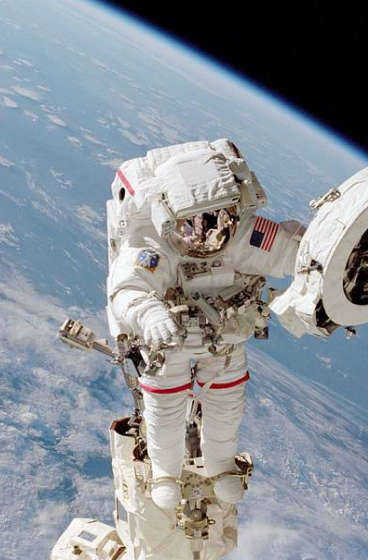
For the past 25 years at NASA, Attocknie has dedicated his career to safeguarding the International Space Station and supporting real-time mission operations at Johnson Space Center in Houston.
As a principal safety engineer in the Safety and Mission Assurance Directorate, Attocknie ensures the safe operation of the space station’s environmental control and life support system. This system is vital for maintaining the life-sustaining environment aboard the orbiting laboratory— a critical foundation for similar systems planned for future Artemis missions.

As a contractor with SAIC, Attocknie has served as a flight controller, astronaut crew office engineer, and astronaut crew instructor. He joined NASA just as the first two modules of the space station, Zarya and Unity, connected in space on Dec. 6, 1998.
“I’ve supported the space station ever since and have been blessed to witness the remarkable progression of this amazing orbiting experiment,” he said. “I feel I have found a way to contribute positively to NASA’s mission: to improve life for all people on our planet.”
He also contributed to closing out the Space Shuttle Program and worked in system safety for the Constellation program.
As part of SAIC’s Employee Resource Group, Attocknie supports the Mathematics, Engineering, Science Achievement project, which uses project-based learning to inspire high school students from underrepresented communities to pursue careers in science, technology, engineering, and mathematics. He continues to advocate for Native Americans as a member of the American Indian Science and Engineering Society, helping NASA engage with college students across Indian Country.

Attocknie strives to contribute to a space exploration legacy that uplifts and unites cultures, paving the way for a future in human spaceflight that honors and empowers all.
A member of the Comanche and Caddo tribes of Oklahoma, he has made it his mission to create a cross-cultural exchange between NASA and Native communities to provide opportunities for Natives to visit Johnson.
One of his proudest moments was organizing a Native American Heritage Month event with NASA’s Equal Opportunity and Diversity Office. The celebration brought together Native dancers and singers from Oklahoma and Texas to honor their heritage at Johnson.
“Seeing the Johnson community rally around this event was amazing,” said Attocknie. “It was a profound experience to share and celebrate my culture here.”

Overcoming challenges and setbacks has been part of his NASA experience as well. “Finding and achieving my purpose is always an ongoing journey,” he said. “Accepting what might seem like a regression is the first step of growth. There’s always a lesson to be found, and every disappointment can fuel a new ambition and direction. Ride the waves, be humble, learn lessons, and above all, always keep going.”
He believes that NASA’s mission is deeply connected to diversity and inclusion. “You can’t truly benefit humankind if you don’t represent humankind,” said Attocknie. “The status quo may feel comfortable, but it leads to stagnation and is the antithesis of innovation.”

Attocknie’s hope for the Artemis Generation? “A healthier planet, society, and the desire to pass on lessons of stewardship for our environment. All life is precious.”
He sees NASA as a gateway to a brighter future: “NASA can truly harness its influence to be an example for our planet, not only in the new heavenly bodies we journey to but also in the new human spirits we touch.”

Following a successful launch of NASA’s SpaceX 31st commercial resupply mission, new scientific experiments and cargo for the agency are bound for the International Space Station.
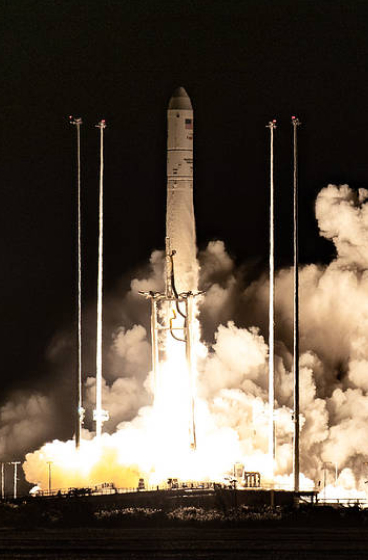
The SpaceX Dragon spacecraft, carrying more than 6,000 pounds of supplies to the orbiting laboratory, lifted off at 9:29 p.m. EST Monday, on the company’s Falcon 9 rocket from Launch Complex 39A at NASA’s Kennedy Space Center in Florida.
Live coverage of the spacecraft’s arrival will begin at 8:45 a.m. Tuesday, Nov. 5, on NASA+ and the agency’s website. Learn how to watch NASA content through a variety of platforms, including social media.
The spacecraft is scheduled to autonomously dock at approximately 10:15 a.m. to the forward port of the space station’s Harmony module.
The resupply mission will support dozens of research experiments conducted during Expedition 72. In addition to food, supplies, and equipment for the crew, Dragon will deliver several new experiments, including the Coronal Diagnostic Experiment, to examine solar wind and how it forms. Dragon also delivers Antarctic moss to observe the combined effects of cosmic radiation and microgravity on plants. Other investigations aboard include a device to test cold welding of metals in microgravity and an investigation that studies how space impacts different materials.
These are just a sample of the hundreds of investigations conducted aboard the orbiting laboratory in the areas of biology and biotechnology, physical sciences, and Earth and space science. Such research benefits humanity and lays the groundwork for future human exploration through the agency’s Artemis campaign, which will send astronauts to the Moon to prepare for future expeditions to Mars.
The Dragon spacecraft is scheduled to remain at the space station until December when it will depart the orbiting laboratory and return to Earth with research and cargo, splashing down off the coast of Florida.
Learn more about space station activities by following @space_station and @ISS_Research on X, as well as the ISS Facebook, ISS Instagram, and the space station blog.
Learn more about the commercial resupply mission at:
https://www.nasa.gov/mission/nasas-spacex-crs-31
-end-
Claire O’Shea / Josh Finch
Headquarters, Washington
202-358-1100
joshua.a.finch@nasa.gov / claire.a.o’shea@nasa.gov
Stephanie Plucinsky / Steven Siceloff
Kennedy Space Center, Fla.
321-876-2468
stephanie.n.plucinsky@nasa.gov / steven.p.siceloff@nasa.gov
Sandra Jones
Johnson Space Center, Houston
281-483-5111
sandra.p.jones@nasa.gov
Bioprinted patches could help wounds heal
Researchers successfully demonstrated the function of a handheld bioprinter that could provide a simple and effective way to treat wounds in space using human skin cells. Crews could use this technology to treat their own injuries and protect crew health and mission success in the future.
Spaceflight can affect how wounds heal. The Bioprint FirstAid device tested a process for bioprinting a patch to cover a wound and accelerate healing. In the future, a crew member’s own cells may be used to create personalized patches for treating an injury. The bioprinting device is easy to use, can be tailored to specific needs, has a low failure rate, and its mechanics are electronics- and maintenance-free. This ESA (European Space Agency) investigation was coordinated by the German Aerospace Center (DLR).

Countering post-flight proficiency challenges
The day they return from spaceflight, astronauts demonstrate significant impairments in fine motor control and the ability to multitask in simulated flying and driving challenges. This finding could help develop countermeasures so crew members can safely land and conduct early operations on the Moon and Mars.
Manual Control used a battery of tests to examine how spaceflight affects cognitive, sensory, and motor function after landing. Researchers concluded that subtle physiological changes that occur during spaceflight degrade post-flight performance. Subsequent tests showed recovery of performance once exposed to the task, suggesting that simulation training immediately before a task could be an effective countermeasure. Researchers also suggest limiting dual or competing tasks during mission-critical phases.

Gamma-ray telescope resilient to space radiation
Researchers found that the station’s Glowbug gamma-ray telescope could perform in the space radiation environment for multi-year missions. Radiation can affect these types of instruments, but Glowbug regularly detected gamma ray bursts (GRBs) during its one-year operation. Studying GRBs can help scientists better understand the universe and its origins.
Glowbug demonstrated technology to detect and characterize cosmic GRBs, primarily short GRBs, which result from mergers of compact binary star systems containing either two neutron stars or a neutron star and a black hole. Short GRBs produce gravitational waves, ripples in space that travel at the speed of light. Studying these gravitational waves could provide insight into the star systems where they originate and the behavior of matter during the mergers.
Learn more about GRB research here.
¿Cómo se investiga en gravedad cero? Preguntamos a una científica de la NASA
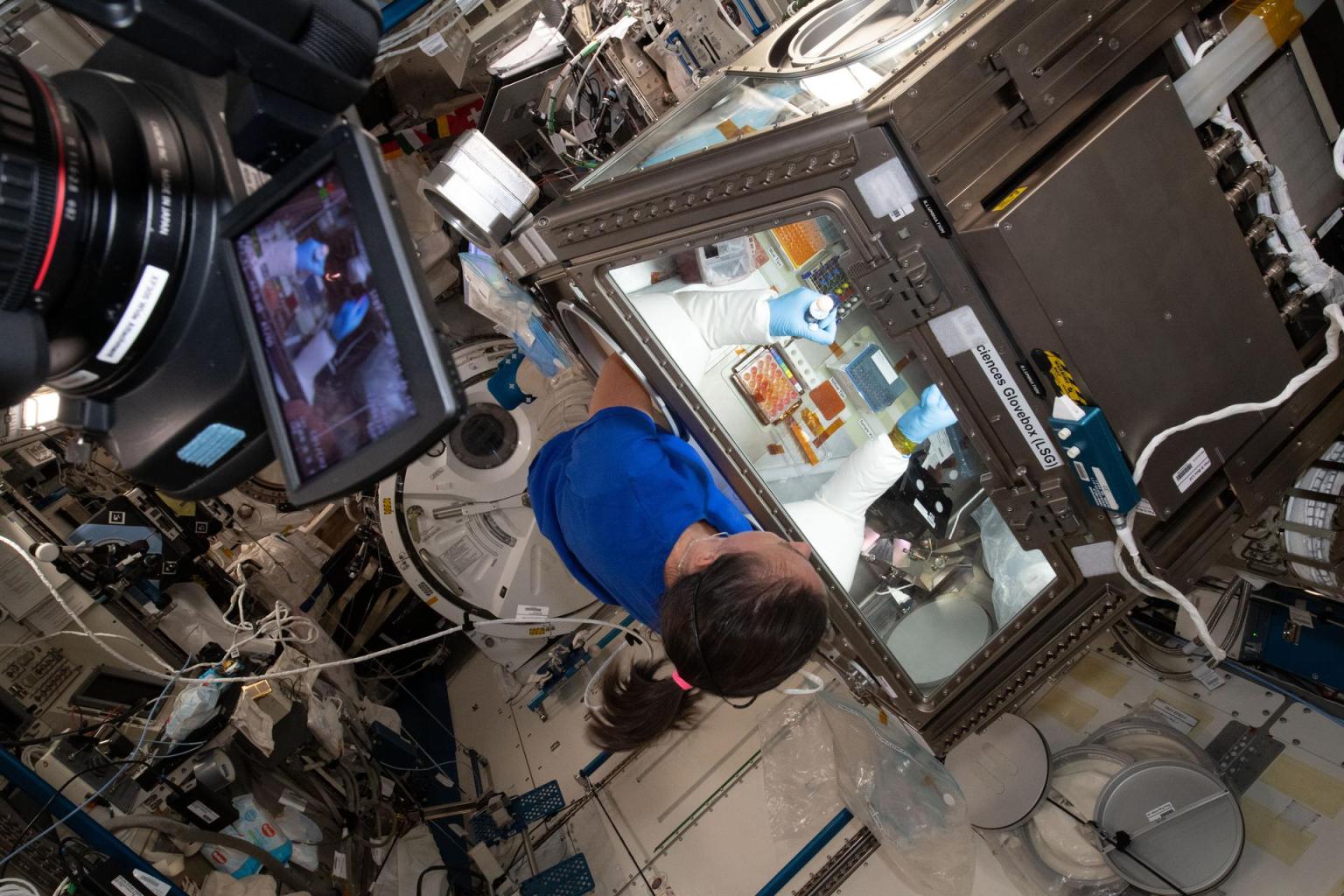
Realizar experimentos científicos en la Tierra puede ser complicado pero en el espacio es aún más difícil debido a las condiciones de gravedad cero y microgravedad. La gerente de investigaciones comerciales de la Estación Espacial Internacional, Yuri Guinart-Ramírez, te explica cómo en la estación se llevan a cabo cientos de investigaciones científicas en condiciones de microgravedad y cómo los investigadores adaptan sus experimentos e instrumentos para que funcionen adecuadamente en ese entorno.
Crédito de video: NASA 360
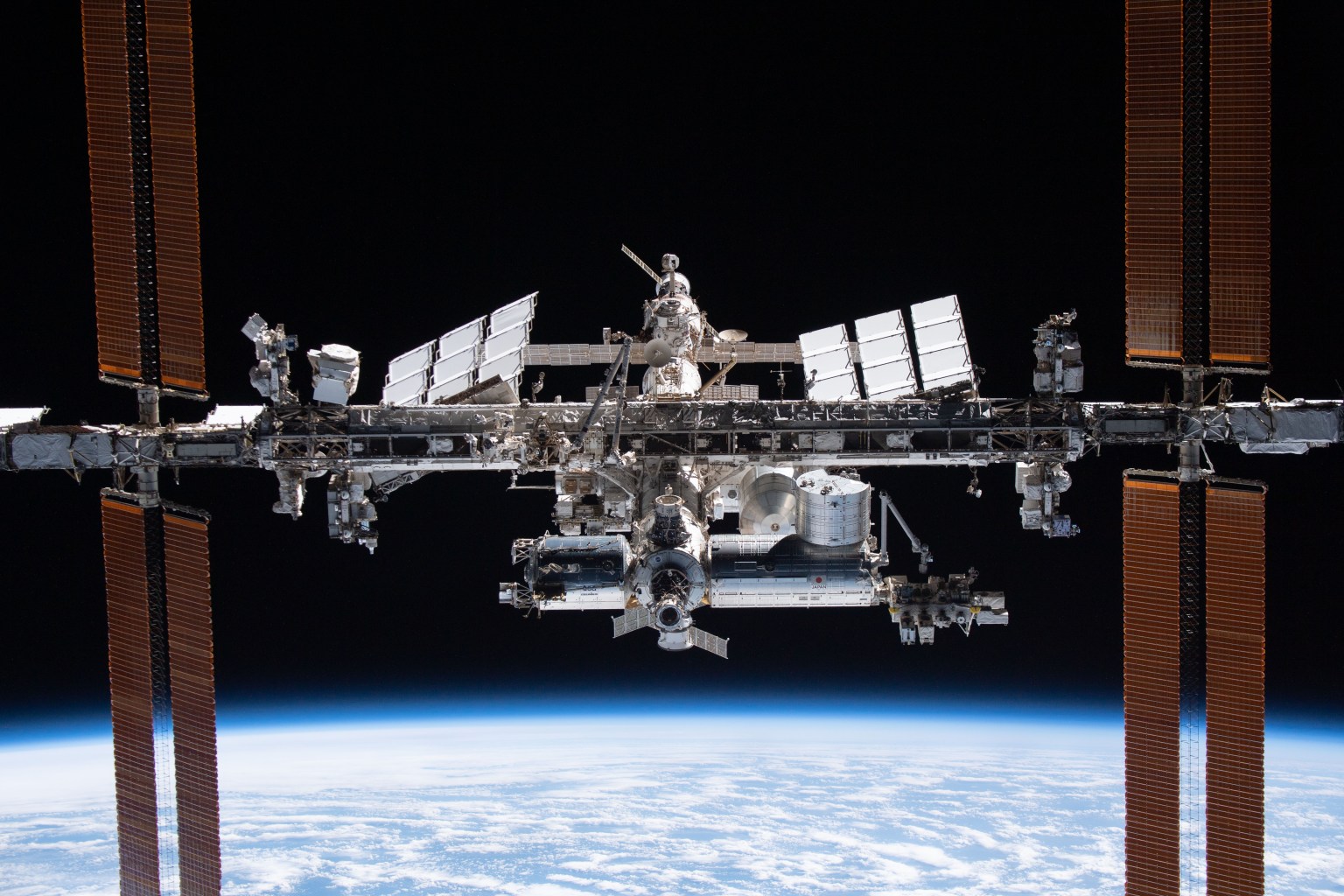
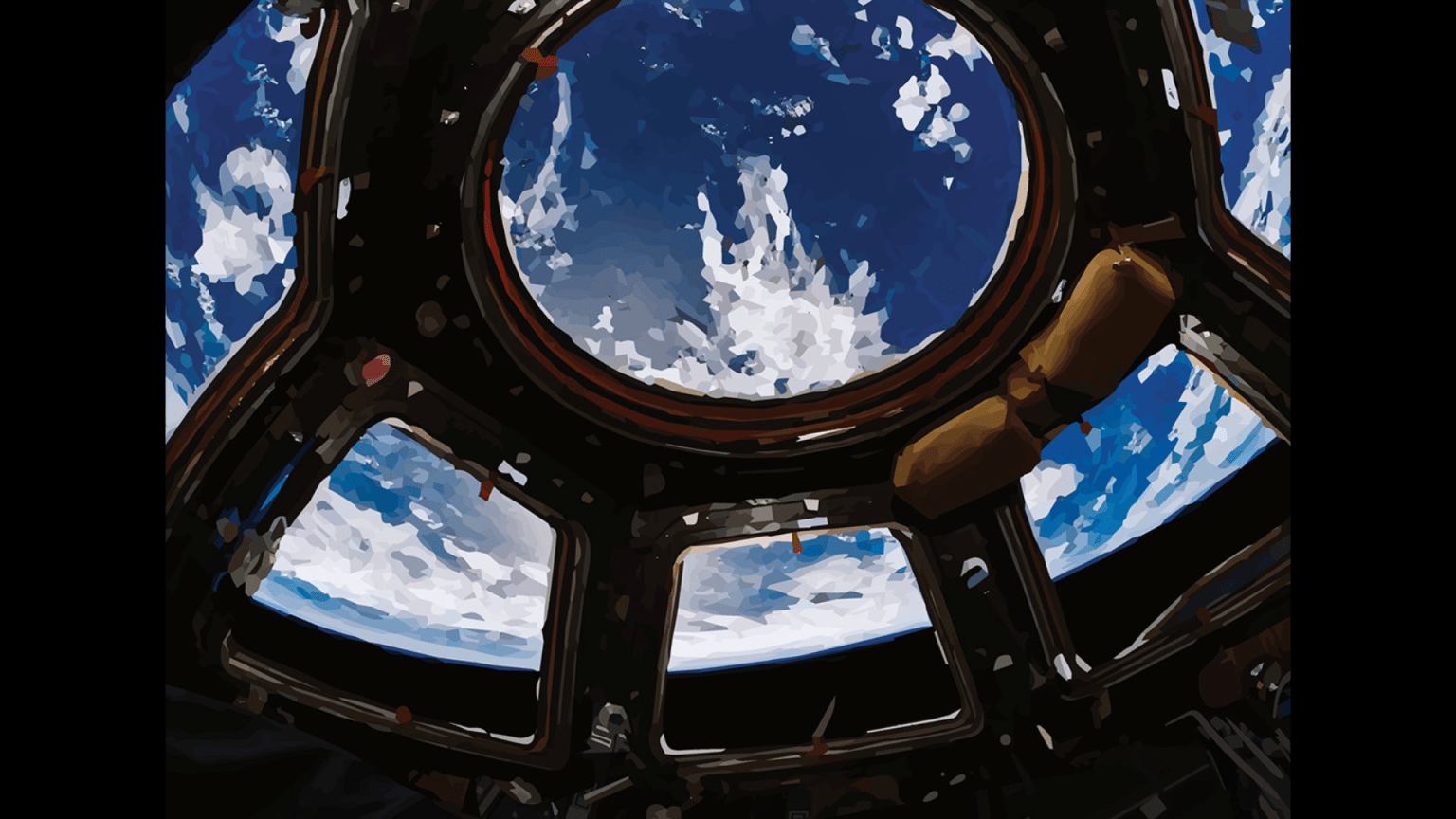
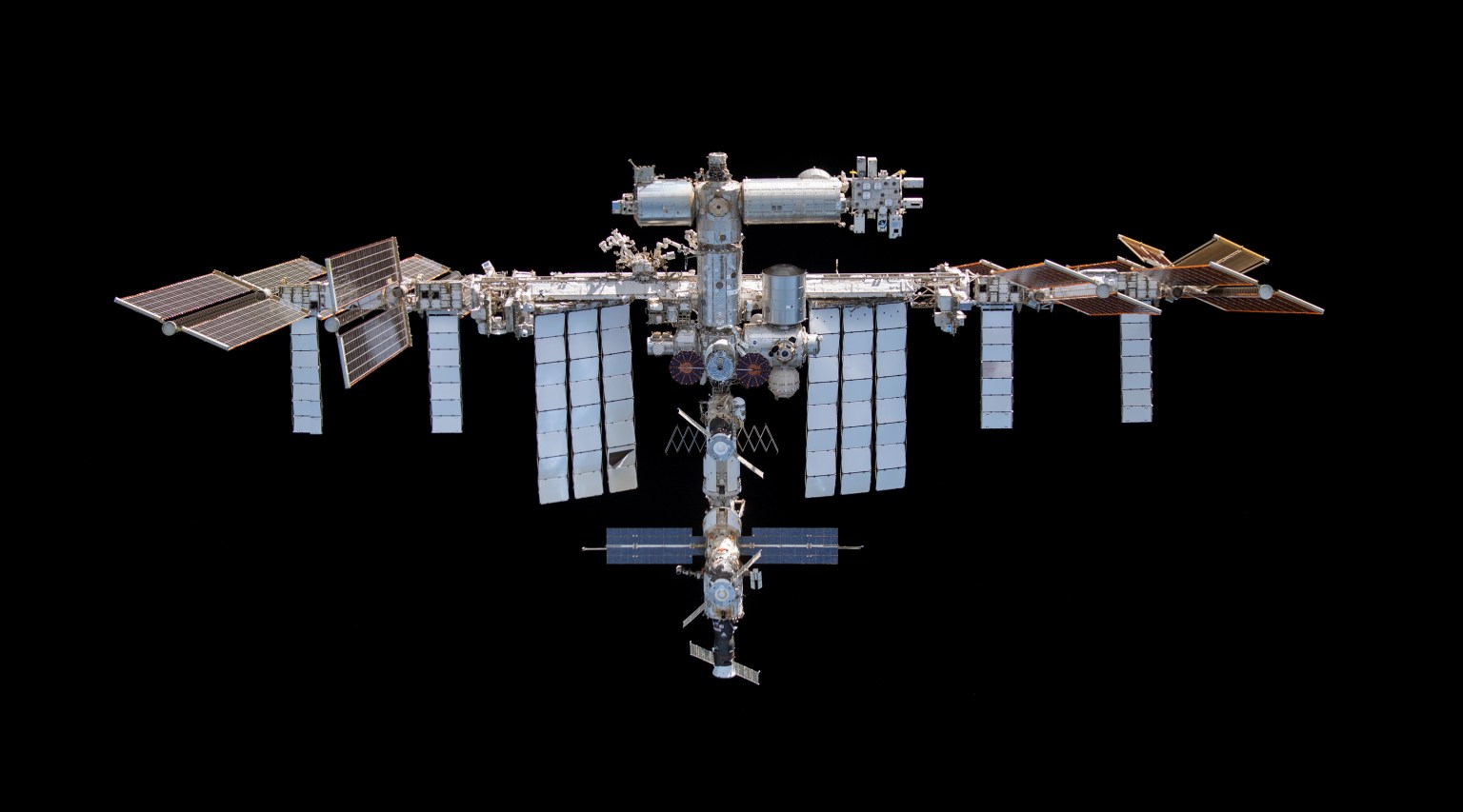
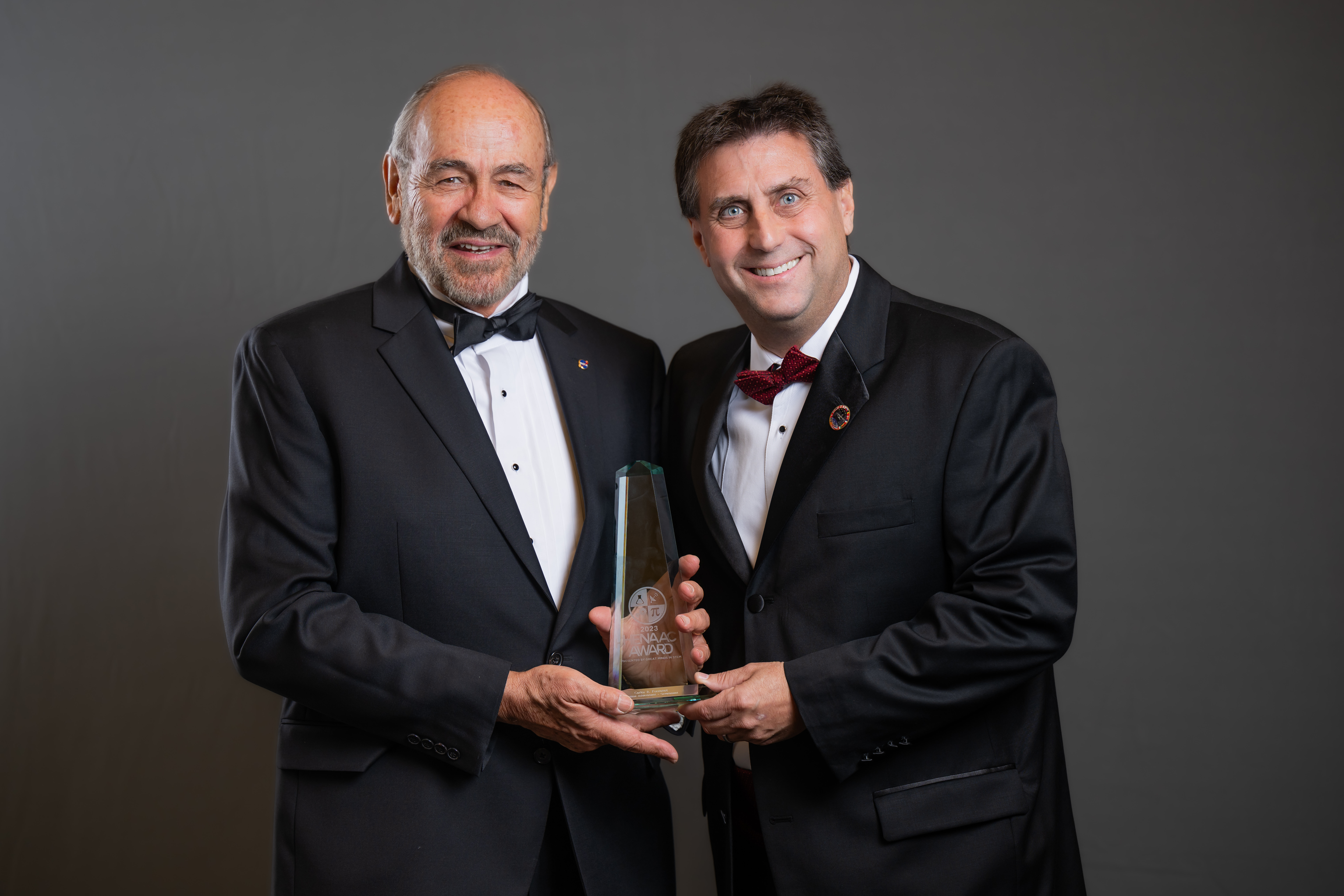
Born and raised in Mexico City, Carlos Fontanot has dedicated 34 years to NASA. He supports the International Space Station Mission Integration and Operations Office, ensuring that high-quality imagery enhances mission objectives and operations.
Fontanot is known for conceiving and leading the High Definition Earth Viewing (HDEV) project, which has brought stunning live visuals of Earth to millions around the globe. As he approaches his well-deserved retirement, we are excited to spotlight Fontanot’s remarkable career, celebrating his contributions to NASA and the lasting impact he has made on the agency’s mission to share the wonders of space.
What does your position entail?
Integrate all aspects of station imagery, from initial requirements to acquisition, processing, cataloging, archiving, and distribution of station imagery to multiple stakeholders, our clients.
How would you describe your job to family or friends who may not be as familiar with NASA?
I manage an array of television and digital still imagery cameras on the International Space Station. Each day we receive eight channels of high definition (HD) video and thousands of digital images that allow the ground team to see what the crew is doing in their daily lives and as part of scientific activities. In today’s age of social media and high-quality imagery, having these images is crucial for effectively conveying the station narrative.
I also chair the International Space Station’s Multilateral Imagery Working Group. Our team captures and processes the video and still images on a large server, where they are cataloged, archived, and distributed to our clients. Additionally, we are responsible for the photo and TV hardware aboard the space station and provide training to astronauts on how to use this equipment.

How do you feel the imagery and public affairs teams contribute to the overall mission of NASA?
Imagery is critical for communication in today’s visual environment. If people can’t see it, they won’t believe it! Effective communication through multimedia and pointed messaging is essential for securing continued support for NASA missions from both Congress and the public.
What was your path to NASA?
I was always interested in photography and film, so I studied radio, TV, and film in college. My first job after graduation was with a local TV station, and I also managed a media center for a multinational company. Then, I joined Johnson Space Center’s television and film division, where I managed space shuttle and institutional imagery.
Once at Johnson, I worked in the Office of Public Affairs as the audiovisual manager and served for two years as the public affairs officer in Moscow at the start of the International Space Station Program, including the launch of the first station crew.
What advice would you give to young individuals aspiring to work in the space industry or at NASA?
NASA is not just about astronauts, flight controllers, and engineers—there are countless disciplines and job opportunities here. Take imagery, for example: in today’s digital age, having the highest resolution imagery of our incredible orbiting laboratory environment and our home planet is essential.
For those aspiring to join the NASA team, I encourage you be open-minded and a team player. We need well-educated and talented individuals from diverse backgrounds across all disciplines to help us achieve our goals and explore the wonders of space.
Is there a space figure you’ve looked up to?
The space figure I will always remember and look up to is John Glenn. I had the fortune and privilege to meet him during his training. He was an extraordinary human being with incredibly high goals throughout his career.
I was assigned to escort John Glenn and the STS-95 crew on a two-week official visit to several European countries. John was by far the most inspiring and dedicated crew member that I’d ever met. He was always ready and willing to engage with dignitaries, politicians, leaders, journalists, and the public to share the NASA story and promote future programs to gain support from various governments and the public.
What do you love sharing about the International Space Station to general audiences?
I love sharing the wonders of life in space, especially the unique and breathtaking views of our planet Earth that can only be appreciated from space. I like to tell audiences about the observations and inspiration our astronauts share upon returning from their missions. I emphasize our thin and fragile atmosphere that sustains life as we know it, the beauty of Earth’s deserts, mountains, jungles, and oceans, and most importantly, the absence of borders. There’s always a profound realization that we are all human and that Earth belongs to all of us.
How has the technology for capturing images and video in space evolved over the years?
There was no digital imagery when I started my professional career. Photographs were taken on film that had to be processed in a dark room using chemicals to produce images. Video was recorded on two-inch magnetic tape at low resolution. We even flew film on our spacecraft that had to be brought back and processed on the ground.
Today, in the digital world, images can be streamed directly from our spacecraft and almost instantaneously shared with the entire globe. The evolution of technology has truly transformed how we capture and share the wonders of space!
What are some of the key projects you’ve worked on during your time at NASA? What have been your favorites?
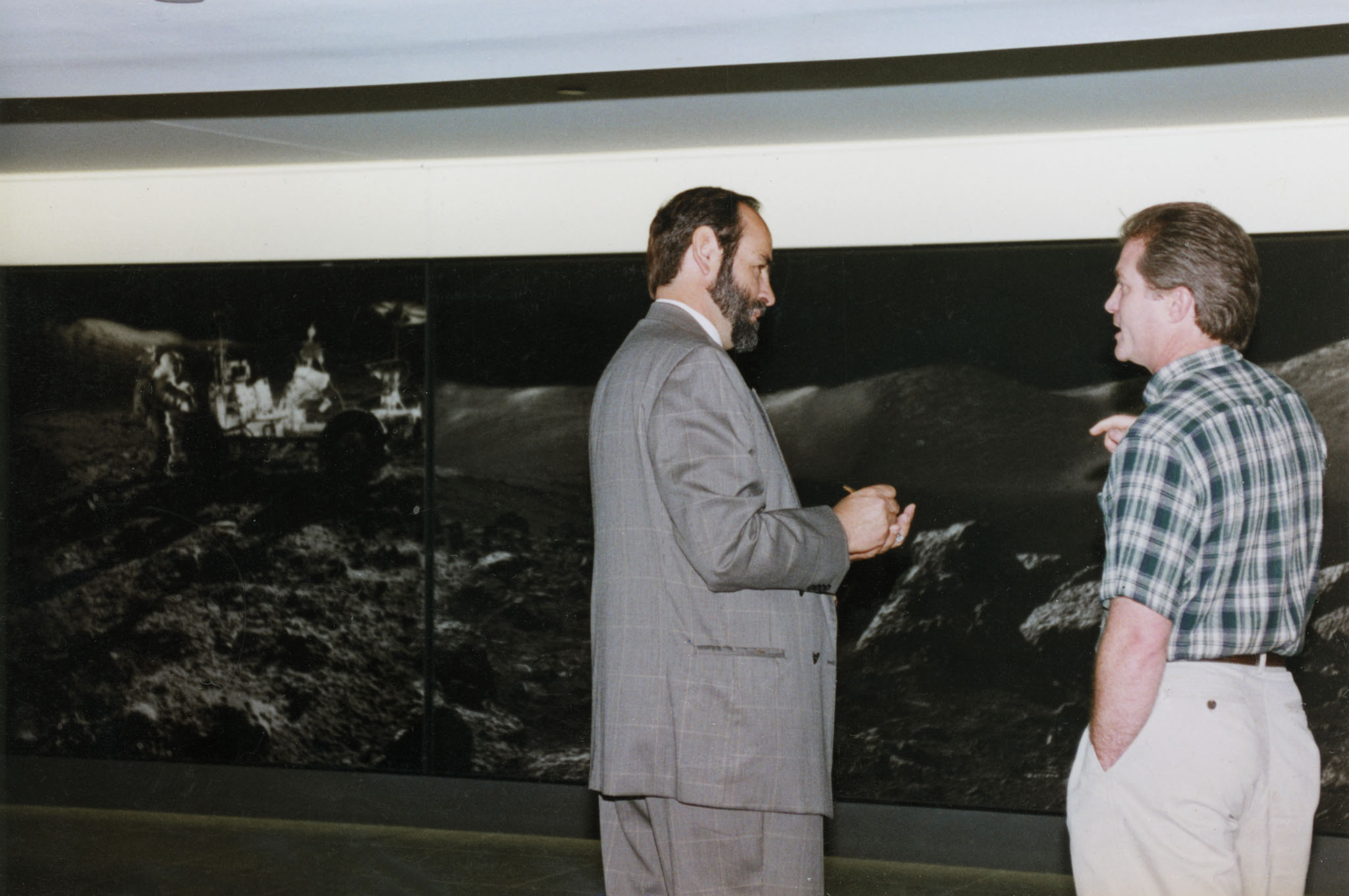
During my time at NASA, I co-led the High Definition Earth Viewing (HDEV) project, which deployed four Earth-viewing cameras on the International Space Station, reaching over 318 million viewers globally. I also contributed to designing Johnson’s new PAO studio, collaborated on upgrading the space station’s downlink system from four standard-definition to eight high-definition channels, and advanced television technology, including the first HD and later UHD live downlinks from the station. These projects have allowed me to enhance NASA’s capacity for sharing space imagery with the world.
What are your plans for retirement, and how do you hope to stay connected to the space community?
I plan to travel across the U.S. in a travel trailer with my wife and dog and enjoying my hobbies I will now have time for, such as photography and spending quality time with my family.

How do you believe NASA’s imagery can continue to inspire future generations?
Astronaut John Young would come to the photo lab after every shuttle mission to review the film shot onboard. He would say, “A picture is worth a thousand words.” What can inspire more than a breathtaking image of a sunset captured from space or the aurora borealis over the polar regions?
What legacy do you hope to leave behind after your time at NASA?
I hope to leave behind a legacy of passion and dedication to acquiring and making pristine, high-resolution imagery from space available for the public to enjoy.
If you could have dinner with any astronaut, past or present, who would it be?
I would choose John Young. He flew during both the Apollo and shuttle eras, was an imagery expert, and had a deep understanding of the space station.
Favorite space movie?
Interstellar
NASA Worm or Meatball logo?
Worm
***
Every day we are conducting exciting research aboard our orbiting laboratory that will help us explore farther into space and bring benefits back to people on Earth. You can keep up with the latest news, videos, and pictures about space station science on the Station Research & Technology news page. It is a curated hub of space station research and digital media from Johnson and other centers and space agencies.
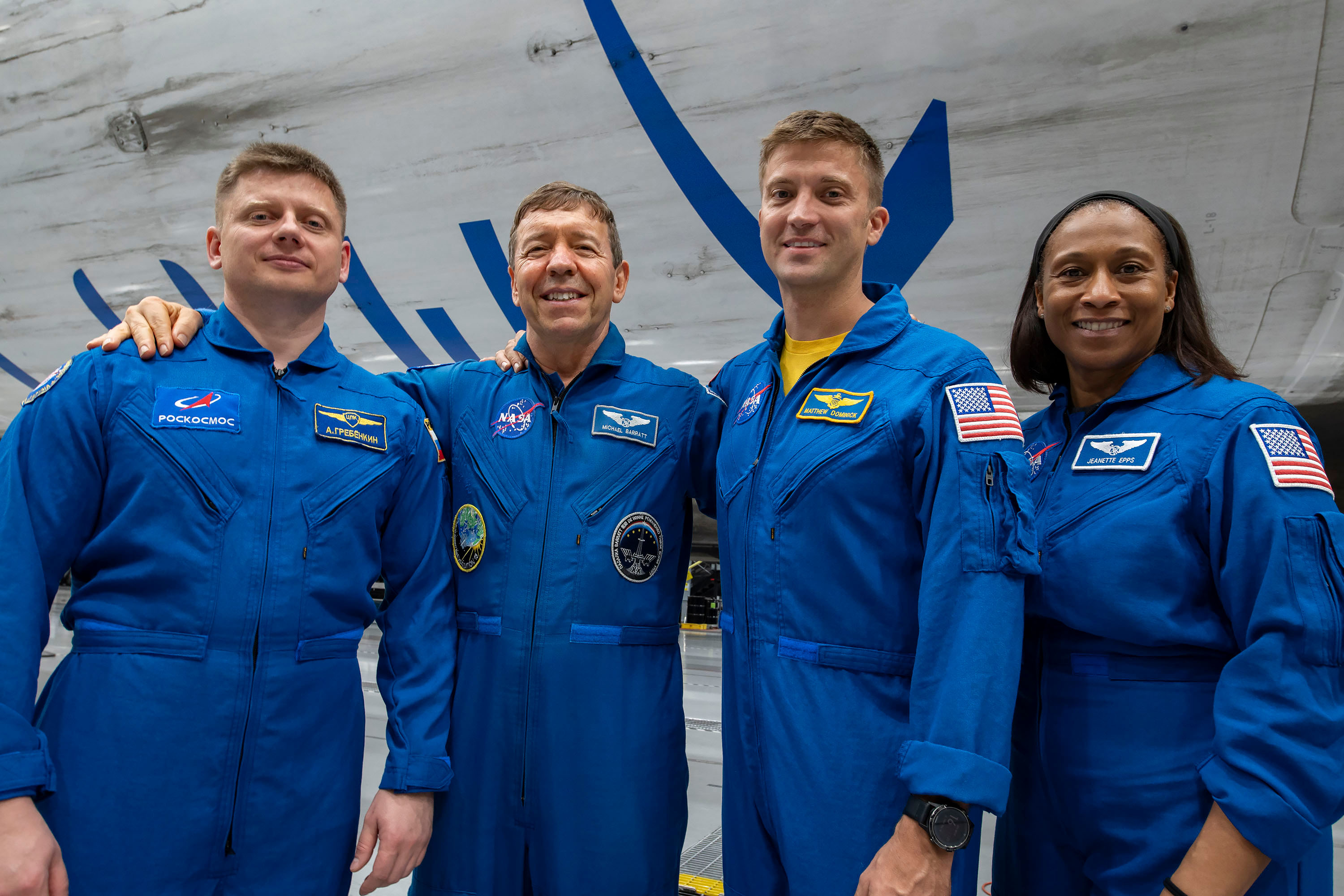
After spending 235 days in space, NASA’s SpaceX Crew-8 astronauts will discuss their science mission aboard the International Space Station during a post-flight news conference at 3:15 p.m. EST Friday, Nov. 8, from the agency’s Johnson Space Center in Houston.
NASA astronauts Michael Barratt, Matthew Dominick, and Jeanette Epps will answer questions about their mission. The three crew members, along with Roscosmos cosmonaut Alexander Grebenkin, returned to Earth on Oct. 25. Grebenkin will not participate because of his travel schedule.
NASA will provide live coverage on NASA+ and the agency’s website. Learn how to watch NASA content through a variety of additional platforms, including social media.
Media are invited to attend in-person or virtually. For in-person attendance, media must contact the NASA Johnson newsroom no later than 5 p.m. Thursday, Nov. 7 at: jsccommu@mail.nasa.gov or 281-483-5111. Media participating by phone must dial into the news conference no later than 10 minutes prior to the start of the event to ask questions. Questions also may be submitted on social media using #AskNASA. A copy of NASA’s media accreditation policy is available on the agency’s website.
The crew spent more than seven months in space, including 232 days aboard the orbiting laboratory, traveling nearly 100 million miles, and completing 3,760 orbits around Earth. While living and working aboard station, the crew completed hundreds of science experiments and technology demonstrations.
Get the latest NASA space station news, images, and features on Instagram, Facebook, and X.
Learn more about NASA’s Commercial Crew Program at:
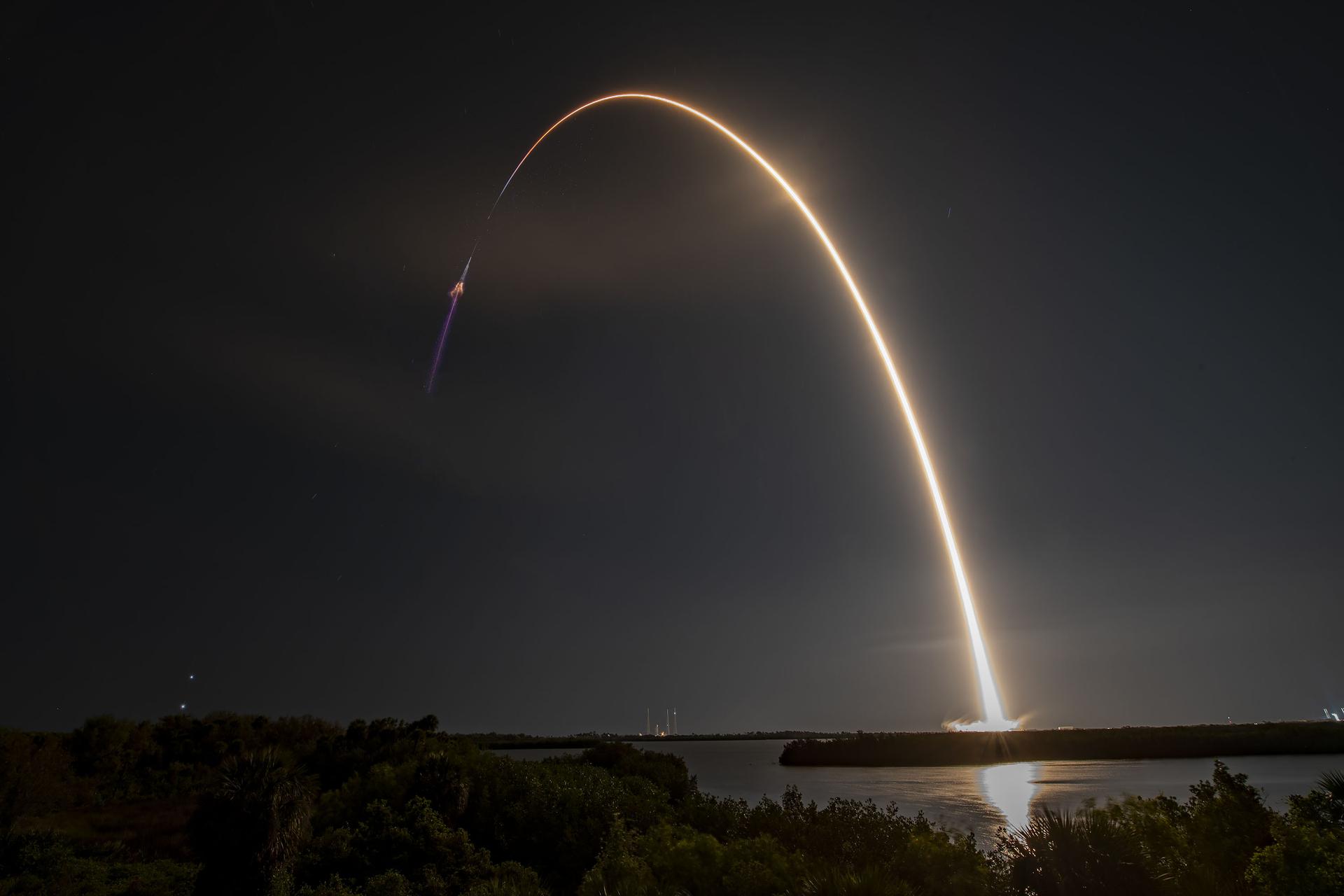
NASA invites the public to participate in virtual activities ahead of the launch of SpaceX’s 31st commercial resupply services mission for the agency. NASA and SpaceX are targeting 9:29 p.m. EST Monday, Nov. 4, for the SpaceX Dragon spacecraft to launch on the company’s Falcon 9 rocket from Launch Complex 39A at NASA’s Kennedy Space Center in Florida.
In addition to food, supplies, and equipment for the crew, Dragon will deliver several new experiments, including the COronal Diagnostic EXperiment to examine solar wind and how it forms, as well as Antarctic moss to observe the combined effects of cosmic radiation and microgravity on plants. Other investigations aboard include a device to test cold welding of metals in microgravity and an investigation that studies how space impacts different materials
Members of the public can register to attend the launch virtually. As a virtual guest, you’ll gain access to curated resources, interactive opportunities, and mission-specific information delivered straight to your inbox. Following liftoff, virtual guests will receive a commemorative stamp for their virtual guest passport
Learn more about NASA research and activities on the International Space Station at:

How it started versus how it’s going for astronaut Nick Hague with ISS Ham Radio on the space station.
Since November 2000, crew members like Hague have used ham radio to communicate with people on Earth through this educational program, also known as Amateur Radio on the International Space Station or ARISS. So far, there have been more than 1,700 events, directly engaging students and listeners from 49 U.S. states, 63 countries, and all seven continents. Students study the space station, radio waves, amateur radio technology, and related topics before their call from space, which encourages interest in STEM.
Now through Nov 17, 2024, ARISS is accepting applications from formal and informal educational institutions and organizations that want to host events in summer or fall of 2025. There is no charge for these calls from space, although host locations may incur some equipment-related costs. Local amateur radio clubs help hosts prepare for their contacts.
Read about how ISS Ham Radio and other station programs inspire students.
Melissa Gaskill
International Space Station Research Communications Team
Johnson Space Center
5 min read
NASA to Launch Innovative Solar Coronagraph to Space Station
NASA’s Coronal Diagnostic Experiment (CODEX) is ready to launch to the International Space Station to reveal new details about the solar wind including its origin and its evolution.
Launching in November 2024 aboard SpaceX’s 31st commercial resupply services mission, CODEX will be robotically installed on the exterior of the space station. As a solar coronagraph, CODEX will block out the bright light from the Sun’s surface to better see details in the Sun’s outer atmosphere, or corona.
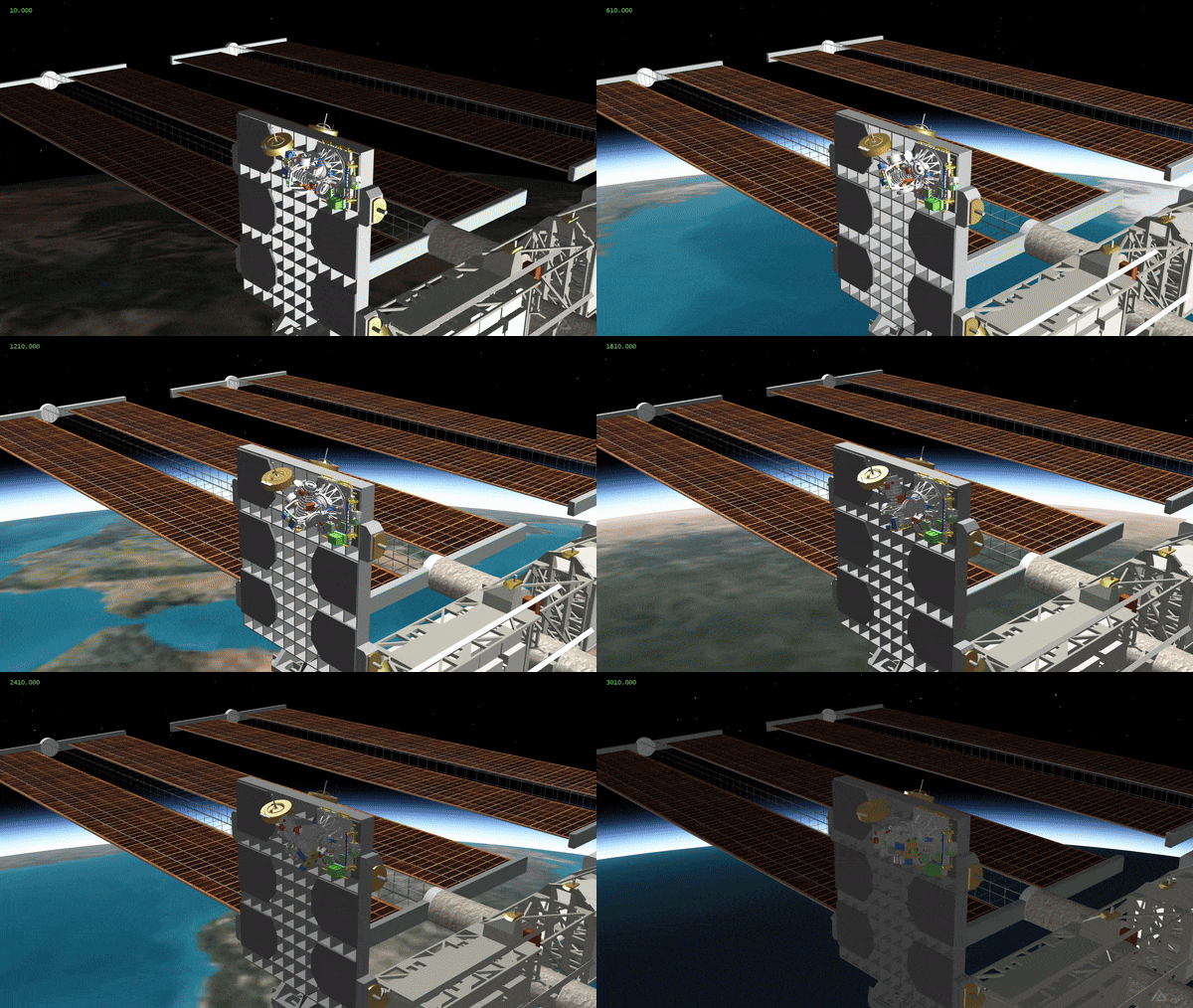
“The CODEX instrument is a new generation solar coronagraph,” said Jeffrey Newmark, principal investigator for the instrument and scientist at NASA’s Goddard Space Flight Center in Greenbelt, Maryland. “It has a dual use — it’s both a technology demonstration and will conduct science.”
This coronagraph is different from prior coronagraphs that NASA has used because it has special filters that can provide details of the temperature and speed of the solar wind. Typically, a solar coronagraph captures images of the density of the plasma flowing away from the Sun. By combining the temperature and speed of the solar wind with the traditional density measurement, CODEX can give scientists a fuller picture of the wind itself.
“This isn’t just a snapshot,” said Nicholeen Viall, co-investigator of CODEX and heliophysicist at NASA Goddard. “You’re going to get to see the evolution of structures in the solar wind, from when they form from the Sun’s corona until they flow outwards and become the solar wind.”
The CODEX instrument will give scientists more information to understand what heats the solar wind to around 1.8 million degrees Fahrenheit — around 175 times hotter than the Sun’s surface — and sends it streaming out from the Sun at almost a million miles per hour.
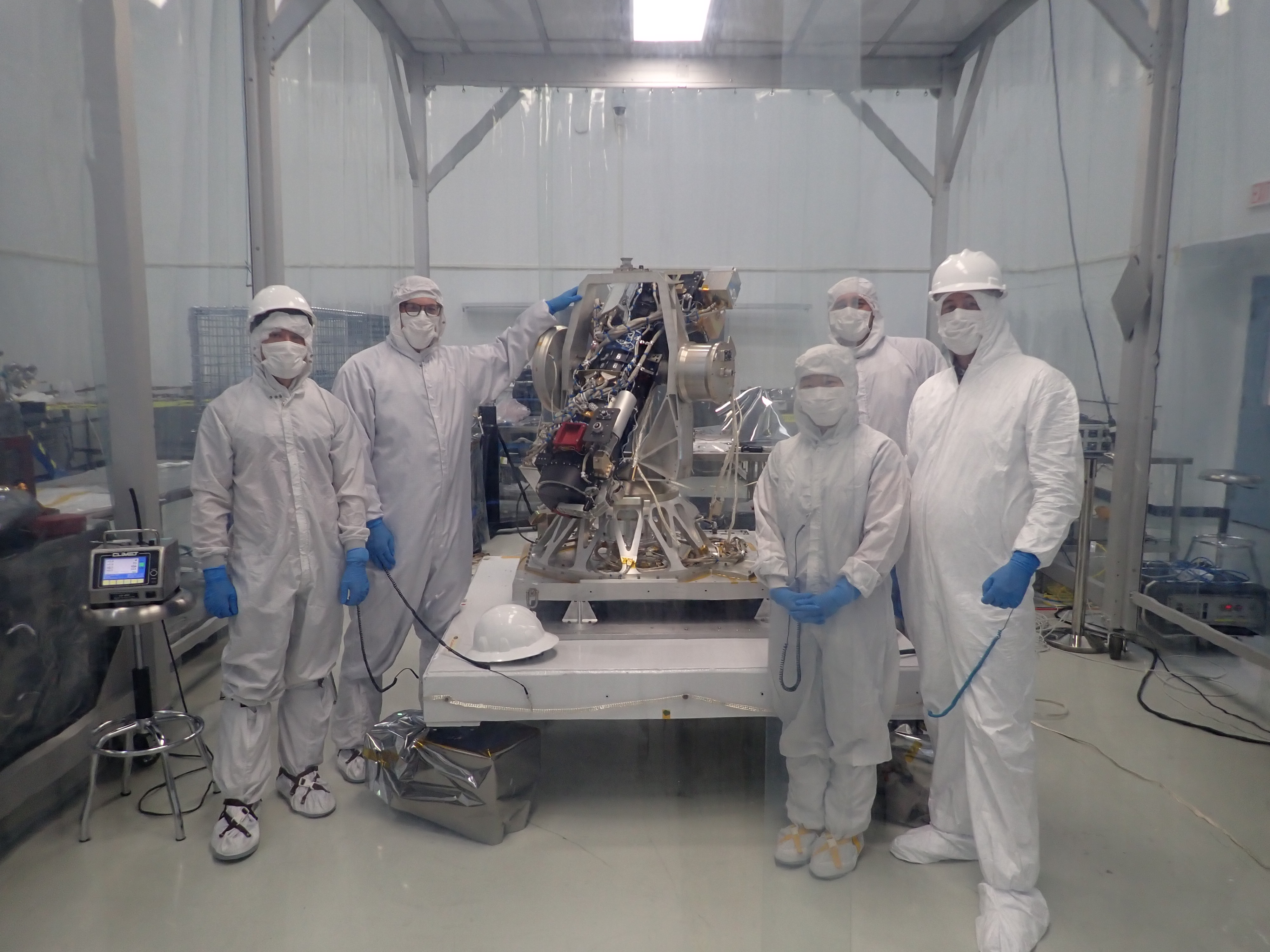
This launch is just the latest step in a long history for the instrument. In the early 2000s and in August 2017, NASA scientists ran ground-based experiments similar to CODEX during total solar eclipses. A coronagraph mimics what happens during a total solar eclipse, so this naturally occurring phenomena provided a good opportunity to test instruments that measure the temperature and speed of the solar wind.
In 2019, NASA scientists launched the Balloon-borne Investigation of Temperature and Speed of Electrons in the corona (BITSE) experiment. A balloon the size of a football field carried the CODEX prototype 22 miles above Earth’s surface, where the atmosphere is much thinner and the sky is dimmer than it is from the ground, enabling better observations. However, this region of Earth’s atmosphere is still brighter than outer space itself.
“We saw enough from BITSE to see that the technique worked, but not enough to achieve the long-term science objectives,” said Newmark.
Now, by installing CODEX on the space station, scientists will be able to view the Sun’s corona without fighting the brightness of Earth’s atmosphere. This is also a beneficial time for the instrument to launch because the Sun has reached its solar maximum phase, a period of high activity during its 11-year cycle.
“The types of solar wind that we get during solar maximum are different than some of the types of wind we get during solar minimum,” said Viall. “There are different coronal structures during this time that lead to different types of solar wind.”
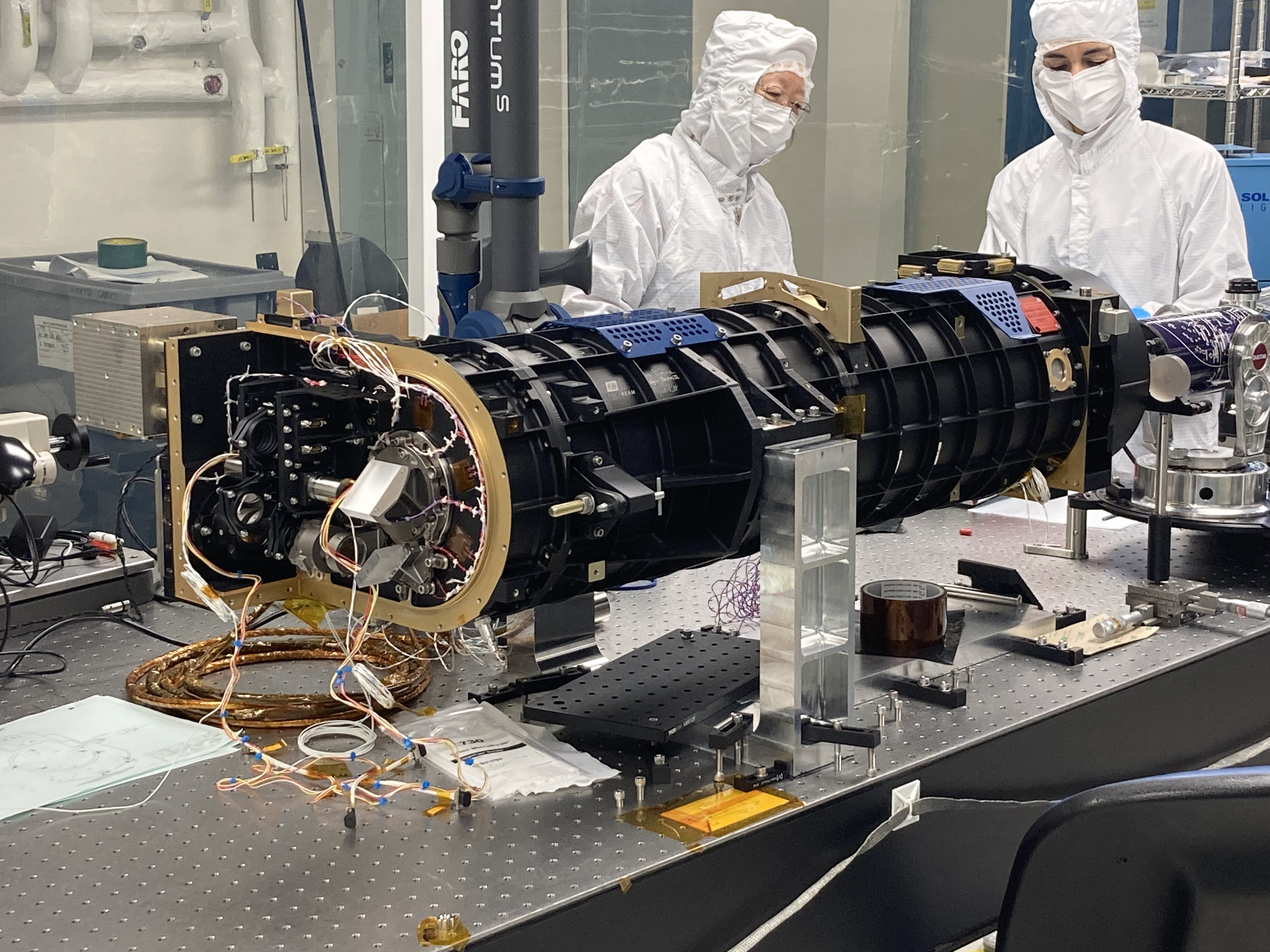
This coronagraph will be looking at two types of solar wind. In one, the solar wind travels directly outward from our star, pulling the magnetic field from the Sun into the heliosphere, the bubble that surrounds our solar system. The other type of solar wind forms from magnetic field lines that are initially closed, like a loop, but then open up.
These closed field lines contain hot, dense plasma. When the loops open, this hot plasma gets propelled into the solar wind. While these “blobs” of plasma are present throughout all of the solar cycle, scientists expect their location to change because of the magnetic complexity of the corona during solar maximum. The CODEX instrument is designed to see how hot these blobs are for the first time.
The coronagraph will also build upon research from ongoing space missions, such as the joint ESA (European Space Agency) and NASA mission Solar Orbiter, which also carries a coronagraph, and NASA’s Parker Solar Probe. For example, CODEX will look at the solar wind much closer to the solar surface, while Parker Solar Probe samples it a little farther out. Launching in 2025, NASA’s Polarimeter to Unify the Corona and Heliosphere (PUNCH) mission will make 3D observations of the Sun’s corona to learn how the mass and energy there become solar wind.
By comparing these findings, scientists can better understand how the solar wind is formed and how the solar wind changes as it travels farther from the Sun. This research advances our understanding of space weather, the conditions in space that may interact with Earth and spacecraft.
“Just like understanding hurricanes, you want to understand the atmosphere the storm is flowing through,” said Newmark. “CODEX’s observations will contribute to our understanding of the region that space weather travels through, helping improve predictions.”
The CODEX instrument is a collaboration between NASA’s Goddard Space Flight Center and the Korea Astronomy and Space Science Institute with additional contribution from Italy’s National Institute for Astrophysics.
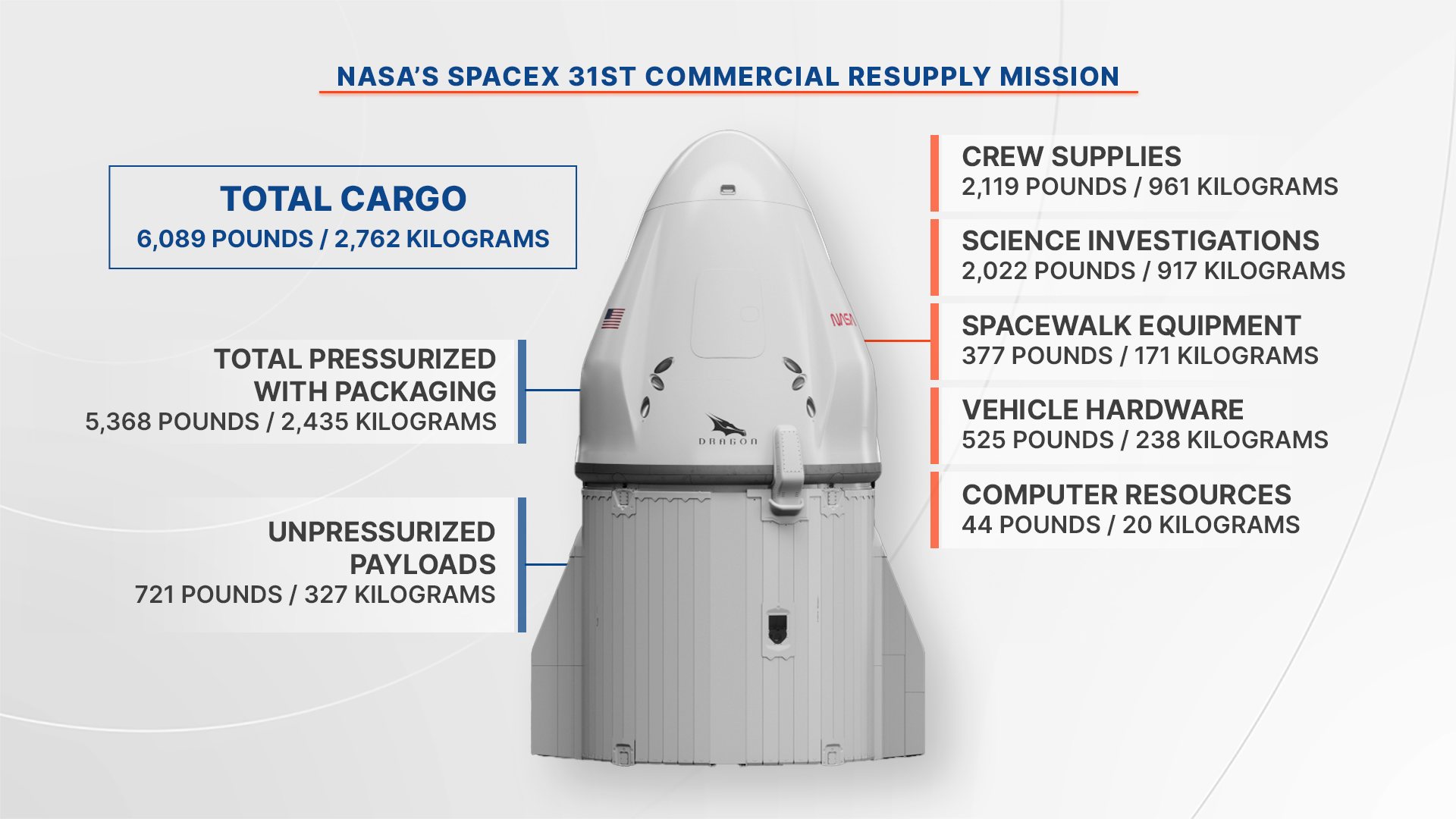
NASA and SpaceX are targeting no earlier than 9:29 p.m. EST on Monday, Nov. 4, for the next launch to deliver scientific investigations, supplies, and equipment to the International Space Station. Filled with more than 6,000 pounds of supplies, the SpaceX Dragon cargo spacecraft, on the company’s Falcon 9 rocket, will launch from Launch Complex 39A at NASA’s Kennedy Space Center in Florida.
This launch is the 31st SpaceX commercial resupply services mission to the orbital laboratory for the agency, and the 11th SpaceX launch under the Commercial Resupply Services-2 (CRS) contract. The first 20 launches were under the original resupply services contract.
NASA’s live launch coverage will begin at 9:10 p.m. on NASA+ and the agency’s website. Learn how to stream NASA content through a variety of platforms, including social media.
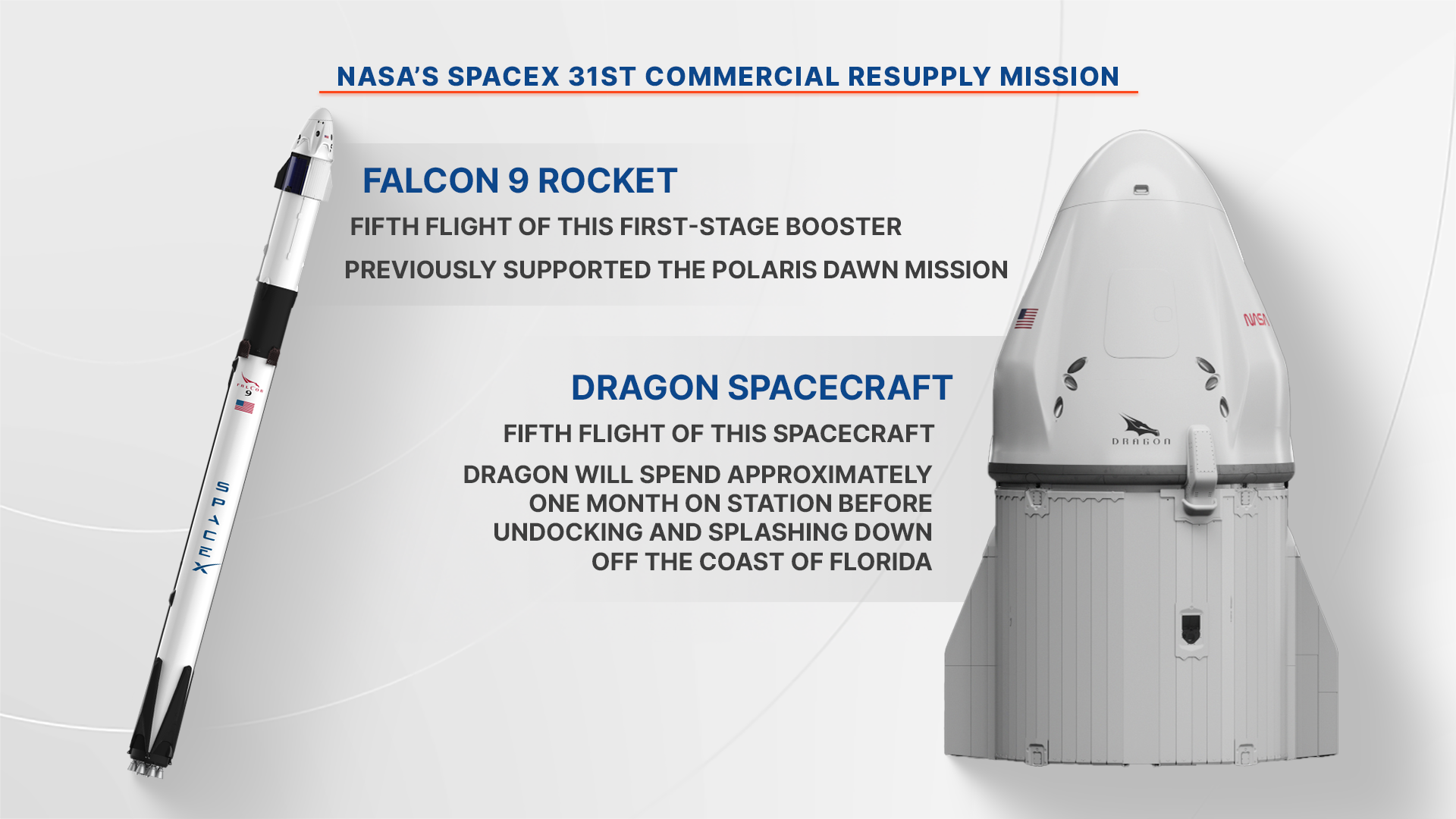

Arrival & Departure
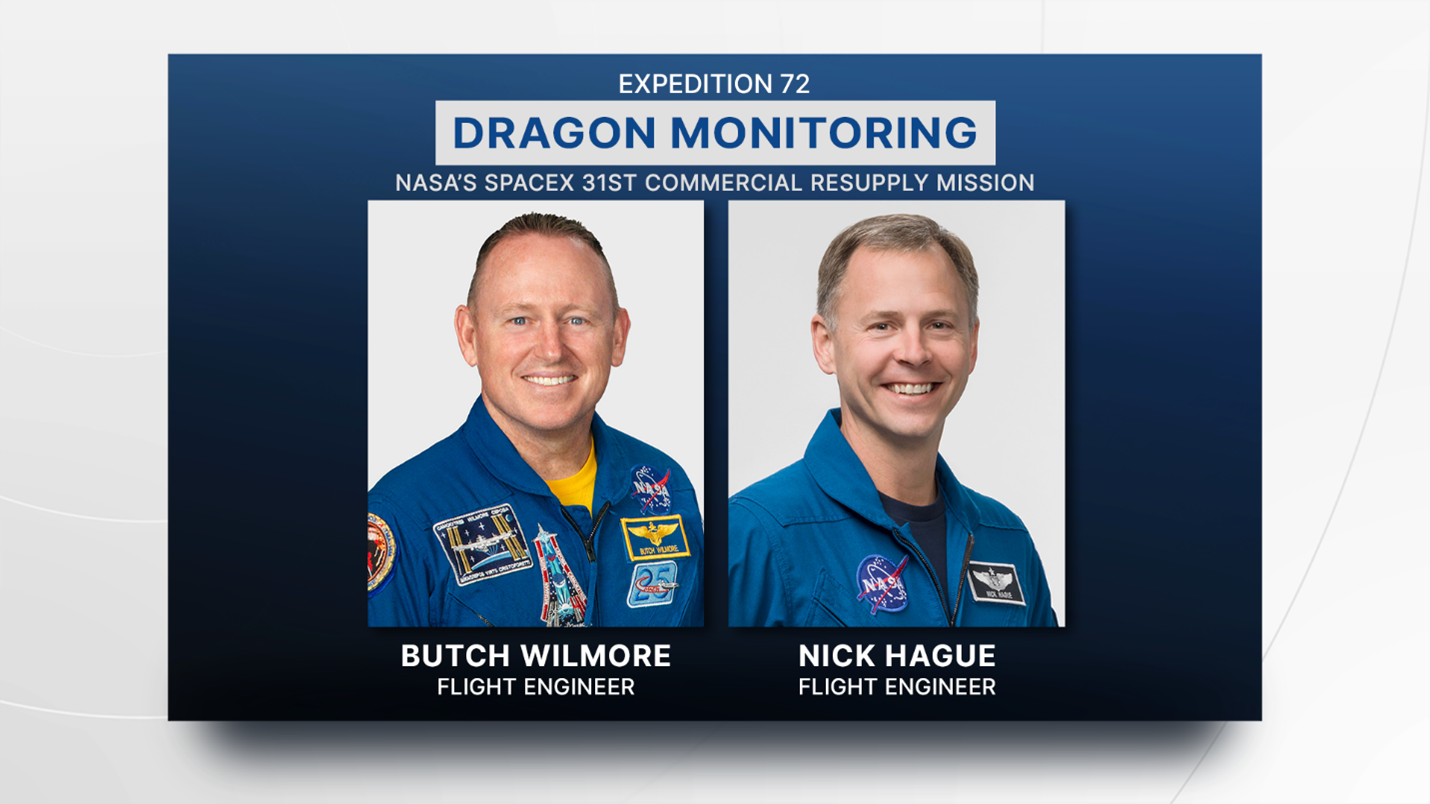
The SpaceX Dragon spacecraft will arrive at the space station and dock autonomously to the forward port of the station’s Harmony module at approximately 10:15 a.m. on Tuesday, Nov. 5. NASA astronauts Butch Wilmore and Nick Hague will monitor the arrival of the spacecraft, which will stay docked to the orbiting laboratory for about one month before splashing down and returning critical science and hardware to teams on Earth.
Live coverage of arrival will begin at 8:45 a.m. Nov. 5 on NASA+ and the agency’s website. Learn how to stream NASA content through a variety of platforms, including social media.
Research Highlights
Scientific investigations traveling in the SpaceX Dragon spacecraft include studies of solar wind, a radiation-tolerant moss, spacecraft materials, and cold welding in space.
Measuring Solar Wind
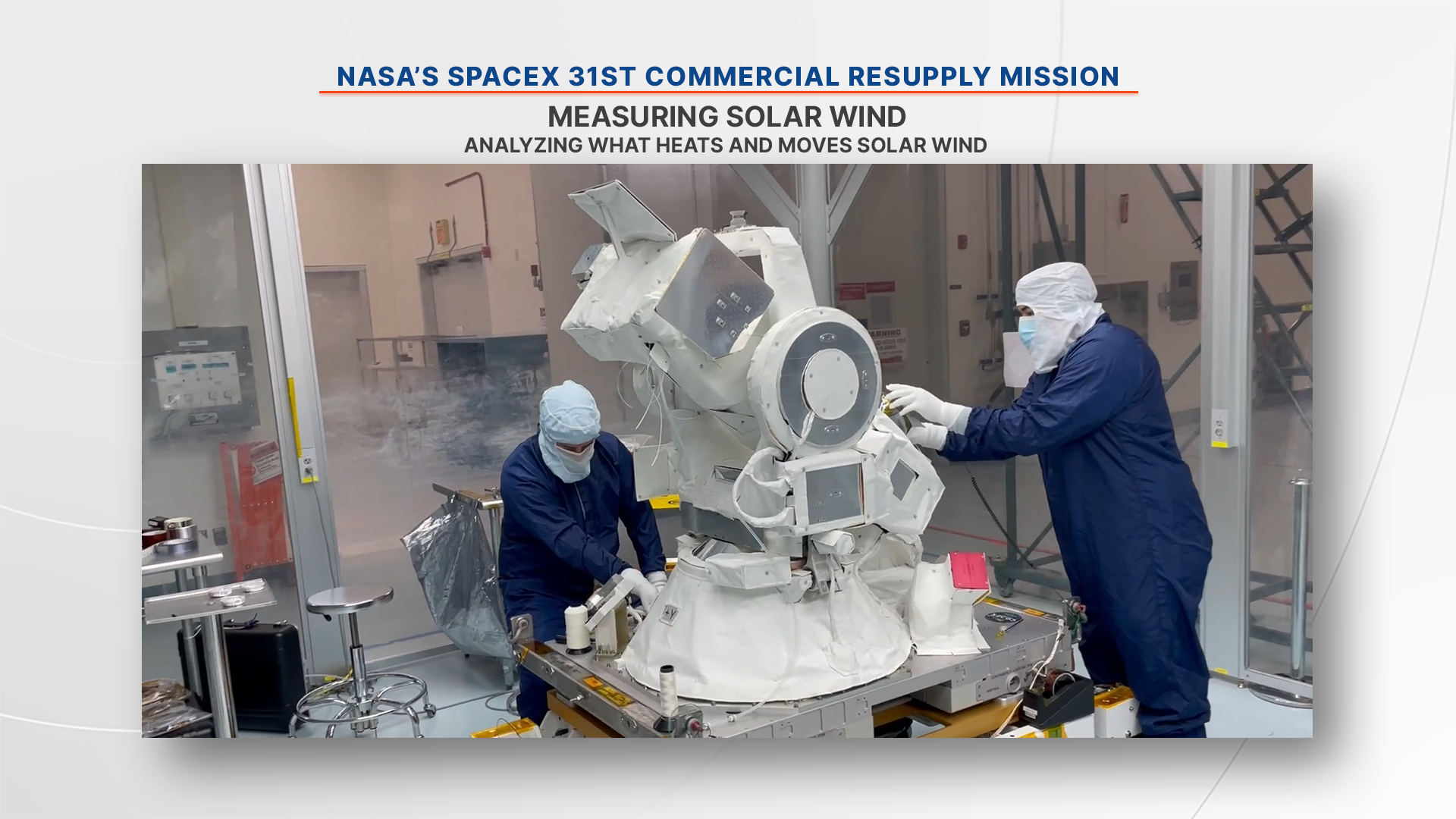
The CODEX (COronal Diagnostic EXperiment) examines the solar wind, creating a globally comprehensive data to help scientists confirm theories for what heats the solar wind – which is a million degrees hotter than the Sun’s surface – and sends it streaming out at almost a million miles per hour.
The investigation uses a coronagraph, an instrument that blocks out direct sunlight to reveal details in the outer atmosphere or corona. The instrument takes multiple daily measurements that determine the temperature and speed of electrons in the solar wind, along with the density information gathered by traditional coronagraphs. A diverse international team has been designing, building, and testing the instrument since 2019 at NASA’s Goddard Space Flight Center in Greenbelt, Maryland.
Antarctic Moss in Space
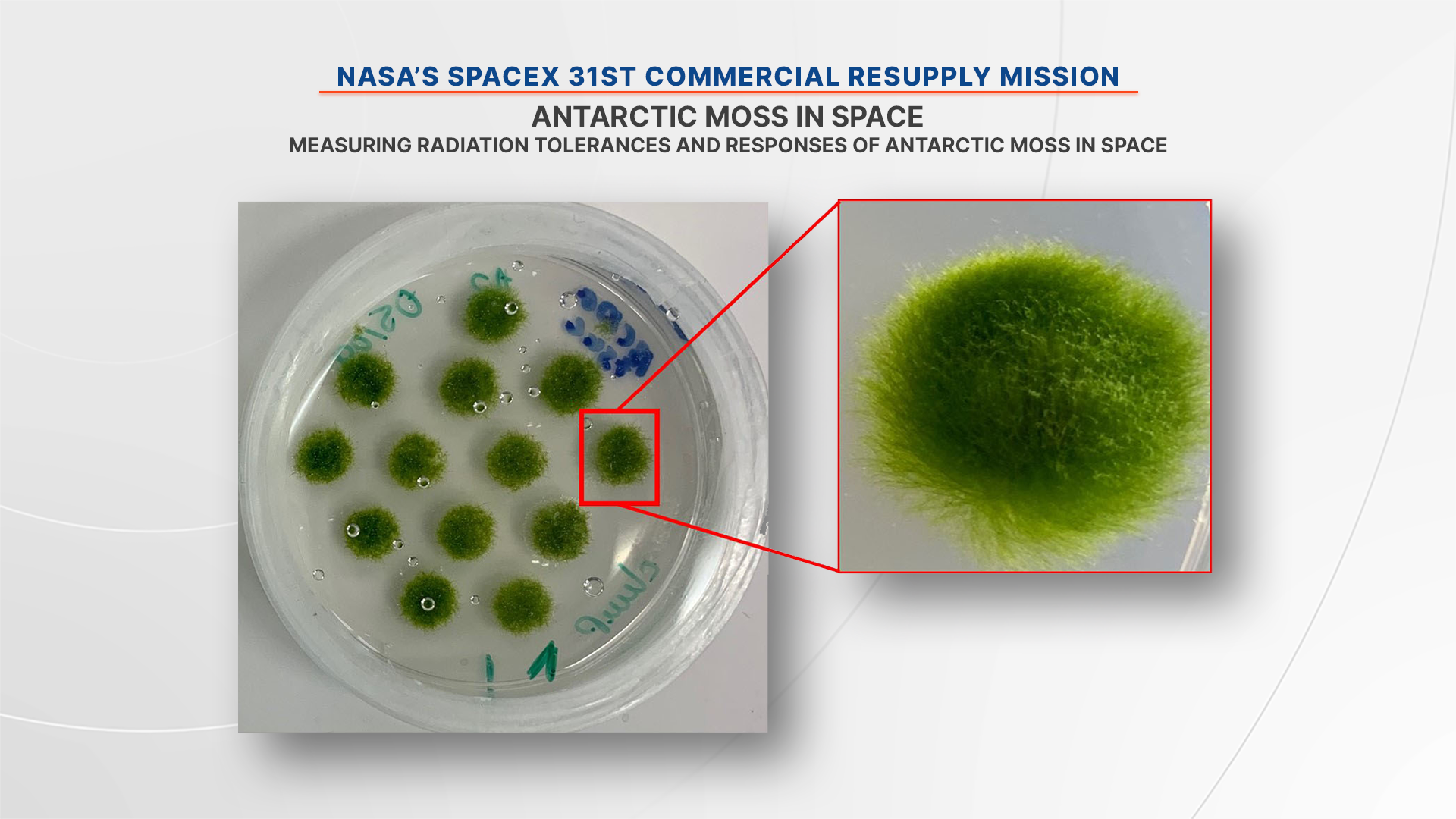
A radiation tolerance experiment, ARTEMOSS, uses a live Antarctic moss, Ceratodon purpureus, to study how some plants better tolerate exposure to radiation and to examine the physical and genetic response of biological systems to the combination of cosmic radiation and microgravity. Little research has been done on how these two factors together affect plant physiology and performance, and results could help identify biological systems suitable for use in bioregenerative life support systems on future missions.
Mosses grow on every continent on Earth and have the highest radiation tolerance of any plant. Their small size, low maintenance, ability to absorb water from the air, and tolerance of harsh conditions make them suitable for spaceflight. NASA chose the Antarctic moss because that continent receives high levels of radiation from the Sun.
Exposing Materials to Space
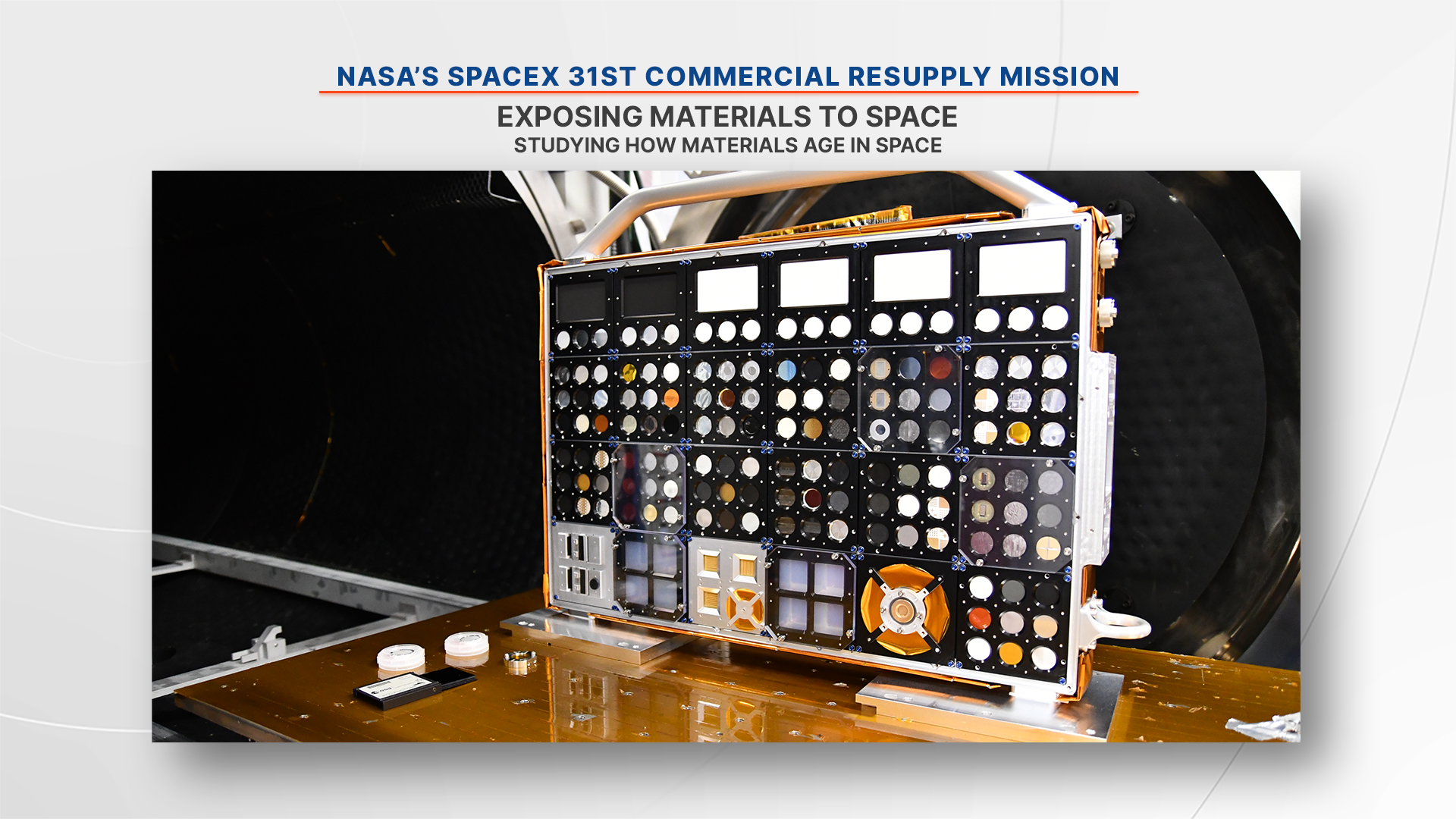
The Euro Material Ageing investigation from the European Space Agency includes two experiments studying how certain materials age while exposed to space. The first experiment, developed by Centre National d’Etudes Spatiales, includes materials selected from 15 European entities. The second experiment looks at organic samples and their stability or degradation when exposed to ultraviolet radiation not filtered by Earth’s atmosphere.
Predicting the behavior and lifespan of materials used in space can be difficult because facilities on the ground cannot simultaneously test for all aspects of the space environment. The exposed samples are recovered and returned to Earth.
Repairing Spacecraft from the Inside
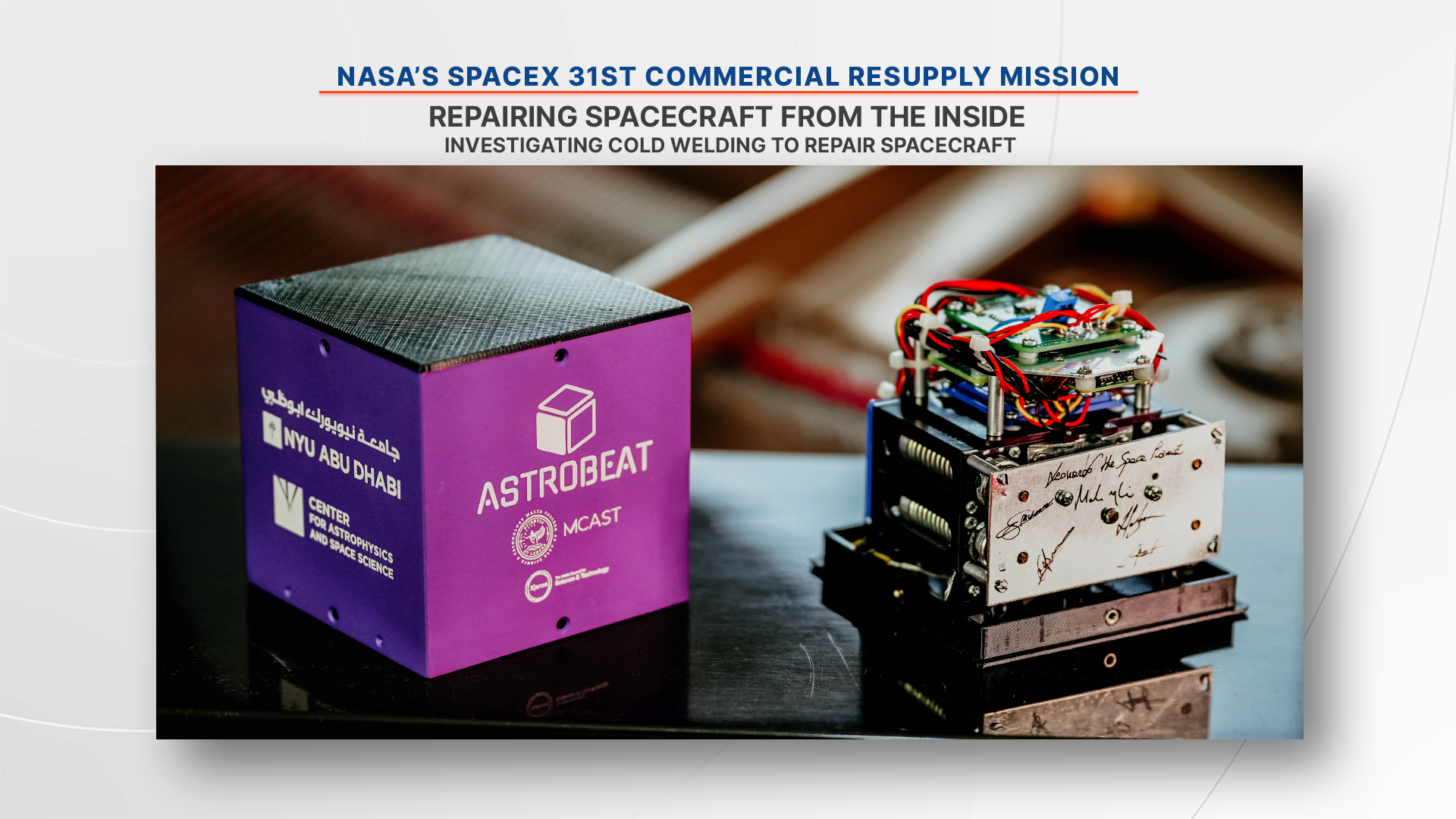
Nanolab Astrobeat investigates using cold welding to repair perforations in the outer shell or hull of a spacecraft from the inside. Less force is needed to fuse metallic materials in space than on Earth, and cold welding could be an effective way to repair spacecraft.
Some micrometeoroids and space debris traveling at high velocities could perforate the outer surfaces of spacecraft, possibly jeopardizing mission success or crew safety. The ability to repair impact damage from inside a spacecraft may be more efficient and safer for crew members. Results also could improve applications of cold welding on Earth as well.
Cargo Highlights
SpaceX’s Falcon 9 rocket will launch the company’s Dragon spacecraft to the International Space Station.
Hardware for Launch
Potable Water Dispenser Filter – The filter unit, installed into the potable water dispenser on the station, will provide the capability to remove iodine from the water before the crew consumes it in food and drink packages.
Reducer Cylinder Assembly & Emergency Portable Breathing Apparatus – Together, this hardware provides 15 minutes of oxygen to a crew member in case of an emergency (smoke, fire, alarm). Two are launching to maintain minimum in-orbit spare requirement.
Multifiltration Bed – Supporting the water processor assembly, this spare unit will continue the International Space Station program’s effort to replace a degraded fleet of units in orbit that improve water quality through a single bed.
Pump Package Assembly – A variable speed pump, reservoir, accumulator assembly used for circulating coolant through the internal active thermal control system loops. This assembly is being flown to maintain the minimum in-orbit spare requirement.
Microbial Removal Filter Cartridge Bag Assembly – Used with the microbial removal filter to offload stowed water to water tank, the assembly will operate under suction to pull water through the filter. These assemblies are replacing current systems that are expiring.
Advanced Restrictive Exercise Device Cable Arm Rope Assembly – Distributes exercise loads through a series of pulleys. The ropes have a limited life cycle, and it is necessary to replace ropes that have achieved their cycle-life limit. This unit is being launched as an in-orbit spare.
International Docking Adapter Planar Reflector Assembly – With an aluminum base and reflective element, visiting vehicles reflect a laser to compute relative range, velocity and attitude to the space station. The current unit is scheduled to be retrieved and replaced during an upcoming spacewalk.
Hardware for Return
Hydrogen Dome – includes all hydrogen and oxygen electrolysis components within the space station’s oxygen generation assembly. These items are contained in a sub-ambient dome maintained at near vacuum pressure, designed to contain an explosion or fire in the electrolysis cell stack during operation. The dome provides a second barrier to protect against cabin air internal leakage and external leakage into the rack environment and is pressurized with nitrogen gas for launch. The dome is returning for repair and re-flight.
Microgravity Experiment Research Locker Incubator Drawer – An aluminum temperature-controlled container designed to maintain conditions for scientific experiments and is returning for refurbishment and re-flight.
Catalytic Reactor – The catalytic reactor replacement unit oxidizes volatile organics from the wastewater so they can be removed by the gas separator and ion exchange bed replacement units as part of the station’s water recycling system. This unit failed in orbit and is being returned for analysis and refurbishment.
Ethylene Scrubber – This container removes ethylene, a plant-produced gas, from the plant growth chamber and helps keep vegetables fresh. This unit will return for refurbishment and re-flight.
Environmental Control System Module – An aluminum box that holds the environmental control system for the plant growth chamber. The environmental control system controls the humidity and other environmental factors within the plant habitat. This module is returning for refurbishment and re-flight.
Ion Exchange Bed – The ion exchange bed unit consists of a pair of tubes in series containing ion exchange resins, which remove organic acids from the catalytic reactor effluent, and microbial check valve resin, which injects iodine into the water as a biocide agent. This unit is returning for repair and re-flight.
Catalytic Oxidizer – Allows the trace containment control system to remove molecular contaminants from in-orbit atmosphere. This item is returning for repair and re-flight.
Urine Processor Assembly Pressure Control and Pump Assembly – This multi-tube purge pump enables the removal of non-condensable gas and water vapor from the distillation assembly within the greater urine processing assembly subsystem. This unit is returning to the ground for repair and refurbishment in support of the legacy environmental control and life support system fleet.
Potable Water Dispenser Filter – The filter unit, installed into the potable water dispenser on the station, will provide the capability to remove iodine from the water before the crew consumes it in food and drink packages. This unit will return and be refurbished for re-flight.
Watch and Engage
NASA’s live launch coverage will begin at 9:10 p.m. Nov. 4, and stream on NASA+ and the agency’s website. Live coverage of arrival will begin at 8:45 a.m. Nov. 5, and stream on NASA+ and the agency’s website.
For additional information on the mission, visit:
https://www.nasa.gov/mission/nasas-spacex-crs-31/
Post a Comment